
Lawn Care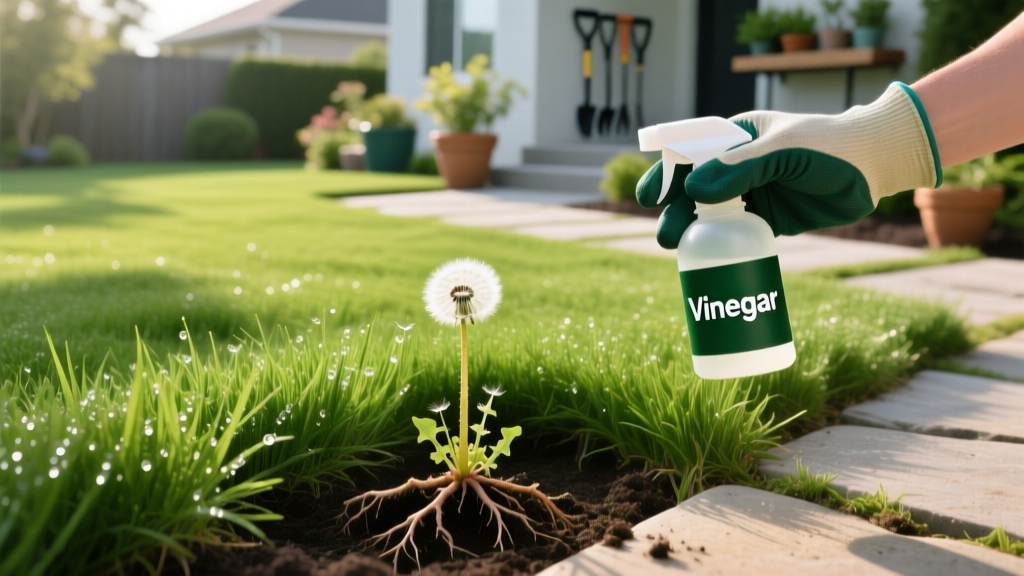
Does Vinegar Kill Weeds Permanently? Science & Lawn Reality
The Short Answer: Contact Burn vs. Systemic Kill
When homeowners search "does vinegar kills weeds", they are typically looking for a cheap, non-toxic alternative to synthetic herbicides like glyphosate. The short answer is that vinegar acts as a rapid contact desiccant, but it is not a permanent systemic weed killer. Acetic acid (the active ingredient in vinegar) destroys the waxy cuticle of plant leaves, causing rapid water loss and visible wilting within hours. However, because it does not translocate through the plant's vascular system, it leaves the root network completely intact. For annual weeds with shallow fibrous roots, this top-kill might be enough. For established perennials, the weed will simply resprout from the root crown within 7 to 14 days.
The Chemistry of Acetic Acid Desiccation
To understand why vinegar fails as a permanent solution, you have to look at its chemical mechanism. Acetic acid (CH3COOH) is a non-selective contact herbicide. When sprayed on foliage, it lowers the pH of the plant tissue locally, rupturing cell membranes and causing the intracellular fluid to leak out. This results in the characteristic "burn" or browning of the leaves.
Unlike systemic herbicides (such as 2,4-D or quinclorac) which are absorbed by the leaves and travel down into the root system to inhibit specific growth enzymes, acetic acid is entirely localized. It only damages the tissue it physically touches. Once the liquid dries or is washed away, its herbicidal activity ceases completely.
Concentration Breakdown: Grocery vs. Horticultural
- Household Vinegar (5% Acetic Acid): Causes mild leaf burn on young, tender annual weeds. Fails completely on mature weeds or thick-leaved perennials like plantain or dandelion. Cost: ~$3 per gallon.
- Cleaning Vinegar (6-10% Acetic Acid): Slightly more effective desiccation, but still lacks root-killing capability. Cost: ~$5 per gallon.
- Horticultural Vinegar (20-30% Acetic Acid): Highly caustic. Will instantly burn the foliage off almost any broadleaf weed or grass. Still does not kill deep taproots. Requires PPE (goggles, heavy gloves) as it can cause severe corneal damage and skin burns. Cost: ~$30 to $40 per gallon in 2026.
The Taproot Problem: Why Perennials Survive
The primary failure point of vinegar as a weed killer is its inability to address deep root structures. Take the common dandelion (Taraxacum officinale), for example. A mature dandelion possesses a brittle taproot that can extend 6 to 18 inches deep into the soil profile. If you spray 20% horticultural vinegar on a dandelion, the leaves will shrivel and die within 24 hours. However, the taproot remains entirely unaffected. Because the root stores carbohydrates, the plant will push out a new rosette of leaves within two weeks. According to the University of Minnesota Extension, repeated applications of acetic acid are required to exhaust the root's energy reserves, making it a labor-intensive and ultimately inefficient strategy for perennial weed management.
Herbicide Efficacy and Cost Matrix
When deciding how to tackle a weed infestation, comparing the active ingredients, costs, and root-kill capabilities is essential for making an informed choice.
| Herbicide Type | Active Ingredient | Root Kill? | Est. Cost (2026) | Best Use Case |
|---|---|---|---|---|
| Horticultural Vinegar | Acetic Acid (20-30%) | No | $35 / gallon | Driveway cracks, patio pavers |
| Fatty Acid Herbicide | Pelargonic Acid | No | $45 / gallon | Organic garden bed edging |
| Selective Broadleaf | 2,4-D + Dicamba | Yes | $40 / gallon (makes 40 gal) | Lawn applications (spares grass) |
| Systemic Non-Selective | Glyphosate (41%) | Yes | $50 / gallon (makes 80 gal) | Spot treatment, fence lines |
The Hidden Danger: Soil pH and Microbiome Disruption
A critical, often overlooked factor in the vinegar debate is its impact on soil chemistry. Turfgrass thrives in a soil pH range of 6.0 to 7.0. Acetic acid is, by definition, an acid. Repeatedly spraying high-concentration vinegar on your lawn or garden beds will artificially lower the soil pH. When soil pH drops below 5.5, essential macronutrients like phosphorus, calcium, and magnesium become chemically "locked up" and unavailable to plant roots.
Furthermore, soil is a living ecosystem. Beneficial mycorrhizal fungi and nitrogen-fixing bacteria are highly sensitive to sudden pH drops. Drenching the soil with 20% vinegar can sterilize the top layer of the soil profile, killing the microbiome required to break down organic matter and feed your turf.
Warning: The Vinegar and Salt Myth
Many DIY recipes online suggest mixing vinegar with Epsom salt or table salt (sodium chloride) and dish soap to "permanently" kill weeds. Do not do this. Sodium accumulates in the soil, causing severe osmotic stress that prevents any future plant growth. You will create a sterile, toxic patch of dirt where neither weeds nor grass will grow for years. The National Pesticide Information Center (NPIC) advises against using unregistered homemade mixtures that introduce persistent soil contaminants like sodium.
When to Actually Use Vinegar: The Hardscape Strategy
Vinegar is not entirely useless; it simply has the wrong application area. It is highly effective for hardscape weed control where soil health is irrelevant. If you have weeds pushing through cracks in a concrete driveway, between patio pavers, or along gravel walkways, 20% horticultural vinegar is an excellent tool.
Step-by-Step Hardscape Application
- Timing: Apply on a hot, sunny day when temperatures exceed 75°F (24°C). Heat accelerates the desiccation process.
- Safety Gear: Wear polycarbonate safety goggles and heavy nitrile gloves. 20% acetic acid is classified as a severe eye irritant and can cause permanent corneal damage.
- Equipment: Use a dedicated pump sprayer. Do not use a sprayer that you plan to use for liquid fertilizers later, as the acid will degrade rubber seals and leave residual contamination.
- Application: Spray the foliage until wet. Avoid overspray onto desirable ornamental plants or lawn edges.
- Follow-up: Inspect the area in 10 days. If the weed resprouts from the root crown, hit it again. Eventually, the root will exhaust its energy reserves without sunlight.
Frequently Asked Questions
Does vinegar kill grass permanently?
No. If you spray vinegar on your lawn, it will burn the grass blades, turning them brown. However, the grass crowns and roots will survive, and the turf will likely recover within a few weeks, provided the soil pH hasn't been severely altered by massive over-application.
Is vinegar considered an organic weed killer?
While acetic acid is a naturally occurring compound, the Environmental Protection Agency (EPA) notes that high-concentration acetic acid (20%+) is a potent chemical irritant. It is exempt from federal pesticide registration under FIFRA 25(b) as a minimum-risk active ingredient when used at lower concentrations, but commercial 20% formulations carry strict warning labels. It is accepted by some organic certification boards for hardscape use, but not for broad-acre agricultural soil application.
What is the fastest natural way to kill weeds in a lawn?
For lawns, the fastest natural method is manual extraction using a stand-up weeder tool that grips the taproot, combined with maintaining a thick, 3-inch tall turf canopy. Dense turf naturally shades out weed seeds, preventing germination without the need for chemical or acidic interventions.

