
Lawn Care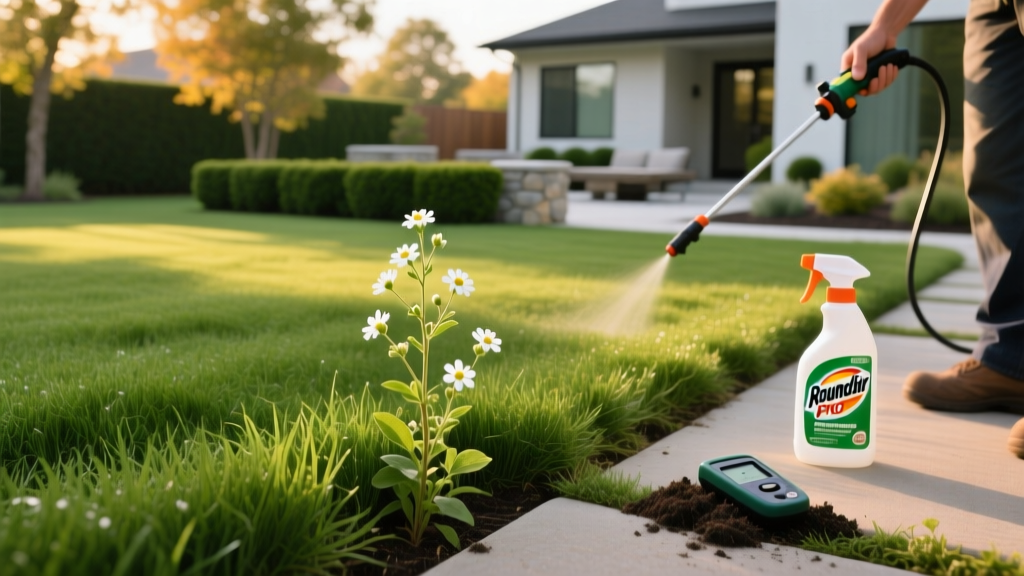
Virginia Button Weed Control: Best Herbicides and Timing
The Biology of a Stubborn Weed
Virginia buttonweed (Diodia virginiana) is widely considered the most difficult broadleaf weed to control in warm-season southern lawns. Unlike common dandelions or clover, buttonweed is a perennial that reproduces through multiple pathways: seeds, creeping stolons, and a deep, resilient taproot. When you pull a buttonweed plant by hand, the taproot almost always snaps, leaving behind root fragments that quickly regenerate new shoots. According to NC State TurfFiles, this weed thrives in poorly drained, compacted soils, making it a primary indicator of underlying turf stress.
Botanical Profile: Diodia virginiana
- Lifecycle: Warm-season perennial
- Leaf Structure: Opposite, lanceolate, heavily pubescent (hairy)
- Flowers: Small, white, four-petaled, star-shaped (blooms June-September)
- Primary Habitat: Wet, compacted soils, low-lying lawn areas
Visual Identification: Don't Confuse It with Clover
Homeowners frequently misidentify Virginia buttonweed as white clover, leading to ineffective treatment plans. While both produce white flowers, their morphological structures are entirely different. White clover features trifoliate leaves (three distinct leaflets per stem) and globe-like flower heads. Buttonweed features opposite leaves that grow directly across from one another on the stem, and its flowers are tiny, distinct four-pointed stars that sit in the leaf axils.
The most critical identification feature for treatment purposes is the leaf surface. Buttonweed leaves are covered in dense, microscopic hairs (pubescence) and possess a thick, waxy cuticle. This biological armor is exactly why standard off-the-shelf herbicides fail to penetrate the plant tissue.
Why Standard Herbicides Fail
If you have applied a standard 2,4-D, dicamba, and MCPP mixture (commonly found in big-box store 'Weed and Feed' products) and noticed zero dieback, you are not alone. Buttonweed has evolved a high tolerance to these older synthetic auxin chemistries. Furthermore, the thick cuticle and hairy leaf surface cause standard aqueous herbicide solutions to bead up and roll off the leaf before absorption can occur. To achieve control, you must utilize modern ALS-inhibitors (Group 2) or specialized synthetic auxin blends (Group 4) paired with a high-quality non-ionic surfactant.
Selective Herbicide Matrix: What Actually Works
Selecting the correct chemistry depends entirely on your specific warm-season grass type. Applying the wrong product will result in severe turf phytotoxicity or outright lawn death. Below is a comparison of the most effective professional-grade herbicides for buttonweed spot-treatment.
| Active Ingredient | Brand Example | Safe Grasses | Spot-Treat Rate (per 1,000 sq ft) | Est. Cost |
|---|---|---|---|---|
| Thiencarbazone + Iodosulfuron + Dicamba | Celsius WG | Bermuda, Zoysia, St. Augustine, Centipede | 0.056 - 0.113 oz | ~$2.50 |
| Metsulfuron-methyl | Manor / Blade | Bermuda, Zoysia, St. Augustine (NOT Centipede) | 0.0014 oz (approx. 1/16 tsp) | ~$0.20 |
| Thiencarbazone + Foramsulfuron + Halosulfuron | Tribute Total | Bermuda, Zoysia (NOT St. Augustine/Centipede) | 0.073 oz | ~$4.00 |
Note: Pricing is estimated based on 2026 professional supplier averages for dry flowable/wettable granule concentrates. Always read the manufacturer label for exact dilution ratios.
The 4-Step Spot-Treatment Protocol
Spot-treating buttonweed requires precision. Broadcast spraying is rarely necessary and increases the risk of turf stress. Follow this exact protocol for optimal results.
- Timing the Application: Apply herbicides when soil temperatures are consistently between 65°F and 80°F. Late spring (May) and early fall (September) are the ideal windows. Avoid applications during peak summer drought stress.
- Mixing with Surfactant: A non-ionic surfactant (NIS) is mandatory. The surfactant breaks the surface tension of the water, allowing the chemical to bypass the hairy leaf cuticle. Mix at a 0.25% v/v ratio. For a standard 1-gallon pump sprayer, this equals exactly 1/2 teaspoon of NIS (such as Hi-Yield Spreader Sticker) per gallon of water.
- Application Technique: Use a fine-fan nozzle on your pump sprayer. Spray the buttonweed foliage until it is visibly wet, but stop before the liquid begins to drip or run off onto the soil. Soil activity is minimal for these foliar-absorbed products; coverage is everything.
- The 21-Day Follow-Up: Buttonweed rarely dies from a single application. The ALS-inhibitors work systemically, slowly starving the root system. Expect to see yellowing and stunted growth within 14 days. A second application is almost always required 21 to 28 days after the initial treatment to kill regenerating root fragments.
⚠️ Critical Temperature Warning
Never apply Celsius WG, Manor, or Tribute Total when daytime air temperatures exceed 85°F. At high temperatures, these herbicides become highly volatile and can cause severe phytotoxicity (chemical burn), particularly to St. Augustine and Centipede grasses. If a heatwave is forecasted, delay your application.
Cultural Remediation: Fixing the Soil
Chemical control is only a temporary fix if the underlying environmental conditions favor buttonweed. As noted by the University of Florida IFAS Extension, Diodia virginiana is a primary indicator of soil compaction and excessive moisture. To prevent reinfestation, implement the following cultural controls:
- Core Aeration: Perform deep-tine core aeration in early summer to relieve soil compaction and improve oxygen flow to the turf root zone.
- Topdressing and Grading: Fill low-lying areas where water pools with a 70/30 sand-to-compost mix. Buttonweed cannot compete with healthy turf in well-drained soils.
- Irrigation Auditing: Reduce watering frequency. Warm-season grasses generally require 1 inch of water per week, including rainfall. Overwatering creates the exact damp environment buttonweed needs to germinate.
- Raise Mowing Height: Increase your mower deck height by 0.5 inches. Taller grass shades the soil surface, depriving buttonweed seedlings of the sunlight required for photosynthesis and establishment.
Troubleshooting & Frequently Asked Questions
Why did my lawn turn yellow after applying Metsulfuron-methyl?
Metsulfuron-methyl (Manor) is highly effective against buttonweed but can cause temporary phytotoxicity (yellowing) in St. Augustine grass, especially if applied at rates exceeding 0.0625 oz per acre or during temperature fluctuations. This yellowing is usually cosmetic and the turf will recover within 2 to 3 weeks. To minimize this, avoid adding nitrogen fertilizer immediately before or after application.
Can I use a pre-emergent to stop buttonweed seeds?
Pre-emergent herbicides like prodiamine or dithiopyr offer very limited efficacy against Virginia buttonweed. Because the weed spreads primarily through creeping stolons and deep taproot fragments rather than just seeds, pre-emergents will not stop an existing infestation from spreading laterally. Focus your budget on post-emergent spot-treatments and soil drainage improvements.
Is hand-pulling ever a viable strategy?
Hand-pulling is only viable for isolated, brand-new seedlings that have not yet developed a deep taproot. For mature buttonweed patches, pulling will inevitably snap the root, leading to multiple new shoots emerging from the remaining root nodes within weeks. If you must manually remove mature plants, use a weeding fork to excavate at least 6 inches of soil to extract the entire taproot structure.
For further reading on integrated weed management in home lawns, consult the Clemson University Home & Garden Information Center.

