
Lawn Care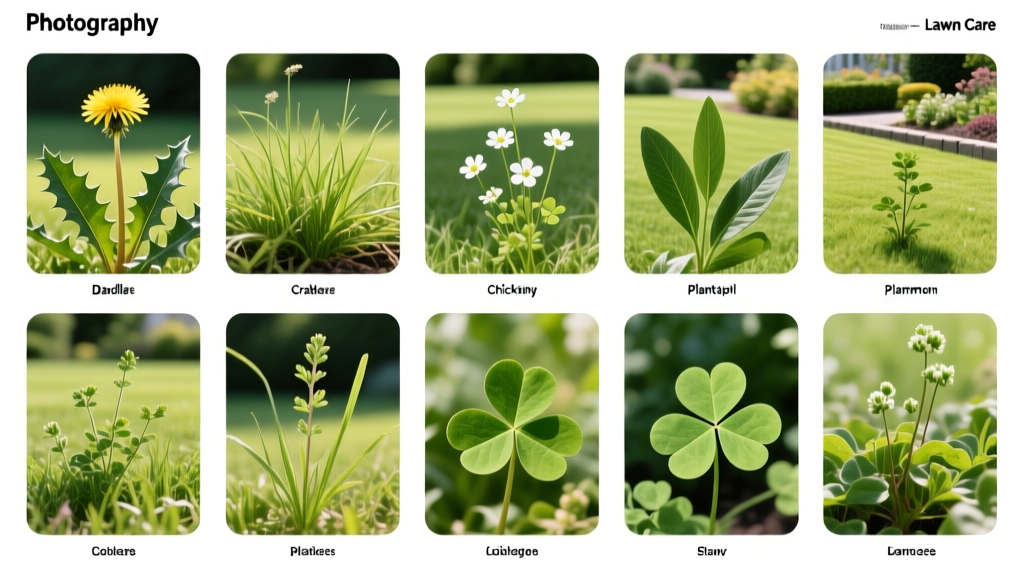
What Do Weeds Look Like? Identifying 12 Common Lawn Invaders
Asking "what do weeds look like" is the first step in reclaiming your turf, but there is no single answer. Weeds are not a monolith; they are a diverse group of opportunistic plants that exploit thin turf, compacted soil, and improper mowing heights. To effectively eliminate them, you must move beyond generic descriptions and understand their specific morphological traits, growth habits, and seedling stages.
The Botanical Divide: Grassy vs. Broadleaf vs. Sedge
Before you can identify a specific species, you must categorize it into one of the three primary weed families. This classification dictates the exact chemical active ingredients required for eradication, as broadleaf herbicides will not kill grassy weeds, and vice versa.
1. Grassy Weeds
These weeds mimic your desired turfgrass, making them the hardest to spot early. They belong to the Poaceae family. Visually, they feature narrow leaves with parallel veins and hollow, rounded stems with distinct nodes (joints). Examples include crabgrass, goosegrass, and annual bluegrass (Poa annua).
2. Broadleaf Weeds
Broadleaf weeds are visually distinct from turf. They possess wider leaves with a net-like (reticulate) vein structure and often produce showy flowers. Their stems are typically solid and may be square or rounded. Dandelions, clover, and plantain fall into this category.
3. Sedges
Sedges look like grass but belong to the Cyperaceae family. They thrive in poorly drained, overly moist soils. The defining visual characteristic is a solid, triangular stem.
The Roll Test: If you are unsure whether you are looking at a grassy weed or a sedge, pull a single stem and roll it between your thumb and index finger. If it rolls smoothly, it is a grass. If you feel distinct flat edges and corners, it is a sedge.
Visual Identification Matrix: 8 Common Turf Invaders
Use this matrix to cross-reference the visual traits of the most common invaders found in North American lawns. According to turfgrass specialists at the University of Minnesota Extension, accurate identification at the vegetative stage is critical for selecting the correct post-emergent herbicide.
| Weed Name | Category | Key Visual Identifier | Root System |
|---|---|---|---|
| Crabgrass | Grassy | Star-shaped growth pattern; pale green, wide blades with a distinct white mid-vein. | Fibrous, shallow |
| Yellow Nutsedge | Sedge | Triangular stem; shiny, yellow-green leaves that grow faster than surrounding turf. | Shallow rhizomes with nutlets |
| Dandelion | Broadleaf | Deeply lobed, jagged leaves forming a basal rosette; hollow flower stalks. | Deep taproot (up to 10 inches) |
| White Clover | Broadleaf | Trifoliate (three-leaf) structure with a white 'V' watermark on the leaflets. | Stolons (creeping above ground) |
| Poa Annua | Grassy | Boat-shaped leaf tips; produces seed heads even when mowed at 2 inches. | Shallow, fibrous |
| Quackgrass | Grassy | Auricles (claw-like appendages) where the leaf blade meets the sheath; blue-green tint. | Deep, aggressive rhizomes |
| Prostrate Spurge | Broadleaf | Low-growing, reddish stems that exude a milky white sap when broken. | Taproot |
| Henbit | Broadleaf | Square stem; scalloped, circular leaves that clasp the stem directly. | Fibrous |
Seedling Stage Identification: What Do Weeds Look Like Early?
Most homeowners ask what weeds look like only after they have already matured and invaded the lawn. By the time crabgrass forms a star pattern, it has already outcompeted your turf. Identifying weeds at the cotyledon (seed leaf) or early true-leaf stage allows for spot-treatment with significantly lower chemical volumes.
Cotyledon vs. True Leaf Stages
When a weed first germinates, it pushes up one or two cotyledons. These do not look like the mature plant. For example, broadleaf plantain cotyledons are spoon-shaped and smooth, completely lacking the prominent parallel veins of the mature leaves. Grassy weeds like crabgrass emerge with a single, blunt-tipped coleoptile that quickly splits into the first true leaf. According to the UC Statewide IPM Program, catching sedges at the three-leaf stage is vital; once the plant develops five to six leaves, it begins forming underground nutlets that survive most chemical applications.
Targeted Eradication Protocols by Weed Type
Knowing what a weed looks like is useless without a targeted eradication strategy. Broad-spectrum herbicides like glyphosate will kill your desired lawn alongside the weed. You must use selective herbicides matched to the weed's botanical family.
Grassy Weed Protocol
For post-emergent control of crabgrass and foxtail, use Quinclorac (e.g., Drive XLR8). Apply at a rate of 0.73 fluid ounces per 1,000 square feet. Critical step: Quinclorac requires a Methylated Seed Oil (MSO) surfactant at 1% v/v to penetrate the waxy cuticle of mature grassy weeds. Without the surfactant, the herbicide will bead up and fail.
Sedge Protocol
Yellow and purple nutsedge require Halosulfuron-methyl (e.g., SedgeHammer) or Sulfentrazone. Apply Halosulfuron at 1.25 fluid ounces per gallon of water for spot treatments. Do not mow the lawn for 48 hours before and after application to ensure maximum foliar absorption and translocation down to the rhizomes.
Broadleaf Protocol
A three-way ester formulation containing 2,4-D, Dicamba, and MCPP (commonly sold as Trimec) is the industry standard. Apply when daytime temperatures are between 65°F and 85°F. Applications made when temperatures exceed 85°F risk vapor drift, which can damage nearby ornamental shrubs and vegetable gardens.
Cultural Defense Mechanisms
Weeds are symptoms of environmental stress. Once you have identified and eradicated the current invaders, implement these cultural practices to prevent re-emergence:
- Mowing Height: Increase your mower deck to 3.5 or 4 inches. Research shows that maintaining tall fescue at 4 inches shades the soil surface, reducing crabgrass germination by up to 85% compared to turf mowed at 2 inches.
- Pre-Emergent Timing: Apply Prodiamine (0.4 oz per 1,000 sq ft) when soil temperatures at a 2-inch depth reach 55°F for three consecutive days in the spring. This creates a chemical barrier in the top 1/2 inch of soil, halting cell division in germinating weed seeds.
- Deep Watering: Water your lawn with 1 to 1.5 inches of water per week, split into two deep sessions. Shallow, daily watering promotes the shallow root systems of weeds like Poa annua and spurge while starving your deep-rooted turfgrass.

