
Lawn Care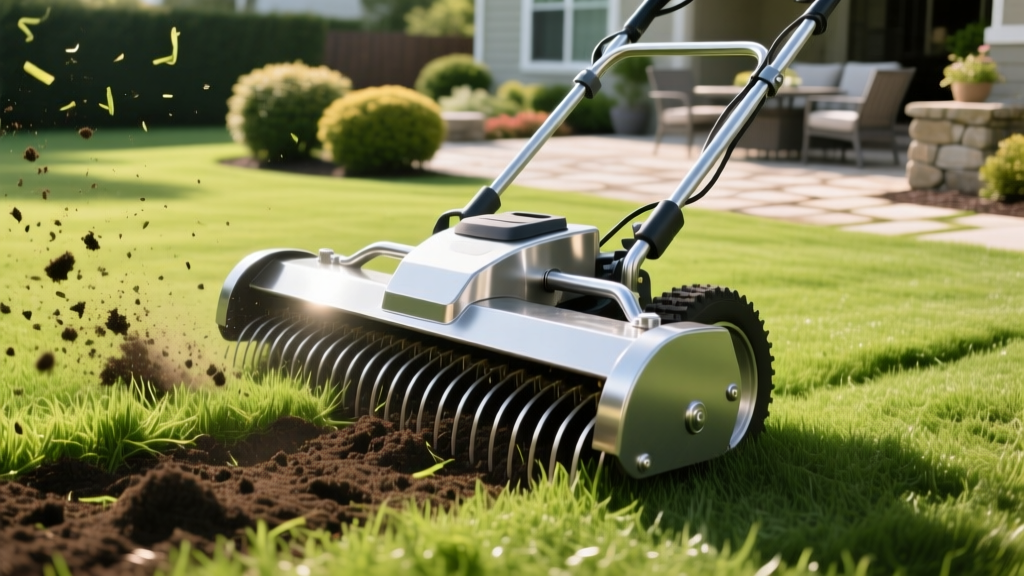
Walk Behind Harley Rake: Selection, Specs & Soil Prep Guide
The Mechanics of Walk Behind Harley Rakes
A walk behind Harley rake—technically classified as a power box rake or soil conditioner—is the premier implement for residential and light-commercial seedbed preparation. Unlike rototillers, which aggressively churn soil to depths of 6 to 8 inches, destroy soil structure, and bring dormant weed seeds to the surface, a Harley rake pulverizes only the top 1 to 2.5 inches of soil. The rotating drum, equipped with angled carbide-tipped tines, fractures compacted earth, sifts out rocks larger than 1/2 inch, and pushes debris into a neat windrow while leaving behind a perfectly graded, pulverized seedbed.
According to Penn State Extension's turfgrass establishment guidelines, proper seed-to-soil contact in a finely graded top layer is the most critical variable for uniform germination. The walk behind Harley rake achieves this exact tilth without the long-term compaction issues (hardpan formation) associated with deep tilling.
Core Specifications & Sizing Framework
Selecting the correct drum width and engine displacement prevents both operational fatigue and inadequate soil fracturing. Undersizing the machine for heavy clay soils will result in severe drum bogging and premature drive-belt failure.
| Drum Width | Engine Spec (Typical) | Operating Weight | Ideal Application | Max Yard Size |
|---|---|---|---|---|
| 36 Inches | 11 HP - 13 HP (e.g., Honda GX390) | 420 - 480 lbs | Tight residential yards, gate access (36"+) | Up to 6,000 sq ft |
| 48 Inches | 13 HP - 14 HP (e.g., Kohler Command Pro) | 550 - 620 lbs | Open suburban lawns, light commercial | 6,000 - 15,000 sq ft |
Pro-Tip: Gate Clearance. Always measure the narrowest gate or side-yard passage on the property before renting or purchasing. A 48-inch rake requires at least a 52-inch clearance to account for handlebar width and operator maneuvering space.
Leading Walk Behind Models in 2026
Harley Power Box Rake (Walk-Behind Series)
The original namesake of the category. The walk-behind Harley models feature a heavy-duty structural steel frame and an offset drum design that allows operators to rake flush against fences and foundations. Pricing for a new 36-inch walk-behind Harley typically ranges from $6,200 to $7,500. The offset capability saves hours of manual string-trimmer edging and hand-raking along hardscapes.
Carlson Walk-Behind Power Rake
Carlson offers a robust alternative, often utilizing a direct-drive hydraulic system or heavy-duty Kevlar belt drive depending on the specific model year. Their 48-inch models are favored by commercial renovators for their aggressive bite in heavy clay. Expect to pay between $5,800 and $6,800. The primary trade-off is a slightly heavier chassis, which can cause operator fatigue on sloped terrain.
Step-by-Step Soil Preparation Workflow
Operating a power box rake requires a systematic approach to avoid scalping the soil or leaving un-tilled ridges.
- Utility Clearance: Before breaking ground, you must contact your local utility marking service. As mandated by Call 811, striking an unmarked gas or fiber-optic line can result in catastrophic damage and severe liability. Always wait the legally required time for marks to be placed.
- The Soil Moisture Test: Grab a handful of soil and squeeze it. If it forms a muddy ribbon or sticks together in a tight ball, it is too wet. Operating a Harley rake in wet clay smears the soil profile, creating a brick-like hardpan once it dries. Wait until the soil crumbles freely in your hand.
- Set the Skid Shoes: Adjust the side skid shoes to dictate depth. Set them to 1.5 inches for standard seedbed prep. For deep renovation or leveling out minor ruts, drop them to 2.5 inches.
- Pass One (Forward): Engage the drum and walk at a steady, moderate pace (about 2 MPH). Do not rush; the drum needs time to fracture the soil and roll rocks forward.
- Pass Two (Perpendicular): Make a second pass at a 90-degree angle to the first. This cross-hatching eliminates directional ridges and ensures a perfectly level grade.
- Windrow Management: The rocks and debris will accumulate in a windrow at the end of your passes. Use a heavy-duty landscape rake or a manual leveling drag to remove the debris before seeding.
Maintenance & Carbide Teeth Replacement Protocol
The cutting edge of a walk behind Harley rake relies on its carbide-tipped tines. Neglecting these components transforms a $7,000 machine into a heavy, ineffective drag mat.
Carbide Tooth Inspection and Economics
A standard 36-inch drum houses approximately 130 to 150 individual teeth. Over time, the carbide tips chip, and the steel shanks wear down.
- Replacement Cost: OEM carbide teeth cost between $4.50 and $8.00 each. A full drum replacement runs $600 to $1,200 in parts alone.
- Rotation Strategy: Many teeth are reversible. Before buying replacements, unbolt the teeth and flip them to expose a fresh carbide edge. This effectively doubles the lifespan of the set.
- Imbalance Warning: If a tooth breaks off entirely, you must replace it immediately or remove the corresponding tooth directly opposite it on the drum. A missing tooth creates a severe rotational imbalance, which will destroy the drum bearings and shear the drive belt within hours of operation.
Drum Bearings and Belt Tension
The drum spins at roughly 300 to 400 RPM under heavy lateral load.
- Greasing: Purge the drum bearings with NLGI #2 lithium complex grease every 8 hours of operation. Stop greasing the moment you see fresh grease purging from the seal lip to prevent blowing out the seal.
- Belt Deflection: Check the main drive belt tension weekly. Press firmly on the longest span of the belt; it should deflect exactly 1/2 inch. If it deflects more, tighten the engine mount tensioner. A slipping belt generates immense heat and will glaze or snap a Kevlar-reinforced V-belt in minutes.
Warning: Hidden Debris Hazards. Power box rakes will aggressively catch and throw chain-link fence wire, rebar, and large taproots. Always do a visual walk-through with a magnetic sweeper before engaging the drum to prevent catastrophic drum wrapping and engine stall.
Troubleshooting Common Operational Failures
| Symptom | Probable Cause | Corrective Action |
|---|---|---|
| Drum bogs down or stalls in clay | Soil moisture too high; depth set too aggressive | Raise skid shoes by 1 inch; wait 48 hours for soil to dry |
| Uneven grading or scalloped ridges | Uneven wear on side skid shoes; operator walking too fast | Replace skid shoe wear-bars; slow walking pace to 1.5 MPH |
| Excessive chassis vibration | Missing carbide tooth causing drum imbalance | Inspect drum; replace missing tooth or remove opposite tooth |
| Belt squealing and burning smell | Belt tension too loose; drum encountering solid bedrock | Adjust engine mount tensioner; raise depth to avoid rock shelf |
Rental vs. Purchase Decision Matrix
Deciding whether to rent or buy a walk behind Harley rake depends entirely on your annual square-footage volume and business model.
The Rental Route: Expect to pay $150 to $250 per day at commercial rental yards (e.g., Sunbelt Rentals or United Rentals). This is the mandatory choice for homeowners doing a one-time lawn renovation. However, rental machines are notoriously abused. Before leaving the rental yard, inspect the carbide teeth for severe wear and check the belt for glazing. A poorly maintained rental rake will leave your soil in worse condition than a simple manual leveling drag.
The Purchase Route: If you are a landscaping professional installing more than 15,000 square feet of sod or seed annually, purchasing pays for itself in roughly 30 to 40 rental days. Furthermore, owning the machine allows you to maintain the carbide teeth to your exact standards, ensuring a premium, rock-free seedbed that justifies higher pricing for your landscaping services. Factor in a $300 annual maintenance budget for grease, belts, and incremental tooth replacements.
For comprehensive data on long-term soil health and avoiding compaction layers during renovation, consult the USDA NRCS Soil Health guidelines, which emphasize the importance of preserving soil structure over deep, destructive tilling—a principle perfectly aligned with the Harley rake's operational design.

