
Lawn Care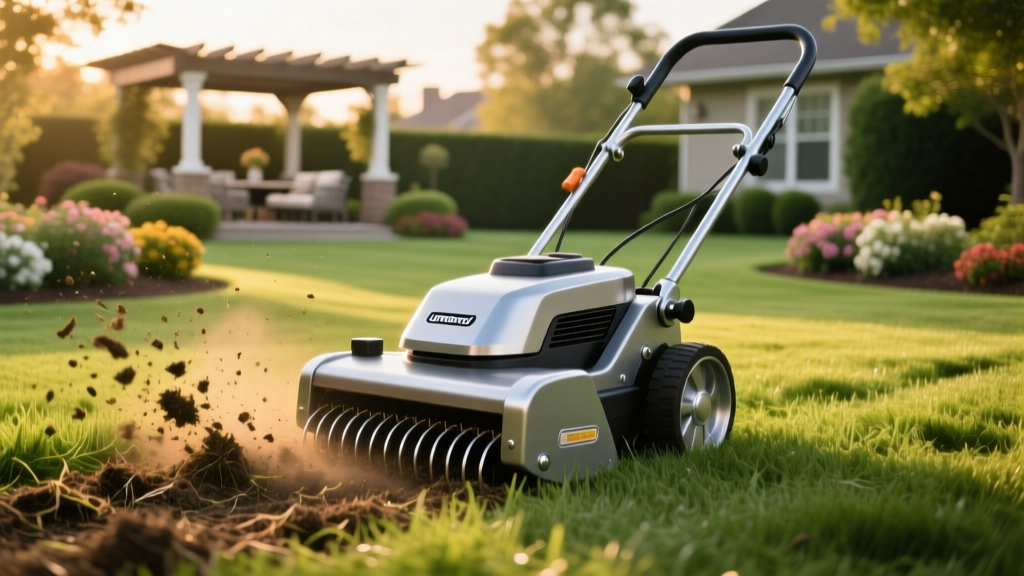
Walk Behind Power Rake: Selection, Specs, and Maintenance
The Mechanics of Turf Preparation
A walk behind power rake is a high-torque, rotary turf renovator designed to aggressively remove thatch, level soil, and prepare seedbeds. Unlike manual dethatching rakes or passive tow-behind spring tine units, a powered walk-behind model utilizes a high-speed rotor (typically spinning at 1,800 to 2,400 RPM) equipped with steel flails or tines to physically fracture the soil surface and eject organic debris. According to turfgrass specialists at Penn State Extension, mechanical power raking is critical when thatch layers exceed 0.5 inches, as it restores water infiltration and gas exchange to the root zone without the severe soil compaction associated with heavy rolling.
Selecting the correct machine requires matching the rotor configuration, engine displacement, and drive system to your specific agronomic goals. Maintenance, meanwhile, hinges on strict adherence to rotor bearing lubrication and belt tension tolerances to prevent catastrophic failure during high-load operations.
Core Specifications and Selection Matrix
When evaluating equipment, commercial landscapers must look beyond basic deck width. The engine's torque curve and the drive mechanism dictate whether the machine will bog down in dense Kentucky bluegrass or glide smoothly through sandy loam.
| Specification | Prosumer / Light Commercial | Heavy Commercial / Renovation |
|---|---|---|
| Working Width | 16 - 18 inches | 18 - 20 inches |
| Engine Platform | Honda GX270 (8.4 HP) or equivalent | Honda GX390 (11.7 HP) or Vanguard 14 HP |
| Drive System | Mechanical belt-driven single speed | Hydrostatic or multi-speed gear drive |
| Rotor Flail Count | 32 - 40 free-swinging flails | 44 - 48 fixed or heavy-duty flails |
| Weight | 180 - 240 lbs | 280 - 360 lbs |
Flail vs. Spring Tine: Agronomic Decision Framework
The rotor head configuration determines the aggressiveness of the soil fracture. Choosing incorrectly can either fail to penetrate the thatch layer or destroy the existing turf crown.
Free-Swinging Flails (The Standard for Renovation)
Free-swinging flails are mounted on a pivot pin, allowing them to retract slightly when they strike immovable objects like rocks or shallow irrigation heads. This is the mandatory choice for complete lawn renovations, overseeding prep, and heavy thatch removal. The kinetic energy of the swinging steel slices through the mat layer and creates 1/8-inch grooves in the soil, providing ideal seed-to-soil contact.
Fixed Flails (The Soil Pulverizer)
Fixed flails do not pivot. They are bolted rigidly to the rotor. These are used almost exclusively for bare-ground seedbed preparation and soil leveling on new construction sites. Using fixed flails on an established lawn will severely damage the turf crown and tear out healthy root systems.
Spring Tines (The Light Dethatcher)
Spring tine rotors use flexible, thick-gauge wire tines. They are appropriate only for annual spring cleanup and light thatch management (under 0.25 inches) on delicate grasses like fine fescues or bentgrass. They lack the mass to fracture compacted soil.
2026 Commercial Model Pricing and Performance
Equipment pricing has stabilized following supply chain fluctuations, but premium hydrostatic models command a significant premium due to their reduced operator fatigue and precise ground-speed control.
- Billy Goat PR1800H (Hydrostatic): Retailing between $4,800 and $5,300, this is the industry benchmark. The hydrostatic drive allows infinite speed adjustments without stopping, which is critical when transitioning from thick thatch patches to bare soil. It features a 20-inch working width and a 14 HP Vanguard engine.
- Classen PR-18H: Priced around $3,900 to $4,300. Classen utilizes a robust mechanical gear drive rather than hydrostatic, which reduces long-term hydraulic maintenance but requires the operator to fully disengage the clutch to change ground speed.
- Redmax PR18H: Coming in at $3,400 to $3,700, this is a high-value prosumer option. It uses an 11.7 HP Honda GX390 and a belt-driven transmission. Excellent for landscapers doing fewer than 15 renovations a year.
The 5-Point Maintenance and Calibration Protocol
Power rakes operate under extreme vibrational and particulate stress. Neglecting the drivetrain and rotor assembly leads to rapid bearing seizure and belt shredding. Follow this protocol every 50 operating hours.
- Rotor Bearing Lubrication: The main rotor shaft rides on two heavy-duty pillow block bearings. Grease these fittings every 10 hours using an NLGI #2 lithium-complex grease (e.g., Mobilith SHC 100). Purge until fresh grease slightly weeps from the seal lips to expel abrasive silica dust.
- Drive Belt Tensioning: The primary V-belt transferring power from the engine to the rotor must have exactly 1/2 inch of deflection when pressed with 3 lbs of force at the midpoint. A loose belt will slip and glaze under load; an overtightened belt will destroy the engine crankshaft bearing.
- Gauge Wheel Calibration: The front gauge wheels dictate flail depth. For overseeding prep, set the wheels so the flail tips hover exactly 1/8 inch above the soil surface. For aggressive thatch removal, lower the wheels to allow the flails to penetrate 1/4 inch into the mat layer. Never let the flail pivot pins strike the dirt.
- Flail Pivot Pin Inspection: Remove the rotor side-plates and inspect the pivot pins holding the flails. If the pin diameter is worn down by more than 1/16 inch, or if the flail hole is elongated into an oval, replace the pins and flails immediately. Worn pins cause severe rotor imbalance, which vibrates the machine violently and cracks the chassis welds.
- Engine Valve Clearance: The Honda GX390 requires intake and exhaust valve clearance checks every 300 hours. Set intake to 0.15 mm (0.006 in) and exhaust to 0.20 mm (0.008 in). Improper clearance leads to hard starting and burned exhaust valves under heavy load.
WARNING: Rotor Engagement Safety
Never engage the rotor clutch while the machine is stationary. The flails will immediately dig into the soil, stall the engine, and potentially snap the drive belt or shear the rotor clutch key. Always engage the rotor at a low idle while the machine is moving forward.
Never engage the rotor clutch while the machine is stationary. The flails will immediately dig into the soil, stall the engine, and potentially snap the drive belt or shear the rotor clutch key. Always engage the rotor at a low idle while the machine is moving forward.
Troubleshooting Common Mechanical Failure Modes
When the machine deviates from normal operation, use this diagnostic matrix to identify the root cause before it cascades into a major repair.
| Symptom | Probable Cause | Corrective Action |
|---|---|---|
| Machine pulls aggressively to one side | Uneven gauge wheel height or worn flails on one side of the rotor. | Measure and equalize gauge wheel spacers. Replace flails in complete sets, not individually. |
| High-pitched squealing under load | Glazed drive belt or misaligned engine pulley. | Replace the V-belt. Use a straight-edge to verify pulley alignment. Apply belt dressing only as a temporary fix. |
| Excessive vibration shaking the handles | Rotor imbalance due to missing flails, mud packed inside the rotor drum, or worn pillow block bearings. | Clean the rotor drum interior. Ensure all 48 flails are present and of equal weight. Check bearings for lateral play. |
| Engine bogs down or stalls in thick thatch | Ground speed too fast, or air filter clogged with fine organic dust. | Reduce hydrostatic ground speed. Clean or replace the dual-stage air filter. Check carburetor main jet for debris. |
Proper selection and rigorous maintenance of a walk behind power rake transform it from a simple dethatcher into a precision soil-fracturing instrument. By matching the flail type to the agronomic need and adhering to strict mechanical tolerances, turf professionals can guarantee optimal seedbed conditions and extend the operational lifespan of their equipment well beyond the standard depreciation cycle. For ongoing turf management strategies, refer to the comprehensive lawn renovation guidelines provided by Penn State Turfgrass Science and the equipment engineering standards detailed by Billy Goat Industries.

