
Lawn Care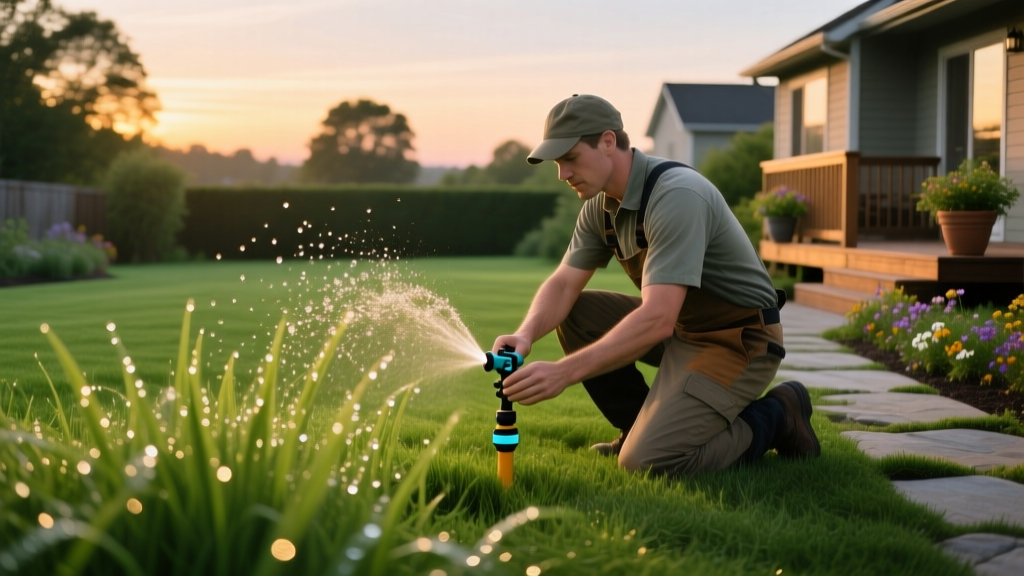
Watering Grass at Night: Step-by-Step Evening Lawn Care Routine
The Pathology of Turfgrass Respiration and Nighttime Moisture
Managing grass at night requires a strict understanding of turfgrass pathology and evapotranspiration rates. The most common mistake homeowners make is scheduling irrigation or performing maintenance after sunset. When grass blades remain wet for extended periods, it creates an ideal microclimate for fungal pathogens. Turfgrass pathologists measure this using Leaf Wetness Duration (LWD). Pathogens like Rhizoctonia solani (Brown Patch) and Pythium aphanidermatum (Pythium Blight) require 10 to 14 hours of continuous LWD to germinate and infect leaf tissue.
Pathology Warning: If you water your lawn at 9:00 PM, the grass will remain wet until the sun dries it around 10:00 AM the next day. This 13-hour LWD window practically guarantees fungal outbreaks in warm-season grasses during high-humidity summer months.
To maintain a healthy lawn, nighttime procedures must focus on automated, pre-dawn irrigation and targeted evening chemical applications, completely avoiding physical turf disturbance like mowing or heavy foot traffic.
Step-by-Step: Programming Late-Night Irrigation Cycles
The only acceptable time to introduce water to your lawn at night is between 4:00 AM and 5:30 AM. This ensures the soil profile is hydrated right before peak evapotranspiration begins at sunrise, while minimizing LWD. Modern smart controllers utilizing the Matter over Thread protocol (standard in 2026 smart home ecosystems) make this precise scheduling effortless.
Step 1: Audit Your Zone Output
Before programming, you must know your exact precipitation rate. Place 3 to 5 straight-sided catch cups (or standard tuna cans) across a single irrigation zone. Run the zone for exactly 15 minutes. Measure the water depth in each cup with a ruler, calculate the average, and multiply by 4 to determine your hourly precipitation rate in inches per hour (IPH).
Step 2: Configure the Smart Controller
Using a Wi-Fi-enabled controller like the Rachio 3e (approx. $229) or the Hunter Hydrawise Pro-HC ($315), navigate to your zone settings.
- Start Time: Set the primary start time to 4:00 AM.
- Cycle and Soak: If your soil is heavy clay (infiltration rate below 0.5 inches/hour), enable Cycle and Soak. Split a 30-minute run time into three 10-minute cycles with 30-minute soak pauses to prevent runoff.
- Weather Intelligence: Enable hyper-local ET (evapotranspiration) skip features. The controller will automatically adjust run times based on local solar radiation and wind data.
Step 3: Set Seasonal Adjustments
According to the University of Minnesota Extension, lawns generally require 1 to 1.5 inches of water per week during peak summer. Program your 4:00 AM schedule to deliver 0.5 inches per session, running three days a week (e.g., Monday, Wednesday, Friday). Deep, infrequent pre-dawn watering forces turfgrass roots to grow deeper into the soil profile, increasing drought tolerance.
Why Mowing Grass at Night Causes Catastrophic Turf Failure
While watering grass at night (specifically pre-dawn) is a calculated procedure, mowing grass at night is an absolute failure of lawn care protocol. Nighttime mowing introduces severe mechanical and biological stress to the turf.
| Time of Day | Turf Moisture State | Clipping Behavior | Disease Risk | Verdict |
|---|---|---|---|---|
| Mid-Morning (8 AM - 10 AM) | Dew has evaporated; blades are dry. | Disperses evenly; no clumping. | Lowest (cuts heal quickly in sunlight). | Optimal |
| Late Afternoon (4 PM - 6 PM) | Dry; temperatures cooling. | Disperses evenly. | Low (gives turf 12 hours to heal before dew). | Acceptable |
| Evening (7 PM - 9 PM) | Dew beginning to form. | Clumps heavily; blocks sunlight to crown. | High (open cuts exposed to immediate moisture). | Poor |
| Night (10 PM - 4 AM) | Heavy dew; maximum turgor pressure. | Tears and shreds; severe clumping. | Extreme (pathogens enter ragged cuts instantly). | Critical Failure |
At night, grass blades are fully turgid (swollen with water). Mowing turgid grass results in tearing rather than clean shearing. These ragged, torn leaf tips lose moisture rapidly the next day and serve as direct entry points for Dollar Spot (Clarireedia jacksonii) spores. Furthermore, night mowing scatters wet clumps of clippings that smother the turf crown, blocking sunlight and promoting rot.
Evening Fungicide Application Protocols
There is one specific lawn maintenance procedure where working on grass at night—or more accurately, late evening—is highly advantageous: applying certain granular systemic fungicides.
Pro Tip: Applying granular fungicides like Scotts DiseaseEx (Active ingredient: Azoxystrobin 0.31%) between 7:00 PM and 9:00 PM allows the product to settle into the turf canopy without immediate UV degradation. When your automated 4:00 AM irrigation cycle runs, it washes the active ingredient directly into the root zone and lower stem area where crown-infecting pathogens reside.
Application Steps:
- Calculate Area: Measure your lawn's exact square footage. DiseaseEx requires 2.5 pounds per 1,000 square feet for preventative Brown Patch control.
- Calibrate Spreader: Set your broadcast spreader (e.g., Scotts Elite Spreader) to the setting specified on the bag (typically setting 5.5).
- Apply at Dusk: Walk at a steady pace of 3 feet per second, overlapping each pass by 2 feet to ensure uniform coverage.
- Water-In: Ensure your smart controller is scheduled to deliver exactly 0.25 inches of water at 4:00 AM to activate the granules without causing runoff.
Troubleshooting Nighttime Lawn Care Mistakes
If you have previously mismanaged your lawn at night, you may be dealing with the aftermath. Use this diagnostic table to identify and correct nighttime-induced turf issues.
| Symptom | Likely Cause | Corrective Action Protocol |
|---|---|---|
| Circular brown patches with dark, smoky-gray webbing in the early morning. | Pythium Blight triggered by 9 PM watering extending LWD past 12 hours. | Halt all irrigation for 48 hours. Apply a contact fungicide containing Mancozeb immediately. Shift all future watering to 4:00 AM. |
| Ragged, yellowing grass tips with white, cobweb-like mycelium on clippings. | Mowing wet grass at night; spreading Snow Mold or Dollar Spot via mower deck. | Sharpen mower blades to 30-degree bevel. Wash mower deck with a 10% bleach solution. Apply Propiconazole 14.3 at 2 oz per 1,000 sq ft. |
| Puddling and runoff on driveways during pre-dawn irrigation cycles. | Zone run-times exceed soil infiltration rates; lack of Cycle and Soak programming. | Enable Cycle and Soak on the smart controller. Split the run time into 3 shorter intervals with 45-minute pauses between each. |
For comprehensive data on identifying specific turfgrass diseases linked to improper moisture management, refer to the diagnostic resources provided by the Purdue University Turfgrass Extension. Proper timing and automated precision are the only ways to safely interact with your lawn during nighttime hours.
Expert Nighttime Lawn Care Checklist
- Never mow, aerate, or dethatch after the sun goes down.
- Always schedule irrigation between 4:00 AM and 5:30 AM.
- Use catch-cups to verify exact precipitation rates before programming smart controllers.
- Apply granular systemic fungicides in the late evening so the pre-dawn irrigation cycle can water them into the root zone.
- Monitor local dew points; if nighttime humidity exceeds 85%, reduce irrigation frequency to prevent LWD fungal triggers.

