
Lawn Care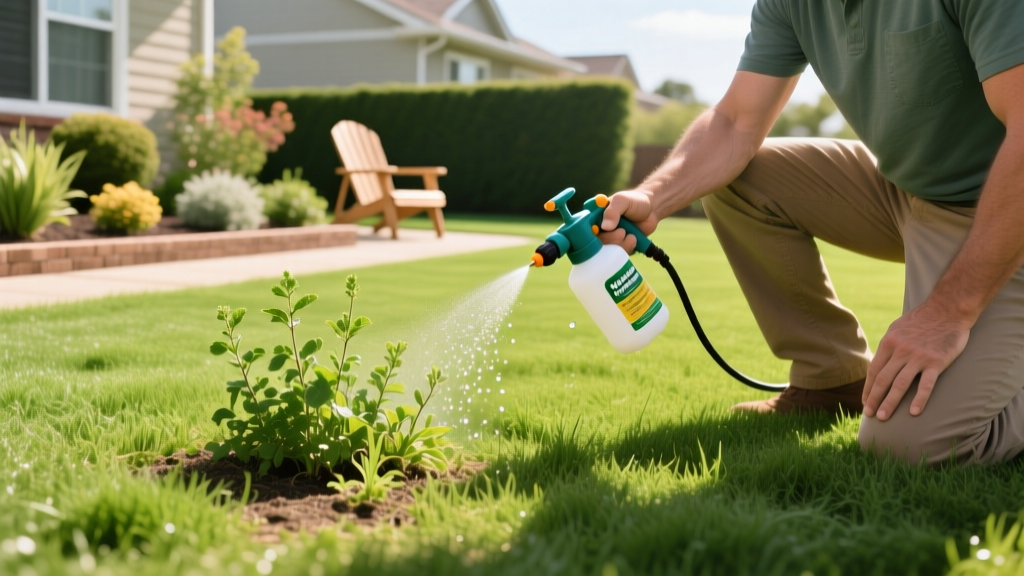
Adapting Weed and Feed Instructions for Targeted Spot Treatments
The Fundamental Flaw in Broadcast Weed and Feed Instructions
When homeowners discover a cluster of dandelions or a patch of white clover, the immediate instinct is to grab the bag of granular weed and feed sitting in the garage. However, standard weed and feed instructions are engineered strictly for broadcast application across the entire turf canopy, not for localized spot treatments. Attempting to adapt broadcast rates for a 20-square-foot weed cluster inevitably leads to severe nitrogen burn, herbicide toxicity, and long-term soil imbalance.
The core issue lies in the physical composition of the product. A standard 14-pound bag of granular weed and feed—such as Scotts Turf Builder Weed & Feed (retailing around $38 in 2026)—contains approximately 90% nitrogen fertilizer and less than 2% active herbicide by weight. The label instructs you to apply 2.5 to 3.5 pounds per 1,000 square feet. If you attempt to isolate a small patch of weeds and apply a handful of granules directly to them, you are delivering a massive, uncalibrated overdose of fast-release nitrogen (often urea or ammonium sulfate) that will scorch the surrounding desirable grass within 48 hours.
Warning: The Granular Dissolution Myth
A common internet hack suggests dissolving granular weed and feed in water to create a liquid spot spray. Do not do this. The fertilizer salts will not fully dissolve, creating a sludge that clogs sprayer nozzles. Furthermore, many modern granular herbicides are coated in polymer binders designed to stick to wet weed leaves upon broadcast spreading; they are not formulated for aqueous suspension. Always refer to the EPA guidelines on reading pesticide labels to verify if a product is water-soluble before attempting to mix it.
A common internet hack suggests dissolving granular weed and feed in water to create a liquid spot spray. Do not do this. The fertilizer salts will not fully dissolve, creating a sludge that clogs sprayer nozzles. Furthermore, many modern granular herbicides are coated in polymer binders designed to stick to wet weed leaves upon broadcast spreading; they are not formulated for aqueous suspension. Always refer to the EPA guidelines on reading pesticide labels to verify if a product is water-soluble before attempting to mix it.
Deconstructing the Bag: Active Ingredients vs. Filler
To successfully treat specific weed species without destroying your lawn, you must separate the 'feed' from the 'weed'. Understanding the active ingredients in your weed and feed allows you to purchase liquid concentrates that mirror those exact herbicides, eliminating the fertilizer burn risk entirely.
The Standard Three-Way Herbicide Profile
Most broadleaf weed and feeds rely on a 'three-way' herbicide blend. When you read the fine print on the back of the bag, you will typically find:
- 2,4-D (0.72% - 1.20%): A synthetic auxin that causes uncontrolled growth in broadleaf weeds, ultimately killing them. Highly effective on dandelions and plantain.
- Mecoprop-p / MCPP (0.36% - 0.60%): Targets tough, waxy-leafed weeds like chickweed and knotweed.
- Dicamba (0.18% - 0.30%): Crucial for creeping, stoloniferous weeds like white clover and ground ivy.
Species-Specific Spot Treatment Protocols
Instead of using granular weed and feed, transition to a liquid concentrate that utilizes the same active ingredients. Products like Ortho WeedClear or Bayer BioAdvanced Southern Weed Killer cost between $15 and $22 for a 32-ounce bottle and are explicitly formulated for liquid spot treatments.
Protocol 1: Dandelions and Broadleaf Plantain (Deep Taproots)
Dandelions (Taraxacum officinale) possess a deep taproot that can extend 10 to 15 inches into the soil. If the top is killed but the root remains, the weed will regenerate.
- Preparation: Mow the lawn 24 hours before treatment to allow the weed's rosette of leaves to expand and capture maximum spray surface area.
- Mixing: Mix 2 fluid ounces of a 2,4-D + Dicamba liquid concentrate per 1 gallon of water. This covers approximately 500 square feet, but for spot treatment, only mix what you need (e.g., 0.5 fl oz per 1 quart of water).
- Application: Use a handheld pump sprayer with a fan-nozzle tip. Spray the dandelion until the leaves are visibly wet, but not dripping. The liquid must remain on the leaf surface for at least 24 hours to translocate down to the taproot.
- Surfactant Addition: Add 1/4 teaspoon of non-ionic surfactant (or a single drop of plain blue Dawn dish soap) per quart of water. This breaks the surface tension on the waxy dandelion leaf, increasing herbicide absorption by up to 40%.
Protocol 2: White Clover (Stoloniferous Spread)
White clover (Trifolium repens) spreads via above-ground stolons. Spot treating only the visible center of the clover patch will fail, as the peripheral nodes will continue to root.
- Targeting: You must spray a 6-inch buffer zone around the visible perimeter of the clover patch to catch hidden, newly rooting stolons.
- Herbicide Requirement: Ensure your liquid concentrate contains Dicamba. 2,4-D alone is largely ineffective against mature clover. According to Michigan State University Extension, fall applications of Dicamba-based herbicides are vastly superior because the plant is actively pulling nutrients (and herbicide) down into its root system for winter storage.
Granular Weed and Feed vs. Liquid Spot Concentrates
When deciding how to allocate your lawn care budget, compare the efficacy and cost of broadcast granular applications versus targeted liquid spot treatments.
| Feature | Granular Weed & Feed (Broadcast) | Liquid Three-Way Concentrate (Spot) |
|---|---|---|
| Primary Use Case | Lawns with >30% broadleaf weed coverage | Lawns with <10% isolated weed clusters |
| Cost per 5,000 sq ft | $12.00 - $15.00 | $3.00 - $5.00 |
| Risk of Fertilizer Burn | Low (if calibrated correctly) | Zero (No nitrogen content) |
| Application Requirement | Wet grass (for granule adhesion) | Dry grass, no rain for 24 hours |
| Grassy Weed Efficacy | Poor (unless Quinclorac is added) | Poor (requires specific grassy herbicides) |
Addressing the Grassy Weed Blind Spot
The most critical limitation of standard weed and feed instructions is their complete ineffectiveness against grassy weeds like crabgrass (Digitaria) and goosegrass (Eleusine indica). Because these weeds are biologically similar to your desirable turfgrass, the 2,4-D and Dicamba herbicides in standard weed and feeds cannot differentiate between the weed and the lawn.
If your spot-treatment target is crabgrass, you must abandon the three-way herbicide profile entirely. Instead, purchase a liquid concentrate containing Quinclorac (such as Bayer BioAdvanced All-in-One Lawn Weed & Crabgrass Killer). Quinclorac is a synthetic auxin specifically engineered to target grassy weeds without harming cool-season turfgrasses like Kentucky Bluegrass or Fescue. Apply at a rate of 1.5 fluid ounces per gallon of water, targeting the crabgrass during its early vegetative stage (1 to 3 tillers) for maximum efficacy.
Environmental Constraints and Temperature Thresholds
Spot treatments require strict adherence to environmental parameters. The active ingredients in weed and feeds are highly susceptible to volatilization—meaning the herbicide turns into a gas and drifts onto non-target plants, causing severe damage to nearby ornamental shrubs, tomato plants, and flower beds.
The 85°F Volatilization Rule
Never apply 2,4-D or Dicamba-based spot treatments when ambient temperatures exceed 85°F, or if temperatures are forecasted to breach 85°F within 48 hours of application. High heat causes the herbicide to vaporize and drift. If you must treat weeds in mid-summer, apply the liquid concentrate in the early evening when temperatures drop below 80°F and winds are calm (< 5 mph). For detailed regional timing, consult your local university extension office, such as the Texas A&M AgriLife Extension turfgrass guidelines.
Never apply 2,4-D or Dicamba-based spot treatments when ambient temperatures exceed 85°F, or if temperatures are forecasted to breach 85°F within 48 hours of application. High heat causes the herbicide to vaporize and drift. If you must treat weeds in mid-summer, apply the liquid concentrate in the early evening when temperatures drop below 80°F and winds are calm (< 5 mph). For detailed regional timing, consult your local university extension office, such as the Texas A&M AgriLife Extension turfgrass guidelines.
Post-Treatment Maintenance
After executing a liquid spot treatment, do not mow the lawn for at least 48 hours. Mowing too soon removes the treated leaf surface before the systemic herbicide has had time to translocate to the root zone. Furthermore, avoid irrigating the lawn for 24 hours post-application to prevent washing the herbicide off the weed's foliage and into the soil profile, where it is significantly less effective against broadleaf species.

