
Lawn Care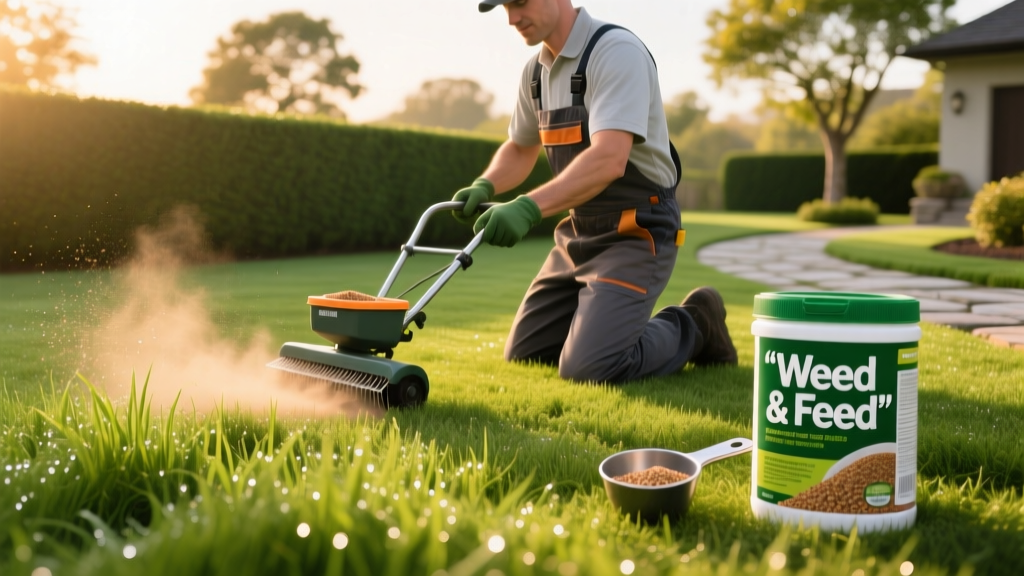
How Long Does Weed and Feed Take to Work? Timeline, Dosage and Costs
The Short Answer: Granular vs. Liquid Timelines
The timeline for weed and feed to work depends entirely on the formulation you choose. Liquid herbicides show visible results in 2 to 4 days, while granular products take 10 to 14 days to show initial wilting and up to 28 days for complete root death. However, these timelines are strictly contingent on applying the exact dosage required for your specific turfgrass and weed species. Under-dosing delays results and breeds herbicide resistance; over-dosing causes severe fertilizer burn without accelerating the weed kill rate.
Quick Timeline Summary
- Liquid Formulations: 24-48 hours for epinasty (stem twisting), 7-14 days for complete necrosis (death).
- Granular Formulations: 10-14 days for leaf curling, 21-28 days for complete root system failure.
- Fertilizer Response (Both): 5-7 days for visible turf greening and accelerated growth.
How Dosage and Coverage Rates Dictate Your Timeline
Many homeowners assume that applying more product will speed up the timeline. This is a critical error. Weed and feed products combine broadleaf herbicides (typically 2,4-D, Dicamba, and Mecoprop) with high-nitrogen fertilizers (often a 28-0-06 or 32-0-04 N-P-K ratio). If you exceed the labeled coverage rate to "speed things up," the excess nitrogen salts will desiccate your turfgrass roots, causing chemical burn before the herbicide has time to translocate to the weed's root system.
According to the Environmental Protection Agency (EPA), pesticide labels are legally binding documents. The dosage rates printed on the bag are calibrated to deliver exactly enough active ingredient to disrupt the weed's cellular growth without overwhelming the surrounding desirable grass.
2026 Coverage and Cost Breakdown by Top Brands
Understanding the true cost of your application requires looking at the price per 1,000 square feet, not just the upfront retail price of the bag or bottle. Liquid concentrates often appear cheaper at the register but carry a significantly higher cost per square foot of coverage compared to granular options.
| Product Type & Brand | Active Ingredients | Coverage Area | Avg. Retail Cost | Cost per 1k sq ft |
|---|---|---|---|---|
| Scotts Turf Builder Weed & Feed3 (Granular) | 2,4-D, Mecoprop, Dicamba | 15,000 sq ft | $44.99 | $3.00 |
| Lesco Professional Weed & Feed (Granular) | 2,4-D, Triclopyr, Dicamba | 15,000 sq ft | $49.50 | $3.30 |
| BioAdvanced 3-in-1 Weed & Feed (Liquid Conc.) | 2,4-D, Dicamba, Quinclorac | 5,000 sq ft | $28.99 | $5.80 |
| Ortho WeedClear (Ready-to-Spray Liquid) | 2,4-D, Dicamba, MCPP | 5,000 sq ft | $18.50 | $3.70 |
Note: Liquid concentrates that include Quinclorac (like BioAdvanced) are more expensive but are necessary if you are targeting crabgrass alongside broadleaf weeds, as standard 2,4-D blends will not affect grassy weeds.
The "Bounce-Off" Effect: Why Granular Applications Fail
The most common reason homeowners search for "why isn't my weed and feed working" after 14 days is a phenomenon turfgrass scientists call the bounce-off effect. Granular herbicides are coated onto fertilizer prills. For the herbicide to work, the prill must physically stick to the broadleaf weed's foliage long enough to dissolve and penetrate the leaf cuticle.
If you apply granular weed and feed to a completely dry lawn on a hot afternoon, the prills will bounce off the waxy cuticle of dandelions and clover, landing harmlessly in the soil. Once in the soil, the herbicide component is largely deactivated, and only the fertilizer feeds the weed's root system. To ensure the 10-14 day timeline holds true, you must apply granular products when the weeds are damp.
Dosage Decision Framework: When to Switch to Liquid
If your lawn has a severe weed infestation (more than 30% weed coverage), granular weed and feed is the wrong tool. The University of Minnesota Extension recommends spot-treating heavy infestations with a dedicated liquid post-emergent herbicide first, waiting 14 days for the weeds to die, and then applying a standalone fertilizer. Weed and feed is designed for maintenance (10% or less weed coverage), not renovation.
Environmental Variables That Delay Results
Even with perfect dosage and coverage, environmental factors can stretch the timeline by an additional 7 to 10 days. Monitor these three variables:
- Temperature Thresholds: Systemic herbicides like 2,4-D require active weed growth to translocate from the leaf to the root. If daytime temperatures are below 55°F or above 85°F, the weed's metabolism slows down, stalling the herbicide's movement. Ideal application windows are when temperatures are consistently between 65°F and 80°F.
- Soil Moisture Levels: Weeds under drought stress develop thicker, more waxy leaf cuticles to retain water. This physical barrier blocks herbicide absorption. Always irrigate your lawn 24 hours before applying weed and feed to ensure the weeds are actively growing and hydrated.
- Mowing Timing: Mowing immediately before or after application removes the leaf surface area required for absorption. Wait at least 48 hours after application before mowing to allow the chemical to fully enter the plant's vascular system.
Step-by-Step Application for Maximum Efficiency
To guarantee the product works within the expected timeframe and to maximize your cost-per-square-foot investment, follow this exact application sequence:
- Step 1: Calibration. Calibrate your rotary spreader to the exact setting listed on the bag for your specific grass type. St. Augustinegrass requires a lower dosage rate than Kentucky Bluegrass to avoid chemical burn.
- Step 2: Timing the Moisture. Apply granular products in the early morning when dew is present, or lightly water the lawn 12 hours prior. The foliage must be damp, but not so wet that the granules wash straight into the soil.
- Step 3: The Perimeter Pass. Walk the perimeter of your lawn first to create a turning boundary, then walk in straight, overlapping lines. Overlapping by 2 inches prevents "striping" (missed rows where weeds survive).
- Step 4: The 48-Hour Rule. Do not water the lawn for 48 hours after application. The granules need time to dissolve off the leaf surface and absorb into the plant tissue. Watering too soon washes the herbicide into the soil, rendering it useless against broadleaf weeds.
FAQ: Troubleshooting Delayed Results
It has been 21 days and the weeds are still alive. What went wrong?
If the weeds showed initial curling but then recovered, you likely under-dosed the area or applied during a temperature extreme. The Texas A&M AgriLife Extension notes that partial kills occur when the herbicide dose is too low to reach the taproot. Do not reapply weed and feed immediately; the excess nitrogen will burn your grass. Instead, spot-treat the surviving weeds with a dedicated liquid herbicide containing Quinclorac or Triclopyr.
Can I apply a second dose to speed up the kill?
No. Applying a second dose of weed and feed within a 30-day window will almost certainly cause severe nitrogen burn to your turfgrass. The fertilizer component is the limiting factor. If the first application failed due to environmental factors, wait 30 days and switch to a standalone liquid herbicide without added fertilizer.
Does weed and feed kill crabgrass?
Standard granular weed and feed products (using 2,4-D and Dicamba) only kill broadleaf weeds like dandelions, clover, and chickweed. They will not kill grassy weeds like crabgrass or nutsedge. To target crabgrass, you must purchase a specific formulation that includes Quinclorac as an active ingredient, or use a pre-emergent herbicide in early spring before crabgrass seeds germinate.

