
Lawn Care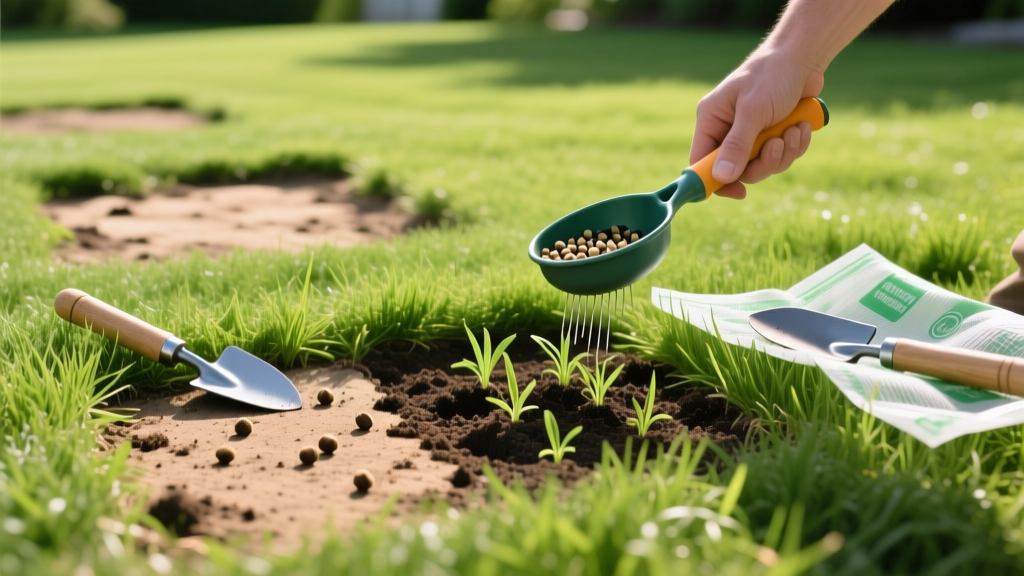
Weed and Seed Spot-Treatment Guide for Lawn Bare Spots
The Biological Conflict of Lawn Renovation
The "weed and seed" dilemma is one of the most frustrating paradoxes in lawn care. Homeowners want to eradicate invasive weeds while simultaneously overseeding bare patches, but the chemical mechanisms required to kill weeds often destroy fragile new grass seedlings. Post-emergent herbicides disrupt cellular division or mimic plant hormones, which is lethal to germinating seeds. Pre-emergent herbicides create a chemical barrier that stops crabgrass but also prevents your expensive turfgrass seed from sprouting.
To successfully execute a weed and seed strategy, you must abandon broadcast spraying and adopt a micro-targeted spot-treatment protocol. By understanding the active ingredients in your herbicides and their specific soil half-lives, you can safely transition from weed eradication to seed germination without sacrificing either. According to the Penn State Extension Turfgrass Program, timing and active ingredient selection are the primary determinants of success in localized lawn repair.
The Herbicide-to-Seed Timing Matrix
Not all weed killers are created equal. The wait time between applying a spot-treatment herbicide and laying down grass seed varies wildly based on the chemical's residual activity in the soil. Below is the definitive 2026 timing matrix for common spot-treatment active ingredients.
| Active Ingredient | Target Weeds | Wait Time to Seed | Safe at Seeding? |
|---|---|---|---|
| Mesotrione (Tenacity) | Broadleaf & Grassy | 0 days | Yes (Cool-Season) |
| 2,4-D + Dicamba + MCPP | Broadleaf Only | 14 to 30 days | No |
| Glyphosate (Roundup) | Non-Selective | 3 to 7 days | No |
| Quinclorac (Drive XLR8) | Crabgrass & Broadleaf | 14 to 21 days | No |
| Prodiamine (Pre-emergent) | Crabgrass (Prevention) | 4 to 6 months | No |
Spot-Treating Broadleaf Weeds Before Seeding
If your bare spots are surrounded by broadleaf weeds like dandelions, clover, or plantain, you must eliminate the competition before seeding. Standard three-way herbicides (2,4-D, Dicamba, and MCPP) are highly effective but leave a toxic residual in the top inch of soil. If you spray a patch of clover with a standard broadleaf killer today, you cannot safely seed that exact spot for at least three to four weeks.
The Pro Workaround: Use a shielded sprayer or a sponge applicator to apply the herbicide strictly to the weed foliage, avoiding soil contact. Alternatively, manually extract broadleaf weeds using a stand-up weeder (like the Fiskars Stand-Up Weeder, typically priced around $35) to remove the taproot without introducing chemical residuals into the seeding zone.
Spot-Treating Grassy Weeds: The Mesotrione Advantage
Grassy weeds like crabgrass, Poa annua, and dallisgrass are the ultimate enemy of the weed and seed strategy because selective herbicides that kill them often harm desirable turfgrass. This is where Mesotrione (sold under the brand name Tenacity) revolutionizes spot repair for cool-season lawns (Kentucky Bluegrass, Tall Fescue, and Perennial Ryegrass).
Mesotrione inhibits the HPPD enzyme, causing susceptible weeds to bleach white and die within two to three weeks. Crucially, it is completely safe to apply on the exact same day you sow cool-season grass seed. It will even protect your new seedlings from emerging crabgrass as they germinate.
Expert Application Note: Mix Tenacity at a rate of 1/2 teaspoon per gallon of water to cover 1,000 square feet. Expect the targeted weeds to turn stark white before dying. Do not use Mesotrione on Bermudagrass, Zoysiagrass, or Bentgrass, as it will cause severe phytotoxicity to these warm-season or fine turf species.
Step-by-Step Weed and Seed Execution Protocol
Follow this precise sequence to ensure maximum seed-to-soil contact and zero chemical interference.
- Eradicate and Wait: Spot-treat the weeds using the appropriate herbicide from the matrix above. If using glyphosate or 2,4-D, wait the mandatory 14-30 days. If using Mesotrione, proceed immediately.
- Scarify the Soil: Use a metal bow rake or a manual scarifier to scratch the bare soil to a depth of 1/4 inch. Remove all dead weed debris. Seed cannot germinate on a thatch layer or compacted crust.
- Apply Starter Fertilizer: Use a high-phosphorus starter fertilizer (e.g., Scotts Turf Builder Starter Food 24-25-4, approx. $28 for 5,000 sq ft) to fuel rapid root development.
- Distribute Seed: Hand-broadcast the seed over the scarified patch. Aim for a density of 12 to 16 seeds per square inch. Overcrowding leads to fungal damping-off; under-seeding leaves room for new weeds.
- Topdress and Roll: Apply a 1/8-inch layer of peat moss or finely screened compost over the seed. Use a lightweight lawn roller (or simply walk over it with flat-soled shoes) to press the seed firmly into the soil grooves.
- Hydration Cycle: Water the spot 3 times a day for 5-10 minutes to keep the top 1/2 inch of soil perpetually moist until germination occurs (usually 7-14 days for TTTF and KBG).
The Pre-Emergent Trap: A Critical Warning
WARNING: If you applied a pre-emergent herbicide like Prodiamine or Dithiopyr in early spring to prevent crabgrass, you cannot seed bare spots until the chemical barrier degrades, typically in late summer or early fall. Pre-emergents do not distinguish between weed seeds and turfgrass seeds. Attempting a weed and seed repair in May on a lawn treated with Prodiamine in March will result in a 100% seed failure rate. The Texas A&M AgriLife Extension emphasizes that pre-emergent timing must dictate your entire annual seeding schedule.
Post-Seeding Weed Management
Once your new grass has germinated, it remains highly vulnerable. Do not apply any post-emergent herbicides to the new patch until the grass has been mowed at least three times. At that stage, the root system is established enough to handle selective herbicides.
If late-emerging crabgrass threatens your new spot, Quinclorac (Drive XLR8) is the safest option for mature cool-season grasses, but it must be applied at reduced rates for young turf. Always check the manufacturer's label for the exact "safe to seed" and "safe to spray seedlings" intervals, as formulation concentrations change between brands.
Frequently Asked Questions
Can I mix grass seed directly with a liquid herbicide and spray it?
No. Liquid herbicides require surfactants and specific water pH levels to adhere to weed foliage. Coating grass seed in herbicide will destroy the seed embryo. Always apply seed mechanically after the soil is prepped.
How do I handle nutsedge in a seeding zone?
Nutsedge requires Halosulfuron-methyl (SedgeHammer). This chemical has a residual soil life that can delay seeding. Spot-treat the nutsedge, wait at least 30 days, and heavily scarify the soil before attempting to seed the bare patch.

