
Lawn Care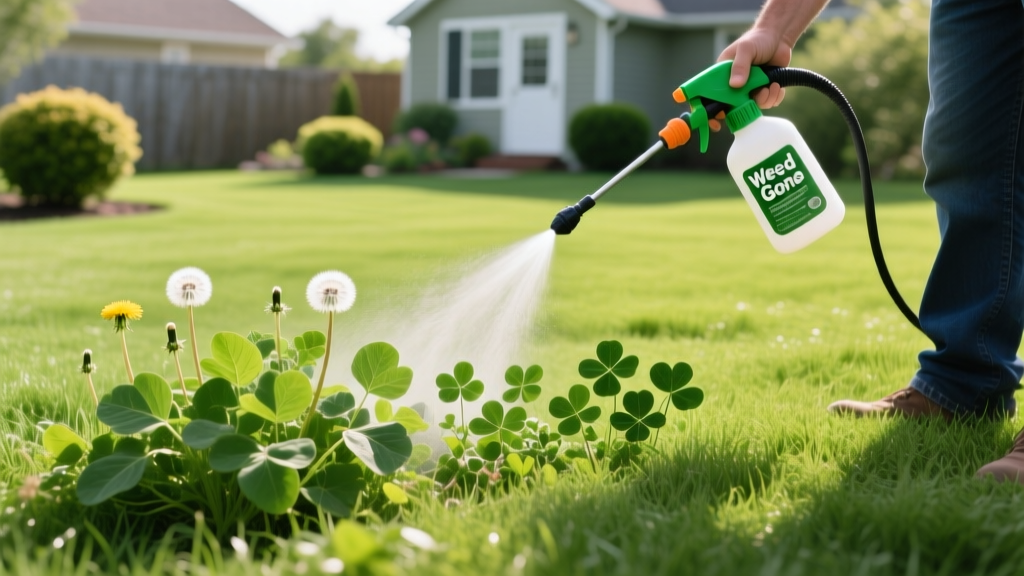
How to Spot-Treat Broadleaf Weeds Using Weed B Gone Spray
Understanding the Chemistry of Weed B Gone Sprays
Spot-treating broadleaf weeds requires a targeted approach that minimizes chemical use while maximizing root eradication. When homeowners refer to a weed b gone spray, they are typically referencing a class of selective, systemic broadleaf herbicides. The standard formulation relies on a three-way active ingredient profile designed to mimic plant growth hormones, causing susceptible weeds to grow uncontrollably until their cellular structure collapses.
The core active ingredients in standard formulations include:
- 2,4-D (2,4-Dichlorophenoxyacetic acid): The primary systemic agent that translocates through the phloem to destroy taproots. It is highly effective on dandelions and plantain.
- Mecoprop-p (MCPP): A secondary auxin herbicide that targets tough, low-growing weeds like white clover and chickweed that often resist 2,4-D alone.
- Dicamba: A fast-acting soil and foliar herbicide that provides rapid visible curling of weed leaves within 24 to 48 hours, accelerating the desiccation process.
According to the Environmental Protection Agency (EPA), 2,4-D is one of the most widely used herbicides in the United States, but its efficacy is entirely dependent on proper application timing and environmental conditions. Blanket spraying your entire lawn is rarely necessary; spot-treating individual weed clusters reduces chemical load by up to 80% while achieving identical aesthetic results.
The 85°F Volatility Rule: Avoiding Vapor Drift
⚠️ CRITICAL WARNING: Temperature Constraints
Never apply any weed b gone spray formulation when ambient temperatures exceed 85°F (29°C). At higher temperatures, the active ingredient Dicamba becomes highly volatile. It converts from a liquid into a vapor gas that can drift across your yard, causing severe cupping, yellowing, and stunting of nearby desirable plants, vegetable gardens, and ornamental shrubs. Always schedule spot-treatments for early morning or late evening when temperatures are between 65°F and 80°F.
Species-Specific Spot-Treatment Protocols
Not all broadleaf weeds absorb herbicides at the same rate. The physical structure of the weed's leaf cuticle dictates how you must prepare and apply the spray. Below is a breakdown of how to tackle the three most common lawn invaders.
Dandelions (Taraxacum officinale)
Dandelions possess a deep, brittle taproot that can extend up to 10 inches into compacted soil. If you only kill the crown, the weed will regenerate in weeks. To ensure the 2,4-D translocates fully to the root tip, do not mow your lawn for 48 hours before or 72 hours after application. The weed needs maximum leaf surface area to absorb the chemical and pull it down into the root zone. Apply the spray until the leaves are uniformly wet, but not to the point of runoff.
White Clover (Trifolium repens)
Clover features a waxy leaf cuticle that naturally repels water-based herbicides. If you are using a concentrate rather than a ready-to-spray hose-end bottle, you must add a Non-Ionic Surfactant (NIS) to your tank mix. Add 1 teaspoon of NIS per gallon of water. The surfactant breaks the surface tension of the spray droplets, allowing the chemical to spread flat across the clover leaf rather than beading up and rolling off onto the soil.
Broadleaf Plantain (Plantago major)
Plantain is notoriously resistant to standard applications due to its thick, ribbed, and heavily waxed leaves. Standard mixing rates will fail here. You must increase the concentrate mixing rate to the maximum label allowance (typically 4 oz per gallon of water) and heavily utilize a surfactant. Expect to apply a second follow-up treatment 14 days after the initial application to achieve total eradication.
Application Matrix: Rates and Surfactant Requirements
Use the following matrix to calibrate your pump sprayer based on the specific weed species you are targeting. Data aligns with standard University of Minnesota Extension turfgrass management guidelines for 3-way broadleaf herbicides.
| Weed Species | Mix Rate (Concentrate) | Surfactant Needed? | Expected Applications |
|---|---|---|---|
| Dandelion | 2 oz / gallon | No | 1 (Single Pass) |
| White Clover | 2 oz / gallon | Yes (1 tsp/gal) | 1 to 2 (14 days apart) |
| Broadleaf Plantain | 4 oz / gallon | Yes (2 tsp/gal) | 2 (14 days apart) |
| Wild Violet | N/A (Resistant) | N/A | Requires Triclopyr |
💡 Expert Note on Wild Violets:
Standard 2,4-D and Dicamba weed b gone sprays will not kill wild violets. Violets possess a unique biochemical resistance to synthetic auxins. If your lawn is heavily infested with wild violets, you must switch to a specialty herbicide containing Triclopyr or Carfentrazone-ethyl to achieve control.
Concentrate vs. Ready-to-Spray: Cost and Coverage Analysis
Homeowners often default to the convenient 32 oz Ready-To-Spray (RTS) hose-end bottles, but the economics and precision of spot-treating heavily favor liquid concentrates.
- 32 oz RTS Hose-End Bottle: Costs approximately $18 to $22. It covers roughly 5,000 square feet when broadcast sprayed. Cost per 1,000 sq ft is $3.60 to $4.40. Furthermore, hose-end sprayers are notoriously inaccurate for spot-treatment, often over-applying chemical to small areas.
- 1 Gallon Liquid Concentrate: Costs approximately $45 to $55. When mixed at 2 oz per gallon, one bottle yields 64 gallons of finished spray, covering up to 20,000 square feet. Cost per 1,000 sq ft drops to $2.25 to $2.75.
For spot-treating, a 1-gallon or 2-gallon handheld pump sprayer filled with concentrate allows you to use a pin-stream nozzle, applying the chemical exclusively to the weed rosette without wasting product on the surrounding desirable turfgrass.
Troubleshooting Common Application Failure Modes
If your weeds are not dying after application, you have likely triggered one of the following physiological or environmental failure modes:
- Spraying During Drought Stress: When soil moisture is low, weeds close their stomata (leaf pores) to conserve water. If the stomata are closed, the systemic herbicide cannot enter the plant tissue. Fix: Deeply irrigate your lawn 24 to 48 hours before applying the spray to ensure weeds are actively growing and absorbing moisture.
- Ignoring the Rainfast Window: While some labels claim rainfastness in 2 hours, 2,4-D and Mecoprop-p require a minimum of 6 hours to penetrate the leaf cuticle, and 24 hours for optimal translocation. Fix: Check the weather forecast and ensure zero precipitation for a full 24-hour window post-application.
- Mowing Too Soon: Cutting the grass removes the weed's leaf surface area before the chemical has reached the root crown. Fix: Set your mower blades high and avoid mowing for at least 3 days after treatment.
Frequently Asked Questions
Is weed b gone spray safe for all grass types?
Standard 3-way formulations are safe for most cool-season grasses (Kentucky Bluegrass, Tall Fescue, Perennial Ryegrass) and warm-season grasses (Bermudagrass, Zoysiagrass). However, applying these sprays to Centipedegrass or St. Augustinegrass can cause severe yellowing and stunting. If you have Centipede or St. Augustine, you must seek out a specialty formulation labeled specifically for those sensitive turf species, typically relying on Atrazine or Penoxsulam instead of 2,4-D.
How long does it take to see results?
You will notice the edges of the weed leaves beginning to curl and cup within 24 to 48 hours due to the Dicamba. Total plant collapse and browning typically take 10 to 14 days, depending on ambient temperatures and the size of the weed's root system. Do not reapply if the weed is still green after 5 days; allow the systemic process to complete.
Can I mix this with liquid fertilizer?
While tank-mixing with liquid nitrogen is a common commercial practice to push growth and force herbicide uptake, it is not recommended for DIY spot-treatments. High nitrogen rates can increase the risk of turf burn when combined with surfactants and herbicides, especially as seasonal temperatures begin to rise in late spring.

