
Lawn Care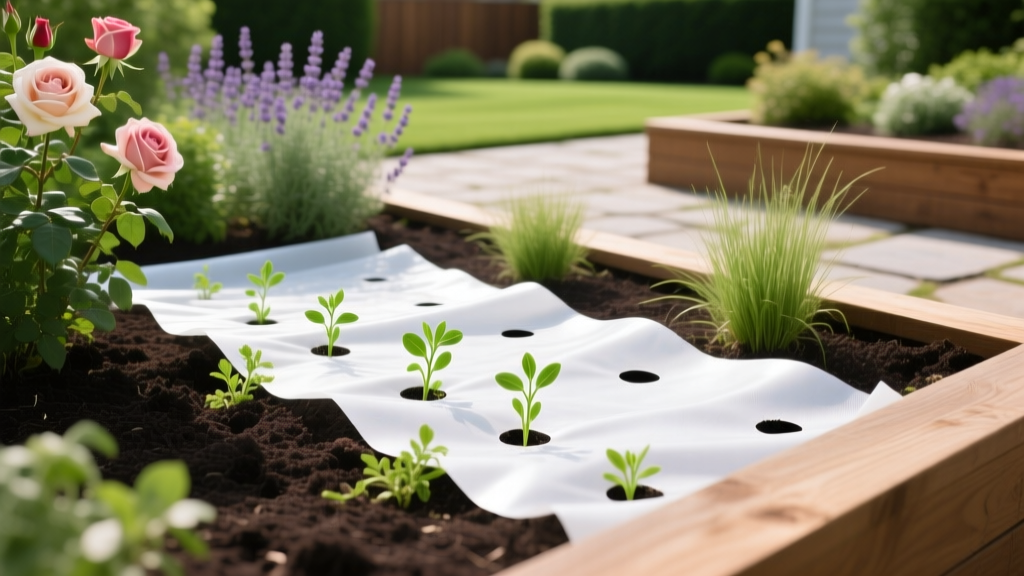
Weed Barrier Fabric for Flower Beds: Spot-Treating Invasive Weeds
The Reality of Weed Barrier Fabric for Flower Beds
Installing weed barrier fabric for flower beds is often marketed as a permanent solution to garden maintenance. However, landscape professionals and horticulturists know that geotextiles are not impenetrable force fields; they are semi-permeable membranes that alter the battlefield between ornamental plants and invasive weed species. While a high-quality 4.1 oz woven polypropylene fabric will successfully suppress annual broadleaf weeds like common chickweed (Stellaria media), it frequently fails against aggressive perennial species equipped with rhizomes, tubers, or deep taproots.
When these aggressive species breach the sub-surface barrier, standard weed control methods become complicated. The fabric physically blocks soil-active herbicides from reaching the root zone and prevents manual extraction tools from accessing deep tubers without tearing the geotextile. This guide details the biological mechanisms behind fabric breaches and provides advanced spot-treatment protocols for the most resilient weed species encountered in mulched flower beds.
Weed Species Penetration and Spot-Treatment Matrix
Not all weeds interact with geotextiles in the same way. The table below categorizes common flower bed invaders by their root architecture, their specific failure mode against weed barrier fabric, and the required spot-treatment approach.
| Weed Species | Root Architecture | Fabric Failure Mode | Spot-Treatment Protocol |
|---|---|---|---|
| Yellow Nutsedge (Cyperus esculentus) | Tubers / Rhizomes | Needle-like shoots pierce non-woven fabrics and exploit woven slits. | Foliar systemic application; manual tuber extraction is impossible through fabric. |
| Field Bindweed (Convolvulus arvensis) | Deep Taproot / Rhizomes | Exploits overlap seams and planting slits; grows laterally under the fabric. | Cut-and-paint systemic herbicide wicking; requires multiple seasonal applications. |
| Crabgrass (Digitaria sanguinalis) | Fibrous / Shallow | Seeds germinate in the mulch layer above the fabric and root downward into the geotextile. | Early manual pulling before roots anchor into the fabric weave. |
| Spotted Spurge (Euphorbia maculata) | Shallow Taproot | Grows horizontally across the fabric surface, rooting through microscopic pores. | Contact herbicide or careful scraping; pulling tears the fabric surface. |
Biological Breach: How Specific Weeds Defeat Geotextiles
Yellow Nutsedge (Cyperus esculentus)
Yellow nutsedge is arguably the most formidable opponent to weed barrier fabric for flower beds. According to the University of California Integrated Pest Management (UC IPM) program, nutsedge reproduces primarily through underground tubers (nutlets) that can survive in the soil for years. When a tuber sprouts, the initial shoot is rigid and needle-like, capable of generating enough upward hydraulic pressure to pierce standard 3.0 oz non-woven spunbond fabrics. Even heavy-duty woven slit-film fabrics are vulnerable, as the shoots easily navigate the millimeter-wide gaps between the woven tapes. Once the shoot breaches the surface and begins photosynthesizing, it sends energy back down to create a secondary chain of tubers, effectively locking the weed into the fabric weave.
Field Bindweed (Convolvulus arvensis)
Field bindweed operates laterally. As noted by Penn State Extension, bindweed possesses a massive, deep-rooted perennial system that can extend up to 10 feet into the soil profile. In flower beds, bindweed rarely attempts to pierce the center of a fabric panel. Instead, it exploits the weakest points: the 2-inch overlap seams between fabric rolls, the X-shaped slits cut for ornamental shrubs, and the edges where the fabric meets hardscaping. Once under the fabric, the rhizomes grow horizontally in the dark, sending up vertical shoots through any available gap. Because the root mass is entirely subterranean and separated from the foliage by the geotextile, physical removal is entirely ineffective.
Spot-Treatment Protocols: What Works Over Fabric?
The Pre-Emergent Trap
A common and costly mistake is applying granular pre-emergent herbicides (like Prodiamine or Dithiopyr) over weed barrier fabric. Pre-emergents must be watered into the top 1-2 inches of soil to form a chemical barrier that stops seed germination. The fabric blocks the granules from reaching the soil. Watering them on top of the fabric merely exposes the active ingredient to UV degradation and microbial breakdown in the mulch layer, rendering the $80+ treatment completely useless. Pre-emergents must be applied before the fabric and mulch are laid down.
Protocol 1: Foliar Systemic Wicking (For Rhizomatous Weeds)
For bindweed, bermudagrass, and nutsedge that have already breached the fabric, you must use foliar-applied systemic herbicides. Because the fabric prevents soil drenches or soil-active chemicals (like Halosulfuron-methyl/SedgeHammer) from reaching the roots, the chemical must travel through the plant's vascular system.
- Timing: Wait until the weed has produced at least 4 to 6 inches of vertical foliage above the fabric. The plant needs sufficient leaf surface area to absorb the chemical and translocate it down through the fabric slit to the subterranean roots.
- Application: Use a 2% solution of a 41% glyphosate concentrate (e.g., Roundup Pro) or a selective grass herbicide like Fluazifop (Grass-B-Gon) for grassy weeds in broadleaf ornamental beds.
- Technique: Use a targeted shield sprayer or a sponge applicator wand. Paint the herbicide directly onto the leaves. Do not broadcast spray, as drift will damage surrounding ornamentals and the chemical will waste onto the inert fabric.
Protocol 2: The 'Cut and Paint' Method (For Deep Taproots)
For weeds with massive taproots that have found a gap in the fabric seams (such as mature dock or dandelion), pulling the weed will likely rip a 6-inch tear in your geotextile, creating a permanent vulnerability for future weeds.
- Use a pair of bypass pruners to cut the weed stem exactly at the point where it emerges from the fabric slit or seam.
- Within 60 seconds of cutting, use a small foam brush to apply undiluted 41% glyphosate directly to the freshly exposed cambium layer on the cut stem.
- The plant's natural transpiration pull will draw the concentrated herbicide down into the taproot, killing it below the fabric without requiring physical extraction.
Protocol 3: Managing the 'Secondary Seedbed' Effect
Over time, the 2 to 3 inches of hardwood mulch placed over the weed barrier fabric decomposes into rich topsoil. Wind-blown weed seeds land in this mulch layer and germinate. The roots of these weeds (like spurge or crabgrass) grow downward and physically weave themselves into the top layer of the geotextile. If you pull these weeds forcefully, you will delaminate or tear the fabric.
The Fix: Do not pull. Use a sharp hori-hori garden knife to slice horizontally just above the fabric line, severing the weed roots from the foliage. Rake the mulch annually to disrupt the secondary seedbed before roots can anchor into the geotextile weave.
When to Abandon Fabric: The Retrofit Decision
Weed barrier fabric for flower beds is not a lifetime installation. If your spot-treatment protocols are failing, the fabric has likely reached the end of its functional lifespan. Consider removing and retrofitting the bed if you observe the following failure states:
- Widespread Siltation: If soil and clay have washed over the fabric from adjacent lawn areas, the fabric pores are clogged. Water will pool on the surface, drowning ornamental roots while creating a mud layer that nurtures weed seeds.
- Severe Nutsedge Infestation: If you are counting more than 10 nutsedge shoots per square yard, the subterranean tuber network has completely colonized the soil beneath the fabric. The fabric is now acting as a protective shield for the weeds, blocking your ability to till or solarize the soil.
- Brittle Degradation: Lift a corner of the mulch. If the fabric tears easily when pinched and exhibits white stress fractures, the UV stabilizers have failed (common in fabrics older than 7-10 years). It is now just fragmented plastic pollution in your soil.
Summary: Strategic Fabric Management
Weed barrier fabric is a highly effective tool for suppressing shallow, annual weeds in flower beds, but it requires a shift in how you manage aggressive perennials. By abandoning soil-active chemicals in favor of targeted foliar systemics, and by understanding the biological mechanics of how nutsedge and bindweed exploit geotextile seams, you can maintain a pristine landscape without destroying the sub-surface infrastructure of your garden beds.

