
Lawn Care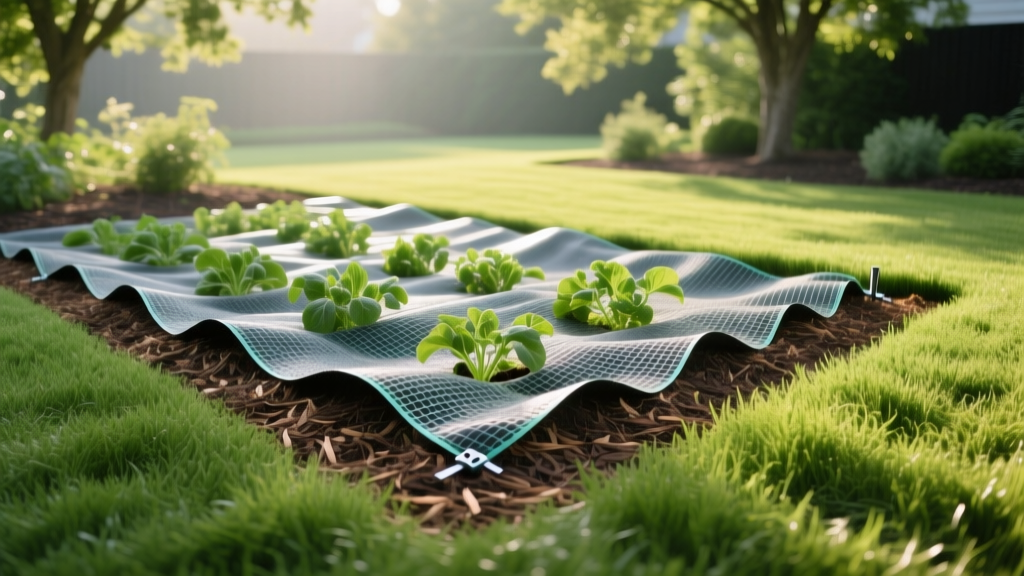
Choosing a Weed Barrier for Garden Beds to Stop Turf Weeds
The Rhizome Threat at the Lawn-Garden Border
Garden beds often act as incubators for aggressive perennial weeds. While homeowners focus on spot-treating visible weeds in the turf, the actual source of the infestation frequently lies in the adjacent landscaping beds. Species like field bindweed, quackgrass, and creeping charlie utilize extensive rhizomatous root systems that easily cross the soil boundary from mulched garden beds into pristine lawn areas. Standard surface-level spot treatments fail because they do not address the subterranean migration. To achieve permanent control, you must deploy a targeted physical weed barrier for garden perimeters combined with localized liquid pre-emergent spot treatments on the turf side.
Matching the Weed Barrier to Specific Invasive Species
Not all landscape fabrics are engineered to stop aggressive rhizomes. Standard non-woven polypropylene fabrics (often sold at big-box stores for $0.15 per square foot) are designed for water permeability and basic seed suppression, but they offer zero resistance to the piercing force of mature weed rhizomes. For lawn-border defense, you must use commercial-grade woven fabrics with a minimum weight of 3.2 ounces per square yard.
| Weed Species | Scientific Name | Max Rhizome Depth | Required Barrier Depth | Recommended Fabric Weight |
|---|---|---|---|---|
| Quackgrass | Elymus repens | 8 - 10 inches | 12 inches | 3.2 oz/sq yd (Woven) |
| Field Bindweed | Convolvulus arvensis | 14 - 18 inches | 24 inches | 4.1 oz/sq yd (Heavy Woven) |
| Creeping Charlie | Glechoma hederacea | 2 - 4 inches | 6 inches | 2.4 oz/sq yd (Standard Woven) |
According to the UC Statewide IPM Program, field bindweed roots can survive in the soil for years and penetrate deep into turf zones if not physically blocked. Similarly, Penn State Extension notes that quackgrass rhizomes can spread up to 10 feet in a single growing season, making shallow physical barriers entirely ineffective.
Precision Trenching and Physical Installation Steps
Installing a weed barrier for garden beds to protect the lawn requires a vertical trenching method, not just a horizontal surface lay. Follow this exact sequence to create an impenetrable subterranean wall.
- Mark the Border: Use a half-moon edger to cut a clean, 4-inch wide trench along the exact boundary where the garden bed meets the lawn.
- Excavate to Specification: Dig the trench to the required depth based on your target weed (e.g., 12 inches for quackgrass, 24 inches for bindweed). Remove all existing rhizomes from the excavated soil.
- Prepare the Fabric: Cut your commercial-grade woven fabric (such as DeWitt Pro 5 or GroundCover Woven) into strips that are 6 inches wider than your trench depth. This allows for a 3-inch lip above ground and a 3-inch fold at the bottom.
- Insert and Secure: Drop the fabric vertically into the trench. The 3-inch lip should extend into the garden bed side, not the lawn side, to allow for mulch coverage.
- Backfill and Tamp: Refill the lawn side of the trench with the excavated soil, tamping it down firmly with a hand tamper every 2 inches to eliminate air pockets that rhizomes could exploit.
- Seam Overlap: If multiple fabric strips are needed, overlap them by a minimum of 6 inches and secure the overlap with 6-inch galvanized landscape staples driven horizontally through both layers.
Pro Tip: The Mulch Trap
Never allow mulch to accumulate against the exposed lip of the fabric on the garden side. As mulch decomposes, it creates a nutrient-rich soil layer above the fabric. Weed seeds will germinate in this layer and send roots directly over the top of your barrier, bypassing the trench entirely. Maintain a 2-inch clearance between the mulch surface and the top of the fabric lip.
Never allow mulch to accumulate against the exposed lip of the fabric on the garden side. As mulch decomposes, it creates a nutrient-rich soil layer above the fabric. Weed seeds will germinate in this layer and send roots directly over the top of your barrier, bypassing the trench entirely. Maintain a 2-inch clearance between the mulch surface and the top of the fabric lip.
Liquid Pre-Emergent Barriers: Spot-Treating the Turf Side
While the physical weed barrier for garden beds stops mature rhizomes, weed seeds and shallow stolons (like those of creeping charlie) can still blow into the turf or creep over the surface. To complete the spot-treatment protocol, apply a localized liquid pre-emergent barrier along the first 24 inches of the lawn bordering the garden bed.
For cool-season lawns, Prodiamine 65 WDG (active ingredient: prodiamine) provides an excellent localized barrier. According to University of Minnesota Turf Science, managing stoloniferous weeds at the border requires consistent pre-emergent timing.
Spot-Treatment Application Matrix
- Herbicide: Prodiamine 65 WDG (Barricade)
- Target Zone: 2-foot wide strip along the garden bed border
- Dosage: 0.4 oz of product per 1,000 sq ft of treated area
- Water Volume: 1.5 gallons of water per 1,000 sq ft to ensure proper soil incorporation
- Timing: Early spring (when soil temperatures at 2-inch depth reach 50°F for 3 consecutive days) and early fall
"Applying a blanket pre-emergent over the entire lawn is often unnecessary and costly. By restricting the chemical barrier to a 24-inch spot-treatment zone along high-risk garden borders, homeowners reduce chemical usage by up to 70% while neutralizing the primary vector for weed invasion."
Diagnosing Barrier Failures and Edge Cases
Even with perfect installation, physical and chemical barriers can fail if environmental edge cases are ignored. Monitor your lawn-garden borders for these specific failure modes:
1. UV Degradation of Exposed Fabric
Woven polypropylene is susceptible to ultraviolet breakdown. If the fabric is exposed to direct sunlight for more than 30 days, its tensile strength drops by up to 40%, allowing sharp rhizomes to pierce it. Always cover the garden-side lip with 2 inches of bark mulch or decorative river rock immediately after installation.
2. Rodent Tunneling
Voles and mice frequently use the soft soil interface between the garden bed and the lawn to dig tunnels. These tunnels create physical gaps under your fabric barrier. If you notice small, golf-ball-sized holes near the border, inject a foaming rodent repellent containing castor oil directly into the tunnels and pack the entrance with crushed gravel to deter re-entry.
3. Pre-Emergent Washout
If your garden bed is graded higher than the lawn, heavy irrigation or rainfall will wash the mulch and soil over the physical barrier, depositing it onto the turf side. This new soil layer bypasses your liquid pre-emergent barrier. To fix this, install a rigid aluminum or steel edging strip on top of the physical fabric trench to create a hard surface dam that prevents soil migration during heavy runoff events.
Frequently Asked Questions
Can I use cardboard as a weed barrier for garden borders?
No. While cardboard is effective for short-term sheet mulching in the center of a garden bed, it decomposes within 4 to 6 months. It provides zero long-term resistance against perennial rhizomes like quackgrass or bindweed attempting to invade the lawn. Only commercial-grade woven polypropylene offers the necessary lifespan (10+ years) and puncture resistance for border defense.
Will a physical barrier damage my lawn's root system?
If installed correctly on the garden-bed side of the boundary trench, the barrier will not harm the lawn. Turfgrass roots primarily grow in the top 4 to 6 inches of soil and spread laterally away from the trench. The barrier actually encourages the turf to develop a denser root mass on the lawn side by eliminating competition from invasive garden weeds.
How often should I reapply the liquid pre-emergent spot treatment?
Prodiamine provides residual control for 4 to 6 months depending on soil temperature and rainfall. For maximum protection, apply once in early spring (April) and once in early fall (September). Do not exceed the maximum annual application rate of 1.15 lbs of active ingredient per acre to prevent turf phytotoxicity.

