
Lawn Care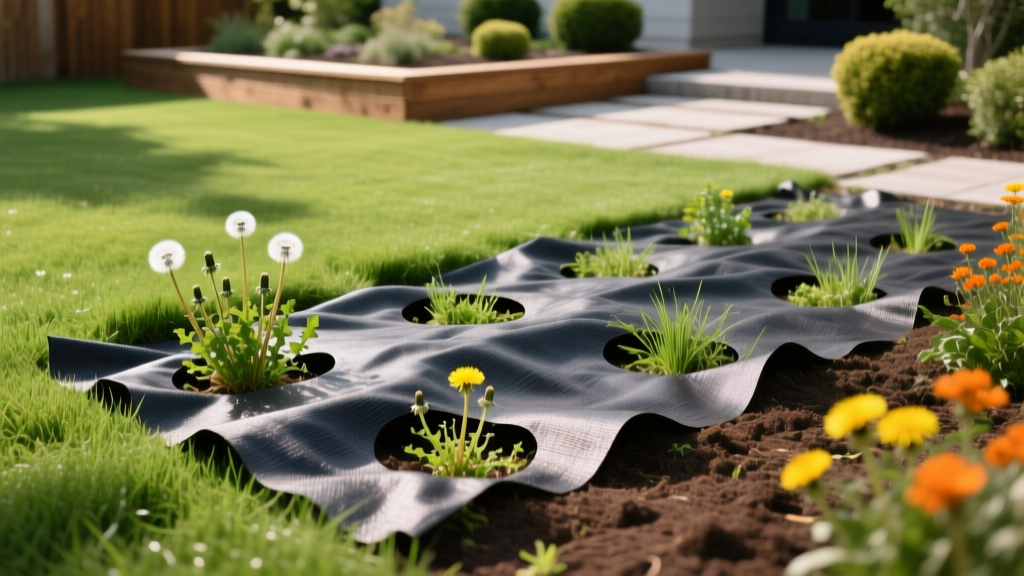
Using Weed Cloth for Gardens to Spot-Treat Aggressive Weeds
Blanketing an entire landscape in cheap landscape fabric is an outdated practice that often leads to soil compaction, ruined microbiomes, and eventual weed breakthroughs. However, when dealing with highly aggressive, hard-to-eradicate weed species in specific garden zones, targeted mechanical containment is essential. Using heavy-duty weed cloth for gardens as a localized spot-treatment barrier—combined with precise chemical eradication—provides a highly effective defense against invasive perennials that standard mulches cannot suppress.
This guide details how to deploy commercial-grade geotextiles specifically to spot-treat and contain three of the most notorious landscape invaders: Field Bindweed, Yellow Nutsedge, and Bermudagrass.
Why Standard Weed Cloth Fails Against Aggressive Species
Most retail weed cloths are made from spunbond polypropylene (non-woven) weighing between 1.5 and 3.0 ounces per square yard. While these materials allow water permeability, they lack the tensile strength to stop aggressive rhizomes and tubers. Invasive weeds exploit microscopic weaknesses in non-woven fabrics, eventually tearing through the material or growing over the top edges.
Warning: The Photodegradation Trap
Cheap, non-UV-stabilized plastics break down into microplastics within 2 to 3 seasons when exposed to direct sunlight. If you are spot-treating a high-risk garden border, investing in UV-stabilized, woven geotextile (minimum 4.1 oz/sq yd or 130 GSM) is non-negotiable. These materials carry a 10- to 20-year lifespan and physically resist root penetration.
Species-Specific Spot-Treatment Protocols
Applying weed cloth without first addressing the existing root structure guarantees failure. The following protocols combine chemical spot-treatments with mechanical barriers tailored to the specific biology of the target weed.
1. Field Bindweed (Convolvulus arvensis)
Bindweed features an extensive, deep taproot system that can reach 10 feet underground. Simply laying fabric over existing bindweed will result in the vines finding the nearest seam or edge and strangling your desirable plants.
- Chemical Spot-Treatment: Apply a targeted spot-spray of 2% glyphosate or a mix of glyphosate and quinclorac directly to the bindweed foliage in late summer when the plant is actively pulling nutrients into its roots. Wait 14 days for complete translocation.
- Mechanical Barrier: Deploy a 4.1 oz/sq yd woven geotextile. Because bindweed can persist in the soil seed bank for up to 50 years, the fabric must extend at least 12 inches beyond the known infestation zone. Overlap seams by a minimum of 6 inches.
- Authoritative Insight: According to the University of California Integrated Pest Management (UC IPM) program, persistent bindweed requires a combination of systemic herbicides and physical exclusion, as shallow tillage only chops the rhizomes into new, viable plants.
2. Yellow Nutsedge (Cyperus esculentus)
Yellow nutsedge reproduces primarily through underground tubers (nutlets). These tubers produce sharp, rigid shoots capable of piercing standard 3.0 oz landscape fabrics with ease.
- Chemical Spot-Treatment: Spot-treat actively growing nutsedge with a halosulfuron-methyl based herbicide (e.g., SedgeHammer) or imazaquin. Do not pull the plants, as this leaves the nutlets intact to regenerate.
- Mechanical Barrier: Standard woven fabrics are insufficient. You must use a heavy-duty, 5.4 oz to 6.5 oz/sq yd woven geotextile (often sold as driveway or French drain fabric). The higher thread count and thicker polyethylene tapes prevent the sharp nutsedge shoots from finding gaps in the weave.
- Expert Note: Penn State Extension emphasizes that nutsedge thrives in poorly drained soils. Ensure your heavy-duty spot-treatment fabric is topped with 3 inches of coarse bark mulch to prevent surface water from pooling and creating the damp conditions nutsedge favors.
3. Bermudagrass (Cynodon dactylon)
Bermudagrass spreads via both above-ground stolons and below-ground rhizomes. It will aggressively creep under the edges of poorly secured weed cloth.
- Chemical Spot-Treatment: Use a spot-application of fluazifop-butyl (Fusilade) or sethoxydim (Vantage) if the Bermudagrass is invading a bed of broadleaf ornamentals, as these grass-specific herbicides will not harm your shrubs.
- Mechanical Barrier: The critical failure point for Bermudagrass is the fabric edge. Bury the perimeter of your weed cloth 4 inches deep in a narrow trench, creating a physical subterranean wall that stolons cannot bypass.
Selecting the Right Geotextile for Spot-Treatments
Choosing the correct material is the difference between a permanent solution and a recurring nightmare. Below is a comparison of commercial-grade fabrics suitable for invasive weed spot-treatments in 2026.
| Product / Brand | Weight & Type | Best Target Weed | Est. Cost (per sq ft) |
|---|---|---|---|
| Dewitt Pro-5 | 4.1 oz/sq yd (Woven) | Bindweed, Dandelion | $0.55 - $0.65 |
| Flarmor Heavy Duty | 6.5 oz/sq yd (Woven) | Nutsedge, Johnson Grass | $0.85 - $0.95 |
| VEVOR Geotextile | 5.4 oz/sq yd (Woven) | Bermudagrass, Kikuyu | $0.45 - $0.55 |
| Scotts Pro Fabric | 3.0 oz/sq yd (Spunbond) | Not recommended for invasive spot-treatment | $0.35 - $0.40 |
Step-by-Step Installation for Maximum Containment
Proper installation ensures the mechanical barrier functions as intended without creating new vulnerabilities.
- Eradicate and Desiccate: Complete your chemical spot-treatment and wait a minimum of 14 days. Mow or trim the dead weed debris as close to the soil line as possible. Do not till the soil, as this brings dormant weed seeds to the surface.
- Grade and Tamp: Rake the soil smooth and compact it lightly with a hand tamper. Eliminating air pockets and sharp soil clods prevents the fabric from sagging and creating pockets where water can pool.
- Cut and Overlap (The Shingle Method): When covering large spots, lay the fabric in overlapping rows like shingles on a roof. This ensures that surface water flows over the overlap rather than seeping through the seam into the soil below.
- Pin Strategically: Use 6-inch galvanized steel landscape pins (not plastic). Place pins every 12 inches along all seams and every 3 feet in the field.
Pro Tip: When cutting holes for existing shrubs, cut an 'X' rather than a circle. Fold the resulting flaps tightly around the plant stem and secure them with a landscape pin to leave no gap for weeds to exploit.
- Apply Coarse Mulch: Cover the fabric with 2 to 3 inches of coarse, aged hardwood bark. Avoid fine mulches like pine straw or compost, which can blow onto the fabric, decompose, and create a soil layer where wind-blown weed seeds can germinate on top of your barrier.
Maintenance and Edge-Case Troubleshooting
Even the best-installed weed cloth requires minor maintenance to remain effective over a decade.
- The 'Top-Soil' Accumulation Problem: Over time, dust, decomposing mulch, and dirt from foot traffic accumulate on top of the weed cloth. This creates a shallow soil layer where new weeds can root. Solution: Rake the mulch annually and use a leaf blower to remove fine organic debris from the fabric surface.
- Frost Heave in Northern Climates: In zones with deep winter freezes, the soil expands and contracts, occasionally pushing landscape pins out of the ground. Solution: Inspect the spot-treated zones in early spring and re-drive any heaved pins. Upgrade to 8-inch spiral pins if heaving is severe.
- Slope Slippage: On grades steeper than 15%, mulch tends to slide off the smooth surface of woven geotextiles, exposing the fabric to UV degradation. Solution: Install wooden batten strips or jute netting over the fabric before mulching to hold the organic matter in place on inclines.
By treating weed cloth not as a blanket solution, but as a precision tool for spot-treating the most aggressive botanical invaders, you can protect your garden beds without sacrificing long-term soil health. Select the correct weight, execute the chemical prep, and install with meticulous attention to seams and edges.

