
Lawn Care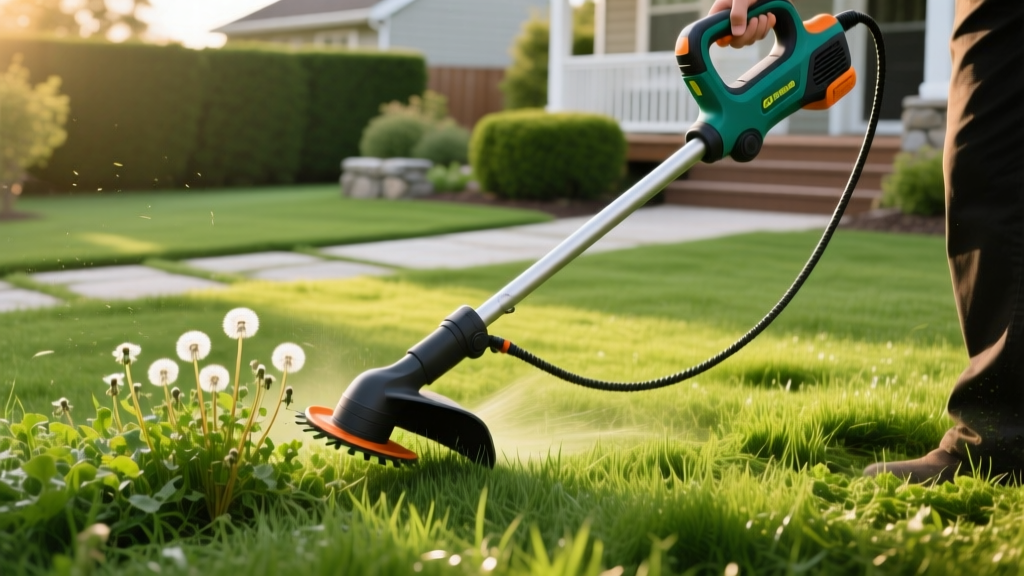
When to Use a Weed Eater or Weed Whacker for Lawn Weed Spot-Treatment
The Mechanical-Chemical Synergy: Why Spot-Trimming Matters
Integrating a weed eater or weed whacker into your lawn care regimen is not just about maintaining clean edges along driveways and fence lines. When executing a targeted weed species spot-treatment plan, the string trimmer serves as a critical surgical instrument. While a standard lawnmower dictates the canopy height for the entire yard, a weed whacker allows you to selectively decapitate mature weeds, remove waxy cuticles, and eliminate seed heads without stressing the surrounding desirable turf.
However, using a weed eater incorrectly can exacerbate infestations. Chopping stoloniferous weeds into fragments can clone the problem, while trimming at the wrong time can block the translocation of systemic herbicides. This guide details the exact "Cut-and-Spray" protocol for integrating mechanical trimming with chemical spot-treatments for the most stubborn lawn weeds.
⚠️ Critical Warning for Stoloniferous Weeds: Never use a weed whacker on creeping charlie (ground ivy), creeping bentgrass, or invasive bermudagrass in a cool-season lawn. The high-RPM nylon string shreds the stolons (runners) and scatters the fragments across the lawn, effectively planting new weeds wherever the debris lands. For these species, rely entirely on systemic liquid herbicides like Triclopyr or spot-hand-pulling.
Species-Specific Whacker Strategies
Different weed architectures require distinct mechanical approaches before chemical application. The table below outlines the exact weed eater technique and subsequent chemical timing for common resilient species.
| Weed Species | Whacker Technique | Wait Time | Recommended Spot-Spray |
|---|---|---|---|
| Dallisgrass (Paspalum dilatatum) | Decapitate seed heads at 3-inch height. Do not scalp to soil. | 48-72 hours | MSMA (warm-season) or Celsius WG |
| Yellow Nutsedge (Cyperus esculentus) | Trim top growth to expose the pale yellow-green crown base. | 24-48 hours | Halosulfuron-methyl (SedgeHammer) |
| Crabgrass (Digitaria - Late Season) | Aggressively trim to capture and remove seed heads before drop. | Immediate (if killing) / N/A | Quinclorac (Drive XLR8) |
| Wild Violet (Viola sororia) | Lightly scuff the thick, waxy leaves to break the cuticle. | 12-24 hours | Triclopyr + 2,4-D amine |
Dallisgrass: Seed Head Decapitation
Dallisgrass is notoriously difficult to eradicate due to its deep, fibrous root system and thick, waxy leaf blades. According to NC State TurfFiles, mature dallisgrass drops thousands of seeds from tall, Y-shaped seed stalks. Using a weed whacker to surgically remove these stalks prevents the next generation of weeds. More importantly, trimming the thick mature leaves forces the plant to push out tender, new growth. This new growth lacks the heavy waxy cuticle of older leaves, allowing systemic herbicides to penetrate the tissue and translocate down to the rhizomes up to 300% more effectively.
Yellow Nutsedge: Exposing the Crown
Nutsedge grows significantly faster than surrounding turf, often shooting 4 to 6 inches above the canopy within days of mowing. Penn State Extension notes that nutsedge reproduces primarily via underground tubers (nutlets). Whacking the tall, triangular stems down to the turf canopy level serves two purposes: it makes the lawn look uniform immediately, and it forces the plant to expend stored energy from the nutlets to regenerate foliage. Spraying Halosulfuron-methyl on this stressed, regenerating tissue ensures maximum chemical draw-down into the tuber network.
Equipment Setup: String Gauge and RPM Management
The physical setup of your weed eater directly impacts the quality of the cut and the subsequent herbicide absorption. Tearing the weed stem rather than slicing it causes rapid cellular damage and browning, which halts the plant's vascular system and prevents herbicide translocation.
- String Gauge for Standard Weeds: Use a 0.080-inch round nylon line for standard broadleaf weeds and crabgrass. This provides a clean slice at standard RPMs.
- String Gauge for Thick-Stemmed Weeds: Upgrade to a 0.095-inch or 0.105-inch twisted line for mature dallisgrass, thistles, or dock. The twisted profile acts like a serrated edge, slicing through fibrous stalks cleanly without wrapping around the trimmer head.
- RPM Control: Run your gas trimmer (e.g., Stihl FS 56 RC) or battery model (e.g., EGO ST1510T) at roughly 75% throttle when spot-treating weeds. Full-throttle (10,000+ RPM) creates excessive centrifugal force that shatters stems rather than cutting them, leading to the vascular blockage mentioned above.
The Cut-and-Spray Protocol: Timing the Chemical Application
The most common failure in spot-treatment is spraying immediately after cutting. When a weed is severed, its immediate biological response is to seal the wound to prevent moisture loss and pathogen entry. This callusing process effectively blocks the absorption of liquid herbicides.
✅ The 48-Hour Rule: After using your weed whacker to trim the target weed down to the surrounding canopy height, wait exactly 48 to 72 hours before applying your systemic herbicide. During this window, the plant will push out 0.5 to 1 inch of fresh, pale-green tissue. This new tissue is highly porous and actively drawing nutrients (and herbicides) down into the root zone.
When mixing your spot-treatment, always include a non-ionic surfactant (NIS) at a rate of 0.25% to 0.5% by volume (roughly 1/2 teaspoon per gallon of mixed solution). The surfactant breaks the surface tension of the water, allowing the chemical to spread evenly across the newly emerged leaf tissue rather than beading up and rolling off onto the soil.
Frequently Asked Questions
Can I use a weed eater attachment that dispenses herbicide while trimming?
While some commercial landscaping attachments claim to cut and spray simultaneously, they are generally ineffective for residential spot-treatment. They apply herbicide to the freshly cut, callusing wound, which results in poor translocation. Furthermore, they lack the precision to avoid drifting onto desirable turf species that may be sensitive to the chemical.
How do I clean my weed whacker to prevent spreading weed seeds?
If you have been trimming mature crabgrass or dallisgrass seed heads, the underside of the trimmer guard and the spool housing will be caked with sticky plant sap and thousands of microscopic seeds. Before moving to a clean area of the lawn, use a wire brush and a blast of water to clear the debris. According to University of Minnesota Extension, equipment sanitation is one of the most overlooked vectors for localized weed spread in residential landscapes.
Is it better to pull weeds by hand or use a weed whacker before spraying?
For taproot weeds like dandelions or plantain, hand-pulling with a weeding fork is superior if the soil is moist. However, for dense, fibrous clumps like dallisgrass or quackgrass, hand-pulling almost always leaves root fragments behind. In these cases, the weed whacker cut-and-spray protocol is vastly more effective at achieving total plant kill.

