
Lawn Care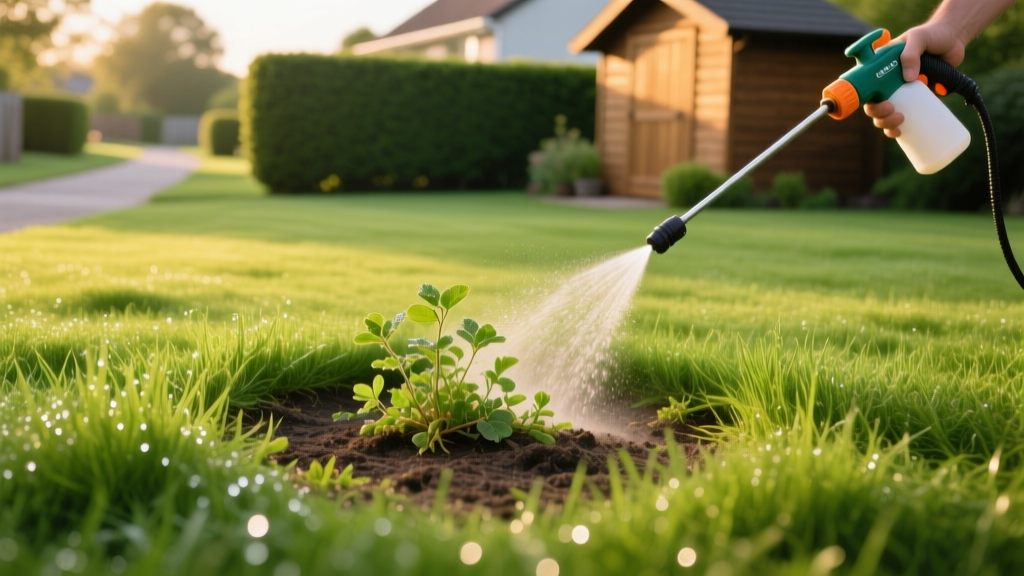
When to Skip Weed Feed Fertilizer for Targeted Spot Treatments
The Broadcast Paradox: Why Granular Fails for Spot Treatments
Homeowners frequently search for a weed feed fertilizer to tackle isolated lawn invaders, assuming that a product combining herbicide and lawn food is the ultimate two-in-one solution. However, applying granular weed and feed as a spot treatment is fundamentally flawed. Granular weed and feed products, such as Scotts Turf Builder Weed & Feed (typically formulated with a 28-0-3 NPK ratio), are engineered for broadcast application across the entire lawn. The herbicide active ingredients—usually a blend of 2,4-D, dicamba, and MCPP—are coated onto fertilizer prills that require morning dew or wet foliage to stick to the broad leaves of target weeds.
When you attempt to spot-treat a single dandelion or a localized patch of clover by dumping a handful of granular weed feed directly onto the weed, you trigger two major problems. First, the granules will likely bounce off the dry waxy cuticle of the weed leaf, failing to deliver the herbicide. Second, the concentrated dose of fast-release nitrogen will chemically burn the surrounding desirable turfgrass, leaving a dead, yellow halo around the weed. For isolated weed outbreaks, liquid spot-treatment protocols utilizing dedicated post-emergent herbicides are the only scientifically sound approach.
⚠️ WARNING: The Nitrogen Burn Risk
Applying granular weed feed fertilizer to a 10-square-foot area at the rate required for herbicidal efficacy will deliver over 3 pounds of nitrogen per 1,000 square feet in a single localized dose. This exceeds the safe threshold for most cool-season grasses by 300%, guaranteeing severe foliar burn and root desiccation.
Applying granular weed feed fertilizer to a 10-square-foot area at the rate required for herbicidal efficacy will deliver over 3 pounds of nitrogen per 1,000 square feet in a single localized dose. This exceeds the safe threshold for most cool-season grasses by 300%, guaranteeing severe foliar burn and root desiccation.
Weed Species That Defy Standard Weed Feed Formulations
Not all weeds are susceptible to the standard three-way herbicide blends found in commercial weed feed fertilizers. While 2,4-D and dicamba are highly effective on broadleaf weeds, they are virtually useless against grassy weeds and sedges. Understanding the specific botanical classification of your lawn invader dictates whether you should abandon the weed feed approach entirely.
| Weed Species | Classification | Weed Feed Efficacy | Spot Treatment Alternative |
|---|---|---|---|
| Dandelion & Clover | Broadleaf | High (if broadcast) | Liquid 2,4-D + Dicamba + MCPP |
| Crabgrass | Grassy (Annual) | Zero (Post-emergent) | Liquid Quinclorac (e.g., Drive XLR8) |
| Yellow Nutsedge | Sedge | Zero | Liquid Sulfentrazone or Halosulfuron |
| Wild Violet | Broadleaf (Perennial) | Low (Waxy leaves repel granules) | Liquid Triclopyr + Surfactant |
According to University of Minnesota Extension, misidentifying nutsedge as a standard grassy weed and treating it with broadleaf weed feed is one of the most common turf management errors. Nutsedge requires specific chemistry, like sulfentrazone, to penetrate its tubers (nutlets) beneath the soil surface.
The Liquid Spot-Treatment Protocol
When you identify a localized weed outbreak that a broadcast weed feed fertilizer cannot handle, transition to a liquid pump sprayer application. This ensures the active ingredient directly contacts the foliage without overloading the soil with unnecessary nitrogen.
Step 1: Calibration and Mixing
For a standard 1-gallon pump sprayer targeting broadleaf weeds, mix 1.5 fluid ounces of a concentrated three-way herbicide (such as Ortho WeedClear or a generic Trimec formulation) per gallon of water. For crabgrass, use a Quinclorac-based product at a rate of 0.36 ounces per gallon. Always add a non-ionic surfactant at 0.5% v/v (roughly 1 teaspoon per gallon) to break the surface tension of water, allowing the herbicide to spread evenly across waxy weed leaves.
Step 2: Application Technique
Apply the mixture when ambient temperatures are between 65°F and 85°F. Spraying in high heat (>90°F) causes the liquid to vaporize before absorption and increases the risk of phytotoxicity to surrounding turf. Spray the weed until the leaves are visibly wet, but avoid drenching the soil or allowing runoff. Keep the nozzle within 6 inches of the target weed to minimize drift.
Step 3: The 48-Hour Rule
Do not mow your lawn for 48 hours before or after a liquid spot treatment. Mowing removes the leaf surface area required for herbicide absorption. Similarly, delay irrigation for 24 hours post-application to allow the chemical to translocate from the leaves down to the root system.
Cost & Coverage Matrix: Broadcast vs. Spot Treatment
Evaluating the financial and environmental impact of your weed control strategy reveals why targeted liquid applications are superior for isolated infestations compared to blanket weed feed fertilizer applications.
Granular Weed Feed (Broadcast)
Cost: $35 - $45 per 10,000 sq ft
Time: 45 mins (spread & sweep)
Environmental Impact: High (runoff risk on driveways)
Best For: Lawns with >40% broadleaf weed coverage
Liquid Spot Treatment (DIY)
Cost: $15 - $25 per 5,000 sq ft
Time: 15 mins (mix & spray)
Environmental Impact: Low (zero drift if targeted)
Best For: Lawns with <10% isolated weed patches
Prosumer Liquid (Backpack)
Cost: $40 - $60 per acre
Time: 30 mins per 10,000 sq ft
Environmental Impact: Very Low (precision application)
Best For: Severe grassy weed/sedge invasions
Frequently Asked Questions
Can I mix liquid herbicide with liquid fertilizer for a spot treatment?
While tank-mixing liquid iron or kelp-based biostimulants with herbicides is common in professional turf management, mixing high-nitrogen liquid fertilizers (like 20-0-0) with post-emergent herbicides for spot treatments is not recommended. The high salt index of the nitrogen can cause rapid leaf desiccation, trapping the herbicide on the dead leaf tissue before it has time to translocate to the weed's roots.
Why didn't my weed feed fertilizer kill my crabgrass?
Standard weed feed fertilizers contain broadleaf herbicides (2,4-D, dicamba) which only target dicot plants. Crabgrass is a monocot (grassy weed). To spot-treat crabgrass, you must use a specialized active ingredient like Quinclorac. The EPA guidelines on 2,4-D clearly delineate its efficacy strictly to broadleaf species, confirming its uselessness against annual grasses.
How soon can I apply weed feed fertilizer after a liquid spot treatment?
Wait at least 7 to 10 days after applying a liquid spot treatment before broadcasting a granular weed feed fertilizer. This window allows the initial herbicide to fully translocate and kill the targeted weed, while preventing chemical antagonism that can occur when multiple active ingredients are introduced to the turf canopy simultaneously.
Expert Takeaway
Reserve weed feed fertilizer strictly for seasonal, broadcast applications when your lawn suffers from widespread, uniform broadleaf weed pressure. For isolated patches, aggressive invaders like crabgrass, or stubborn sedges, abandon the granular approach. Invest in a 1-gallon pump sprayer, select a weed-specific liquid active ingredient (Quinclorac for grasses, Sulfentrazone for sedges, Triclopyr for tough broadleaves), and apply with precision. This targeted methodology saves money, protects your soil ecology, and prevents the nitrogen burn associated with misapplied granular products.

