
Lawn Care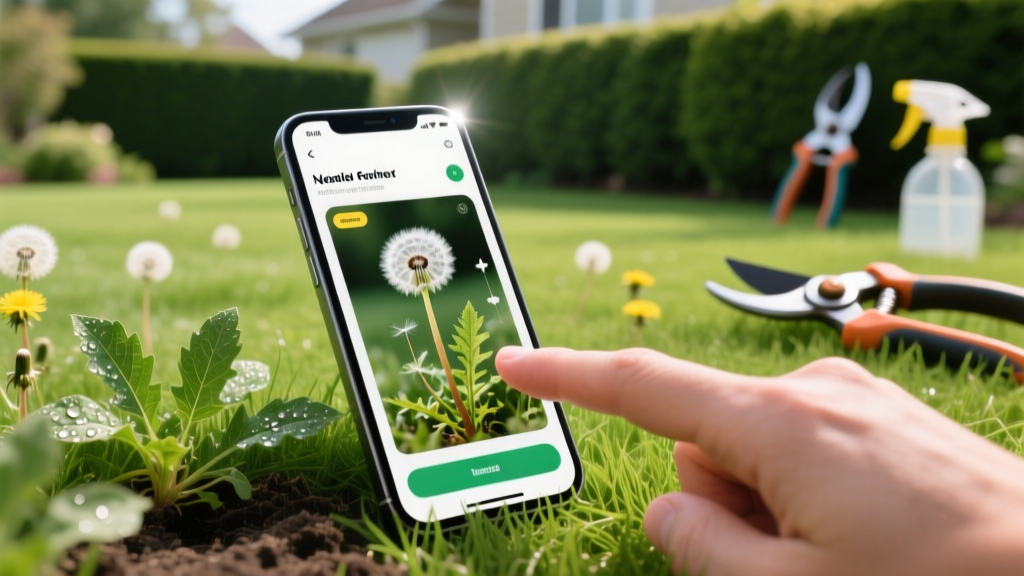
Using a Weed Identifier by Picture for Lawn Spot Treatment
The Economics and Agronomy of Visual Weed Identification
Blanket spraying a 5,000-square-foot lawn with a broad-spectrum herbicide costs between $60 and $120 in materials alone, not to mention the unnecessary chemical load placed on your soil microbiome. Precision spot-treatment reduces herbicide usage by up to 85%, but it requires absolute certainty about the weed species you are targeting. Applying a broadleaf herbicide like 2,4-D to a grassy weed like crabgrass is a complete waste of capital and leaves the invader to outcompete your turf.
Modern visual AI tools have revolutionized this diagnostic step. By leveraging a weed identifier by picture, homeowners and turf managers can bypass complex botanical manuals and instantly cross-reference leaf venation, margin serration, and growth habits against massive agronomic databases. However, relying on these tools requires an understanding of their algorithmic limitations and a structured protocol for translating an identification into a targeted chemical or cultural control strategy.
How Visual AI Weed Identifiers Process Turfgrass Invaders
Visual identification apps utilize Convolutional Neural Networks (CNNs) trained on millions of botanical images. When you snap a photo, the algorithm isolates the subject from the background turf and analyzes specific morphological features:
- Leaf Architecture: The algorithm measures the leaf width-to-length ratio, apex shape, and base structure.
- Venation Patterns: Parallel veins typically indicate monocots (grasses and sedges), while net-like veins indicate dicots (broadleaf weeds).
- Reproductive Structures: The presence of seed heads, flowers, or specific spikelet arrangements provides the highest confidence score for the AI.
Critical Limitation: AI weed identifiers experience a severe accuracy drop (often below 60%) when analyzing juvenile seedlings. Seedlings lack mature ligules, auricles, and reproductive structures. For optimal results, allow the weed to mature slightly before scanning, or rely on the surrounding mature specimens to identify the colony.
2026 App Comparison Matrix for Turfgrass Diagnostics
Not all plant identification apps are calibrated for turfgrass environments. Ornamental garden apps often misidentify aggressive lawn weeds as benign wildflowers. Below is a comparison of the top three tools optimized for lawn care professionals and dedicated homeowners.
| Application | Pricing (2026) | Turf Accuracy | Best Use Case |
|---|---|---|---|
| PictureThis | $39.99/year | 94% (Mature) | High-accuracy broadleaf and sedge ID; includes basic treatment suggestions. |
| ID Weeds (Mizzou) | Free | 89% (Mature) | Offline capability; highly specific to North American agronomic and turf weeds. |
| Seek by iNaturalist | Free | 72% (Turf) | General flora; useful for identifying invasive woody weeds in lawn borders. |
For dedicated lawn spot-treatment, the University of Missouri's ID Weeds app remains the gold standard for free diagnostics, as it is trained specifically on agricultural and turfgrass pests rather than general botanical specimens.
The Spot-Treatment Protocol: From ID to Eradication
Once your weed identifier by picture has confirmed the species, you must select the correct active ingredient. The NC State TurfFiles database categorizes turf weeds into three primary biological groups, each requiring a distinct chemical approach.
1. Broadleaf Weeds (Dandelion, White Clover, Plantain)
Broadleaf weeds are dicots, making them highly susceptible to synthetic auxin herbicides. These chemicals mimic plant growth hormones, causing the weed to grow itself to death.
- Active Ingredients: 2,4-D, Dicamba, MCPP, and Quinclorac.
- Product Example: Trimec Classic or Ortho WeedClear.
- Mixing Ratio: Typically 1.5 to 2.0 fluid ounces per gallon of water.
- Application Tip: Apply when temperatures are between 65°F and 85°F. Temperatures above 90°F increase the risk of herbicide volatilization, which can drift and damage nearby ornamental shrubs.
2. Grassy Weeds (Crabgrass, Goosegrass, Poa Annua)
Because grassy weeds are monocots like your desired turf, selective control is highly dependent on your specific grass type. Post-emergent control of grassy weeds in cool-season lawns (Fescue, Bluegrass) requires precise chemistry.
- Active Ingredients: Fluazifop-p-butyl or Fenoxaprop-p-ethyl.
- Product Example: Ortho Grass B Gon (Fluazifop) for use in Fescue and Zoysia.
- Mixing Ratio: Follow label rates strictly; usually 1 packet per 2 gallons for hose-end sprayers.
- Warning: Never apply Fluazifop to Bermudagrass or Kentucky Bluegrass, as it will cause severe phytotoxicity and turf death.
3. Sedges (Yellow Nutsedge, Purple Nutsedge, Kyllinga)
Sedges are neither broadleaf nor true grasses; they belong to the Cyperaceae family. Standard broadleaf and grassy weed herbicides will not kill them. Misidentification here is the most common cause of treatment failure.
- Active Ingredient: Halosulfuron-methyl.
- Product Example: SedgeHammer.
- Mixing Ratio: 0.9 grams of product per 1 gallon of water.
- Crucial Additive: You MUST include a Non-Ionic Surfactant (NIS) at a rate of 0.25% v/v (roughly 1 teaspoon per gallon). Sedge leaves have a thick, waxy cuticle; without a surfactant, the herbicide will bead up and roll off onto the soil.
Photographic Technique for Maximum AI Accuracy
The accuracy of any weed identifier by picture is entirely dependent on the quality of the input data. Blurry, poorly lit, or incorrectly framed photos will result in false positives. Follow this protocol to capture the perfect diagnostic image:
- Isolate the Subject: Part the surrounding turfgrass with your free hand to ensure the weed occupies at least 60% of the camera frame.
- Capture the Collar Region: For grassy weeds and sedges, the most identifying features are the ligule and auricles located at the collar (where the leaf blade meets the stem). Pull the leaf downward to expose this junction.
- Provide Scale: Place a standard US Quarter or a carpenter's tape measure next to the leaf blade. This helps the AI algorithm calculate the exact width-to-length ratio, which is critical for distinguishing between similar species like smooth crabgrass and large crabgrass.
- Lighting and Focus: Shoot in natural, diffused daylight. Avoid using the flash, which washes out leaf venation details. Tap your screen to force the macro-focus on the leaf edge rather than the background soil.
Spot-Treatment Success Checklist
- Confirm weed species using a turf-specific AI identifier (avoid general plant apps).
- Verify your lawn's turfgrass species to ensure herbicide selectivity and safety.
- Calculate exact square footage of the weed patch to mix only the required volume of chemical.
- Add the appropriate surfactant (NIS for sedges, MSO for stubborn broadleaves) to ensure cuticle penetration.
- Delay mowing for 48 hours post-application to allow maximum foliar translocation of the herbicide into the weed's root zone.
Mastering the use of visual AI diagnostics transforms lawn care from a guessing game into a precise science. By pairing accurate identification with targeted, chemically sound spot-treatments, you preserve the ecological balance of your soil while maintaining a pristine, uniform turf canopy. Always consult the EPA's guidelines on safe pest control to ensure your herbicide applications comply with local environmental regulations and safety standards.

