
Lawn Care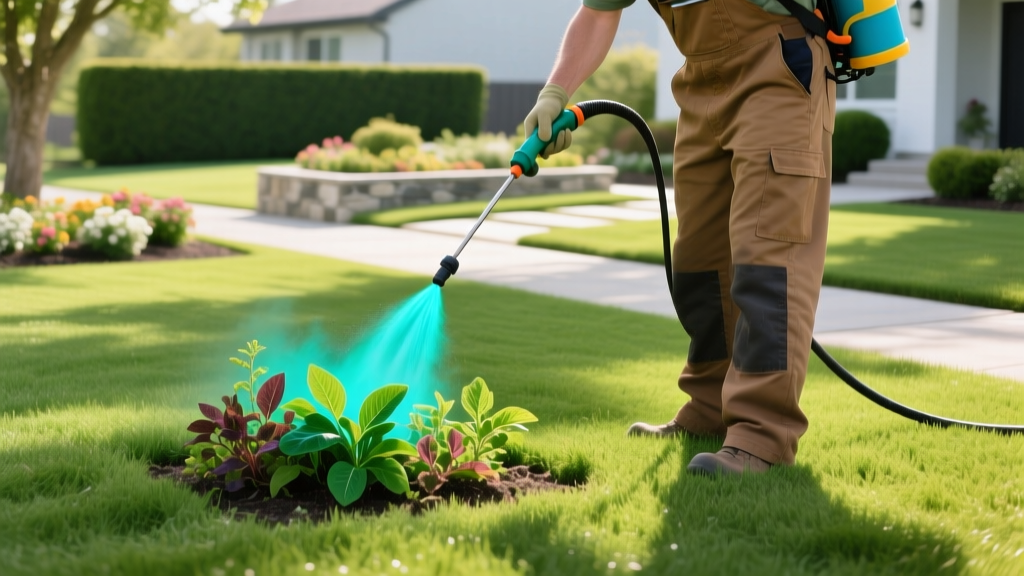
Master Weed Spot-Treatment: Using Weed Spray Dye Effectively
Spot-treating weeds is the most cost-effective and environmentally responsible method for maintaining a pristine lawn. However, without a visual indicator, homeowners frequently overlap herbicide applications, leading to severe phytotoxicity (chemical burn) on desirable turfgrass and wasted chemicals. Integrating a weed spray dye into your tank mix solves this by providing a temporary, highly visible marker that ensures complete coverage of the target weed while preventing accidental double-spraying.
The Chemistry of Weed Spray Dyes (And Why Blue is Best)
Not all colorants are created equal. The professional turf care industry relies almost exclusively on Acid Blue 9 (Brilliant Blue FCF) for spot treatments. Unlike pigment-based 'paints' or latex colorants that sit on the surface and clog sprayer nozzles, acid dyes are anionic. They temporarily bind to the waxy cuticle of plant leaves and the cellulose in soil, then photodegrade under UV light within 24 to 48 hours.
Blue is the preferred spectrum because it contrasts sharply with both green turfgrass and brown dormant weeds or soil. Red dyes, while available, often blend into the natural browns of dead thatch and mulch, defeating the purpose of the visual marker. Premium products like Monterey Spray Indicator Blue or Prime Source Blue Colorant typically retail between $12 and $16 for an 8-ounce bottle, which is enough to dye up to 48 gallons of herbicide mix.
Critical Warning: Never use food coloring or fabric dye as a substitute. These lack UV-degradation properties, will permanently stain your hardscapes, and can alter the pH of your herbicide solution, rendering the active ingredients ineffective.
Matching Dye Concentration to Weed Species
The concentration of weed spray dye must be adjusted based on the target weed species and the specific herbicide being used. Grassy weeds require heavier coverage than broadleaf weeds, necessitating a higher dye load to track the spray pattern accurately. According to turfgrass management guidelines from University of Minnesota Extension, precise calibration prevents both under-application (surviving weeds) and over-application (turf damage).
| Target Weed Species | Common Herbicide Pairing | Dye Rate (per 1 Gal) | Coverage Strategy |
|---|---|---|---|
| Broadleaf (Dandelion, Clover) | 2,4-D Amine + Dicamba | 1/4 teaspoon | Light mist; target center rosette |
| Grassy (Crabgrass, Foxtail) | Quinclorac | 1/2 teaspoon | Heavy wet-down; full leaf coverage |
| Sedges (Yellow/Purple Nutsedge) | Sulfentrazone / Halosulfuron | 1/4 teaspoon | Targeted base spray; avoid runoff |
| Non-Selective Borders / Driveways | Glyphosate / Glufosinate | 1 full teaspoon | Maximum visibility near hardscapes |
Step-by-Step Calibration for Backpack Sprayers
When spot-treating, you are not spraying blanket coverage. You are using a wand to target individual plants. The most common failure point is using the wrong nozzle, which makes the dye—and the herbicide—impossible to control.
Nozzle Selection: Flat Fan vs. Cone
Discard the adjustable cone nozzle that came with your backpack sprayer. Cone nozzles produce a hollow, swirling spray pattern that causes massive drift and uneven dye distribution. Instead, install a TeeJet XR11002VS (or equivalent 110-degree flat fan nozzle). This produces a uniform, tapered edge that allows you to see exactly where the dye begins and ends, eliminating overlap.
The 1-Gallon Spot-Treatment Recipe
- Fill: Add 0.5 gallons of clean water to a 1-gallon or 2-gallon pump sprayer (never mix chemicals in a dry tank).
- Dye First: Add 1/4 teaspoon (approx. 1.25 ml) of Acid Blue 9 dye. Agitate gently. Adding dye before the herbicide prevents the concentrated chemical from reacting with the pure dye.
- Herbicide: Add your measured herbicide (e.g., 1.5 oz of Trimec Classic for broadleaf weeds).
- Surfactant: Add 1/2 teaspoon of non-ionic surfactant (NIS) to break the surface tension of the weed's waxy cuticle.
- Dilute: Top off with remaining water to the 1-gallon mark and shake vigorously for 10 seconds.
Troubleshooting Common Dye and Herbicide Failures
Even with precise measurements, chemical interactions can cause your weed spray dye to fail. Here is how to troubleshoot the most common edge cases:
- Dye Precipitation (Flaking in the Tank): Amine-based 2,4-D herbicides have a highly alkaline pH (often above 9.0). When mixed with certain acid dyes, the dye will precipitate out of the solution, forming blue flakes that clog your nozzle filter. Fix: Add 1 ounce of Ammonium Sulfate (AMS) or a dedicated pH buffer to the water before adding the dye to stabilize the solution.
- Dye Fading in Under 2 Hours: If you are spraying on a highly alkaline soil profile (pH > 7.5) or on dormant, brown turf, the dye will break down rapidly. Fix: Increase the dye concentration by 50% (use 3/8 tsp per gallon) to extend the visual tracking window.
- Pool Dye at the Base of the Weed: This indicates you are holding the wand too close and spraying too long. The surfactant is causing the liquid to run off the leaf and pool in the soil, which can burn the roots of surrounding desirable grass. Fix: Maintain a 12-to-18-inch distance from the target and use a sweeping motion.
Environmental Safety and Hardscape Protection
While Acid Blue 9 is non-toxic to humans and pets once dry, it is a potent staining agent for porous surfaces. Driveways, pavers, and painted curbs will absorb the dye instantly if sprayed directly or if the sprayer drips during transport.
To protect hardscapes, always engage the sprayer's shut-off valve before walking over concrete. If a spill occurs, do not rinse it with a hose—this will only drive the dye deeper into the concrete pores. Instead, immediately blot the spill with a dry paper towel. For stubborn stains that have set, a paste of oxygen bleach (such as OxiClean) and water, left to sit for 15 minutes before scrubbing, will lift the dye without damaging the concrete sealant. For more comprehensive guidelines on preventing pesticide runoff and protecting surrounding environments, refer to the EPA Safe Pest Control protocols.
Frequently Asked Questions
Will weed spray dye harm my grass if it gets on the turf?
No. Acid Blue 9 is biologically inert to plants. It merely coats the leaf surface and will wash off with the next heavy rain or degrade under sunlight. It does not block photosynthesis long enough to cause stress.
Can I use weed spray dye with organic herbicides like horticultural vinegar?
Yes, but with caution. Horticultural vinegar (20% acetic acid) has a very low pH (around 2.0). This high acidity can alter the chemical structure of some blue dyes, turning them purple or brown. Always do a 'jar test' by mixing a small amount in a glass cup and waiting 15 minutes to ensure the color remains stable before filling your tank.
How long does the dye stay on the weeds?
On living, actively growing weeds, the dye typically remains visible for 24 to 48 hours. On dead plant matter, concrete, or bare soil, it may persist for 3 to 5 days until UV exposure and microbial activity break down the chemical bonds.

