
Lawn Care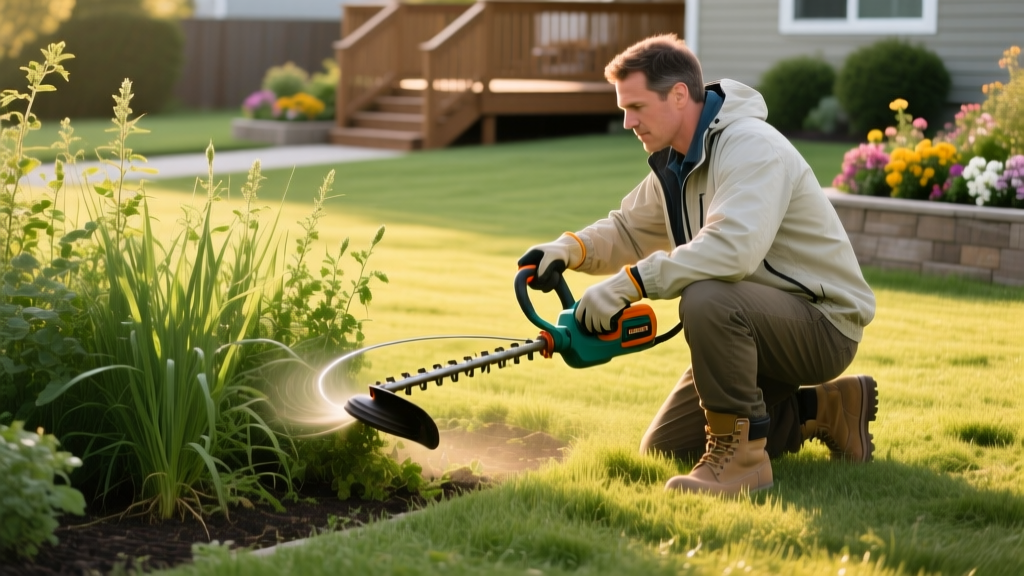
How to Use a Weed Trimmer for Tall Weed Spot-Treatment Prep
Liquid herbicides fail when applied to mature, overgrown weeds. When species like Canada thistle, pokeweed, or broadleaf plantain exceed 12 inches in height, their lower stems lignify (harden) and lose the stomatal density required to absorb chemical treatments. Furthermore, tall weeds prioritize seed production over root development, preventing systemic herbicides from translocating down to the taproot. Learning how to use a weed trimmer as a preparatory tool for spot-treatment is a critical, often overlooked protocol in professional lawn care.
Why Mature Weeds Require Trimmer Prep Before Spot-Treatment
Applying a systemic herbicide like Triclopyr or Glyphosate directly to a 3-foot-tall weed is highly inefficient. The chemical coats the upper leaves, but the plant's vascular system is focused on upward growth and flowering, not downward nutrient storage. By using a string trimmer to cut the weed down to a height of 2 to 3 inches, you achieve three physiological objectives:
- Breaking Apical Dominance: Removing the top growth forces the weed to break dormancy and push out fresh, tender vegetative shoots.
- Exposing the Meristem: Fresh growth near the crown has a high concentration of active stomata, maximizing herbicide absorption.
- Reversing Vascular Flow: The plant shifts from reproductive growth to vegetative recovery, actively pulling water and nutrients (along with the systemic herbicide) down into the root system.
According to Penn State Extension, mechanical reduction of tall weed biomass prior to chemical application significantly increases the long-term kill rate of perennial broadleaf species, provided the timing of the chemical application aligns with the plant's recovery window.
Matching Trimmer Line to Weed Stem Density
Standard 0.065-inch round trimmer line will simply bounce off the fibrous, semi-woody stems of mature weeds, glazing the surface and wasting battery life. You must match the line diameter and geometry to the specific weed species you are targeting.
| Weed Species | Stem Composition | Recommended Line Diameter | Line Geometry |
|---|---|---|---|
| Crabgrass / Annual Bluegrass | Soft, herbaceous | 0.065" - 0.080" | Round |
| Broadleaf Plantain / Dandelion | Fibrous, semi-tough | 0.080" - 0.095" | Twisted or Square |
| Canada Thistle / Dock | Dense, heavily ribbed | 0.095" - 0.105" | Multi-sided (Hex/Star) |
| Pokeweed / Mature Mugwort | Semi-woody, thick pith | 0.105" - 0.130" | Serrated or Blade-style |
For spot-treatment prep on mixed mature weeds, a 0.095-inch twisted nylon line offers the best balance of cutting aggression and feed reliability without overloading the motor of standard residential trimmers.
Step-by-Step: How to Use a Weed Trimmer for Spot-Clearance
Executing the trim requires precision. Scalping the weed down to the soil line will kill the crown, preventing the plant from absorbing the subsequent herbicide. Follow this exact sequence:
- Inspect for Seed Heads: If the weeds have already formed mature seed heads (e.g., dandelion pappus, crabgrass panicles), do not use the trimmer immediately. A trimmer head spinning at 6,000 RPM will launch seeds up to 30 feet away, effectively planting the next generation. Manually snip seed heads into a bucket first, or attach a physical deflector shield to your trimmer deck.
- Set the Cutting Angle: Tilt the trimmer head so the string is angled at 15 degrees away from you. This prevents the line from striking the soil and dulling on hidden rocks.
- Control the RPM: If using a variable-speed trigger, dial the RPM back to roughly 50-60% throttle. High RPMs shred fibrous stems into stringy messes, while medium RPMs with a heavy line slice cleanly through the vascular tissue.
- The Sweep Technique: Use smooth, lateral sweeping motions. Cut the weed down to exactly 2 to 3 inches above the soil grade. Leave the basal rosette and crown completely intact.
- Clear the Debris: Rake away the severed top growth. If left on the lawn, the decaying biomass will block sunlight and prevent the weed's new recovery shoots from emerging, delaying your herbicide window.
The 48-to-72 Hour Recovery Window
CRITICAL TIMING WARNING
Do not apply herbicide immediately after trimming. The plant is in a state of mechanical shock and has temporarily sealed its vascular system to prevent moisture loss. Applying chemicals now will result in contact burn only, with zero root kill.
You must wait for the weed to initiate recovery. Depending on soil moisture and ambient temperatures (ideally between 65°F and 85°F), the weed will push out 1 to 2 inches of fresh, light-green growth within 48 to 72 hours. This new growth is highly porous and actively drawing resources from the root system. This is your exact window to apply a systemic spot-treatment. According to research from the University of Minnesota Extension, applying systemic herbicides during this active vegetative flush ensures maximum translocation to the root zone, effectively eradicating perennial taproots.
Common Trimming Mistakes That Ruin Spot-Treatments
Even experienced homeowners make critical errors when integrating mechanical trimming with chemical spot-treatments. Avoid these failure modes:
- Scalping the Crown: Cutting flush with the dirt removes the meristematic tissue. The plant dies back entirely, and your expensive systemic herbicide has no living tissue to absorb into.
- Using a Weed Whacker on Woody Stems: Attempting to cut 1-inch thick pokeweed or tree saplings with a standard nylon line will snap the line instantly and risk damaging the trimmer's gear head. Use a brush blade attachment or loppers for stems exceeding 0.5 inches in diameter.
- Ignoring the Deflector Guard: Removing the plastic debris guard to 'increase cutting width' is a severe hazard when spot-treating near desirable turf. The guard not only protects your shins but prevents the string from accidentally edging into and damaging the surrounding healthy grass.
- Trimming in High Winds: Spot-treatment prep requires precision. Wind pushes the tall weed stems around, making it nearly impossible to maintain a consistent 2-inch cutting height, resulting in uneven chemical absorption later.
Expert Tool Recommendations for Spot-Treatment Prep
For residential lawn care in 2026, 56V to 80V battery-powered string trimmers provide the instantaneous torque required to slice through tough weed stems without the bogging down common in older 18V models or the maintenance overhead of 2-cycle gas engines.
- EGO Power+ ST1510T (15-Inch, $199): Features a rapid-reload head and excellent variable speed control. The 15-inch swath is ideal for clearing 3-foot diameter weed patches in a single pass.
- Stihl FSA 57 ($229): Extremely lightweight (under 6 lbs without battery), allowing for precise wrist control when navigating tight spot-treatments near delicate ornamental beds.
- Husqvarna 220iL ($199): Known for its smooth motor ramp-up, which prevents the aggressive 'jerk' that often causes users to accidentally scalp the lawn when starting a cut.
Pair any of these units with a high-quality twisted trimmer line, respect the 72-hour recovery window, and your spot-treatment success rate on mature, stubborn weeds will increase dramatically.

