
Lawn Care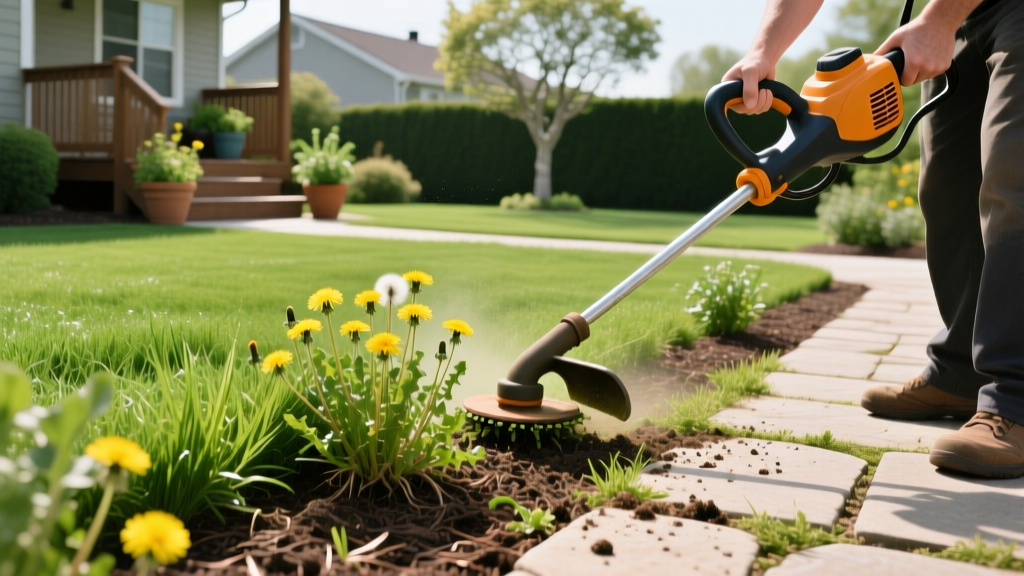
Weed Wacker vs Edger for Spot-Treating Invasive Border Weeds
The Core Difference: Foliar Destruction vs. Root Barrier Creation
When managing lawn borders, hardscapes, and garden beds, homeowners often conflate string trimmers (weed wackers) and lawn edgers as interchangeable aesthetic tools. However, from a weed species spot-treatment perspective, they serve fundamentally different biological functions. A weed wacker is a foliar destruction tool designed to decapitate top growth, prevent seed head maturation, and exhaust the carbohydrate reserves of perennial broadleaf weeds. An edger, conversely, is a rhizotomy tool used to sever lateral root systems and create physical subterranean barriers against invasive stolons and rhizomes.
Choosing the wrong tool for a specific weed species results in rapid regrowth, wasted battery or fuel, and eventual encroachment into your turf or landscape beds. This guide breaks down the exact mechanical specifications, line types, and trenching depths required to use these tools as primary interventions in your integrated weed management program.
Weed Wackers: Spot-Treating Top Growth and Seed Heads
The primary role of the weed wacker in spot-treatment is mechanical defoliation. For annual weeds like Digitaria sanguinalis (crabgrass) or Portulaca oleracea (purslane) growing flush against a concrete driveway, a string trimmer removes the photosynthetic canopy and destroys emerging seed heads before they can shatter and spread.
However, not all weed wacker setups are effective against tough, woody-stemmed border weeds like Canada thistle (Cirsium arvense) or broadleaf dock. To achieve a clean cut that prevents the weed from splintering and immediately pushing out lateral shoots, you must match your trimmer's RPM and line geometry to the target species.
Matching Trimmer Line to Weed Species
- Round Line (0.065" - 0.080"): Best for soft-tissue annual weeds and standard turfgrass trimming. Fails on woody stalks, causing the line to wrap or snap.
- Twisted or Square Line (0.095" - 0.105"): Essential for spot-treating mature broadleaf weeds, thistles, and woody saplings along fence lines. The sharp edges slice through fibrous stalks cleanly. Models like the EGO Power+ ST1510T (15-inch swath, 56V) or Stihl FSA 57 handle 0.095" twisted copolymer line efficiently without stalling the motor.
- Serrated Line: Features micro-teeth that act like a chainsaw chain. Ideal for heavily lignified weeds like mature burdock or blackberry brambles encroaching on lawn edges.
Warning: The Scalping Mistake
Angling your weed wacker head downward to "scalp" weeds flush with the soil surface often exposes the turf's root crown, inviting fungal pathogens like Rhizoctonia solani (brown patch). Keep the trimmer head parallel to the ground, allowing the string tips to do the cutting at a height of 1.5 to 2 inches above the soil line.
Edgers: Trenching Against Invasive Rhizomes and Stolons
While weed wackers handle the canopy, they do absolutely nothing to stop the subterranean advance of invasive grasses. Species like Bermudagrass (Cynodon dactylon), Johnsongrass, and Quackgrass spread via rhizomes that can travel 4 to 6 inches below the soil surface, easily bypassing surface-level mulch or landscape fabric.
An edger is your primary mechanical defense against these species. By cutting a continuous, narrow trench between your lawn and garden beds, you sever the rhizomes and create an air-gap barrier that desiccates the root tips when they attempt to cross.
Blade Selection and Depth Calibration
To effectively block rhizomatous weeds, your edger must be capable of cutting at least 5 to 6 inches deep. Standard manual half-moon edgers rarely achieve this depth consistently. Motorized edgers, such as the McLane 101-3.5H (gas-powered, 9-inch blade) or the EGO Power+ EA0800 (battery-powered, adjustable depth up to 5.5 inches), are required for true rhizome barriers.
- Flat Blades: Standard for aesthetic edging. Cuts cleanly but leaves a narrow gap that can easily collapse, allowing rhizomes to bridge the trench after heavy rain.
- Star Blades (Trenching Blades): Feature pointed, star-like tines that pulverize soil and widen the trench into a "V" shape. This is the superior choice for weed control, as the wider top gap prevents rhizomes from drooping across the trench and re-rooting on the opposite side.
Weed Species Decision Matrix
Use the following framework to determine which tool to deploy based on the specific weed species invading your lawn borders.
| Target Weed Species | Growth Habit | Primary Tool | Technique & Specification |
|---|---|---|---|
| Crabgrass / Goosegrass | Shallow fibrous roots, high seed output | Weed Wacker | Use 0.080" round line at high RPM to sever stalks before seed heads mature. |
| Bermudagrass / Torpedograss | Aggressive deep rhizomes and stolons | Edger | Cut a 6-inch deep V-trench using a star blade. Clear soil from trench weekly. |
| Canada Thistle / Bindweed | Deep taproots, spreads via lateral roots | Weed Wacker | Repeated defoliation with 0.095" twisted line to exhaust root carbohydrate reserves. |
| Dallisgrass | Short, thick rhizomes, clumping habit | Both | Edger to isolate the clump perimeter; Weed Wacker to remove top growth. |
| Purslane / Spurge | Fleshy succulent stems, surface roots | Weed Wacker | Low-speed trim with standard line. Avoid shredding, which allows stem fragments to root. |
The Integrated Border Defense Workflow
For maximum efficacy, professional turf managers combine both tools in a single maintenance pass. Follow this step-by-step workflow to establish a long-term biological barrier along hardscapes and landscape beds.
- Initial Trenching (The Edger Pass): Set your motorized edger to its maximum depth (typically 5 to 6 inches). Run it along the border to sever existing rhizomes. If using a flat blade, make a second pass angled at 45 degrees to remove soil and create a V-trench.
- Trench Clearing: Use a hand trowel or leaf blower to remove all loose soil and severed root fragments from the trench. Leaving severed Bermudagrass rhizomes in the trench allows them to re-root.
- Foliar Defoliation (The Wacker Pass): Switch to your weed wacker loaded with 0.095" twisted line. Trim any remaining top growth hanging over the hardscape or bed. Hold the trimmer head parallel to the ground to avoid damaging the turf crown.
- Spot Chemical Application (Optional): For perennial broadleaves that were just cut by the wacker, apply a targeted drop of systemic herbicide (like triclopyr or glyphosate) directly to the fresh cut stem. The open vascular tissue will rapidly translocate the chemical to the root system.
- Mulch Buffering: Fill the bottom 2 inches of the V-trench with coarse gravel or heavy hardwood mulch to maintain the air gap while preventing soil erosion from collapsing the barrier.
Expert Sourcing and Further Reading
Effective weed management requires an understanding of plant biology and regional turfgrass behavior. For detailed, research-backed profiles on the root depths and spreading mechanisms of the weed species mentioned in this guide, consult the University of Minnesota Extension's comprehensive lawn weed control database. Additionally, the UC Agriculture and Natural Resources Integrated Pest Management (IPM) Weed Index provides critical data on the rhizome depth and drought tolerance of invasive grasses like Bermudagrass and Johnsongrass, which is essential for calibrating your edger's trench depth.

