
Lawn Care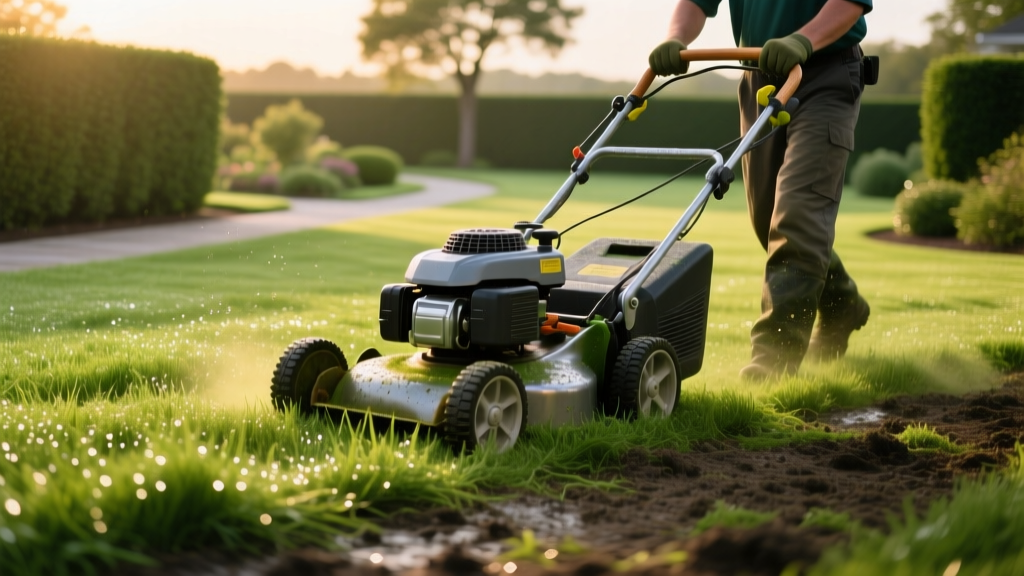
Is It OK to Mow Lawn When Wet? Risks and Best Practices
The Short Answer: Why Turfgrass Experts Say No
When homeowners ask, "is it ok to mow lawn when wet?", the universal consensus among agronomists and turfgrass specialists is a definitive no. Mowing wet grass compromises the structural integrity of the turf canopy, accelerates the spread of fungal pathogens, and causes severe mechanical strain on your mower. According to Clemson University Extension, wet grass blades are highly turgid and heavy, causing them to bend rather than stand upright. This results in an uneven cut and leaves the lawn highly susceptible to environmental stressors.
While waiting for the lawn to dry is the gold standard, real-world weather patterns—especially prolonged spring rains or heavy morning dew—sometimes force a compromise. Understanding the exact thresholds of moisture tolerance and the mechanics of wet cutting is critical for minimizing long-term turf damage.
The Moisture Matrix: Is Your Lawn Actually "Too Wet"?
Not all moisture levels are created equal. Light morning dew poses significantly less risk than a lawn saturated by a two-inch overnight downpour. Use this decision matrix to evaluate your specific conditions before engaging your mower deck.
| Moisture Condition | Footprint Test Result | Time Since Precipitation | Verdict & Action |
|---|---|---|---|
| Heavy Dew Only | Grass springs back instantly; no soil depression. | N/A (Overnight condensation) | Caution: Wait 1-2 hours for sun to burn off dew. Mowing now risks minor clumping. |
| Light Rain / Drizzle | Footprints fade within 3 seconds; soil is firm. | 2+ hours post-rain | Acceptable: Safe to mow if blades are freshly sharpened. Use side-discharge. |
| Moderate Rainfall | Footprints remain visible for 5-10 seconds. | Less than 12 hours | Avoid: High risk of tearing grass and clogging the mower deck. Delay mowing. |
| Saturated / Spongy | Footprints remain indefinitely; water pools in depressions. | Recent heavy storm | Strictly Prohibited: Severe soil compaction and rutting will occur. Wait 24-48 hours. |
The Physics of Wet Cutting: Tearing vs. Slicing
To understand why wet mowing is destructive, you must look at the physics of the mower blade interacting with the grass blade. A sharp mower blade spinning at 3,000 RPM is designed to create a clean shear force. However, water adds significant mass to the grass blade. When a wet blade is struck, the added weight and surface tension cause it to fold over the cutting edge rather than being sliced cleanly.
This folding action results in a tearing or bludgeoning effect. The torn leaf tips lose their waxy cuticle layer, exposing the internal vascular tissue. This leads to rapid moisture loss (desiccation), turning the lawn a dull, grayish-brown color within 24 hours. Furthermore, these ragged, open wounds are the primary entry points for opportunistic turfgrass pathogens.
Expert Insight: If you must mow damp grass, the sharpness of your blade is non-negotiable. Mulching blades (like the Toro Atomic mulching blade) rely on high-velocity air circulation to keep clippings suspended for recutting. Wet grass collapses this air vortex, turning your mulching deck into a clumping disaster.
Equipment Risks: Deck Clogging and Electrical Hazards
The question of whether it is ok to mow lawn when wet isn't just about grass health; it is also about protecting your equipment investment. Modern mowers are highly engineered, but wet, acidic grass clippings bypass these engineering tolerances.
Mulching vs. Side-Discharge in Damp Conditions
If you are forced to cut damp turf, never use a mulching plug. Wet clippings adhere to the underside of the mower deck like wet cement. On stamped steel decks (common on older Craftsman or Troy-Bilt models), this acidic paste accelerates rust and degrades the deck thickness over a single season. Even on polymer composite decks, such as those found on the EGO Power+ LM2130 or Toro Poly-Cut series, wet buildup alters the internal aerodynamics. This reduces blade lift, causing the mower to scalp the lawn and stall the motor.
Electric Mower Vulnerabilities
As of 2026, lithium-ion electric mowers dominate the residential market. While these machines are rated for outdoor use, pushing them through soaked, dripping grass increases the risk of water ingress into the battery terminal housing and the electronic speed controller. Always ensure the battery compartment seal is completely intact before operating in high-moisture environments.
Disease Vectors: The Fungal Superhighway
Perhaps the most severe consequence of mowing wet grass is the mechanical transmission of fungal spores. Diseases like Brown Patch (Rhizoctonia solani) and Dollar Spot (Clarireedia jacksonii) thrive in high-humidity, wet-canopy environments.
According to Penn State Extension, Brown Patch spreads rapidly when daytime temperatures exceed 80°F and nighttime temperatures stay above 70°F with high humidity. When you mow a wet lawn that has a localized, undetected fungal outbreak, the mower tires and the spinning blade act as a vector, physically dragging and aerosolizing millions of spores across the entire property. What was a 10-square-foot infection zone becomes a systemic lawn failure within a week.
The Emergency Wet-Mowing Protocol
If your cool-season Tall Fescue has reached 5.5 inches due to a week of continuous rain, and the forecast predicts more precipitation, you may have no choice but to mow. Follow this strict protocol to mitigate damage:
- Raise the Cutting Height: Increase your deck height by at least 0.5 to 1.0 inches. For Tall Fescue, set the deck to a minimum of 3.5 inches. This reduces the volume of wet tissue being cut and prevents the blade from bogging down in the thickest part of the canopy.
- Remove the Mulching Plug: Install the side-discharge chute. Do not attempt to mulch or bag wet grass; the weight of wet clippings will tear standard fabric collection bags and clog the discharge chute.
- Reduce Ground Speed: Engage a lower self-propelled speed setting or walk slower. This gives the mower blade more time to generate lift and expel the heavy, wet clippings out of the side chute.
- Overlap Passes: Wet grass will inevitably cause some clumping. Overlap your mowing lines by 30% to ensure the second pass picks up and redistributes the clumps left by the first pass.
- Immediate Deck Cleaning: Within 30 minutes of finishing, use a plastic putty knife to scrape the underside of the deck. Do not use a wire brush on polymer decks, and never use a metal scraper on stamped steel, as this removes the protective paint coating.
Frequently Asked Questions
Can I mow when there is morning dew?
It is highly recommended to wait. Morning dew contains dissolved salts and atmospheric pollutants that, when smeared across a torn grass blade, can cause localized tip burn. Wait until the sun has dried the canopy, usually between 9:30 AM and 10:30 AM depending on your region and tree shade.
Will mowing wet grass dull my mower blade faster?
Yes. The added mass of water in the grass blade increases the impact resistance against the cutting edge. Additionally, wet soil and sand particles adhere to the lower grass stems; cutting through this gritty, wet slurry acts like sandpaper on your mower blade, dulling it up to 40% faster than cutting dry turf.
How do I fix a lawn that was torn by wet mowing?
Apply a light dose of fast-acting liquid nitrogen (such as a 24-0-0 urea-based foliar spray) to promote rapid cellular recovery and push new growth. If you notice frayed tips turning brown and developing dark, concentric lesions, apply a preventative fungicide containing azoxystrobin immediately to halt secondary fungal infections.

