
Lawn Care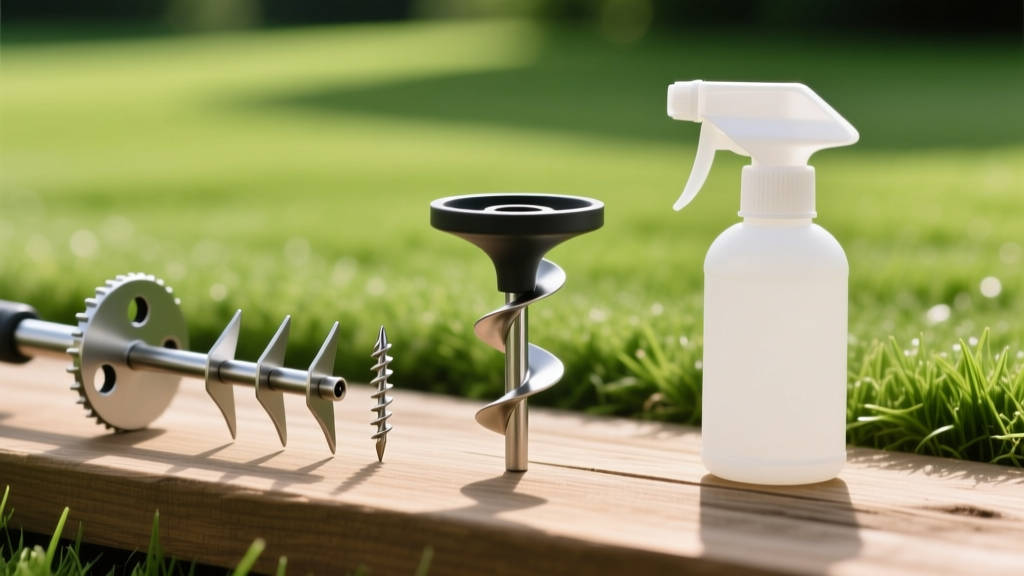
What Are Aerators? Identifying Core, Spike, and Liquid Lawn Tools
Defining Lawn Aerators: Beyond Poking Holes
When homeowners ask, 'what are aerators?', the most common answer is 'machines that poke holes in the dirt.' While functionally true, this definition misses the agronomic purpose of the tool. In turfgrass management, an aerator is a mechanical or chemical implement designed to alleviate soil bulk density. When soil bulk density exceeds 1.4 g/cm³, pore space collapses, choking grassroots of oxygen, restricting water infiltration, and halting nutrient uptake. Aerators physically or chemically disrupt this compacted matrix to restore the ideal 50% solid / 25% water / 25% air soil composition.
Understanding the exact mechanics of different aerators is critical. Using the wrong tool on the wrong soil type can actually worsen compaction, leading to severe turf decline. This guide identifies the three primary categories of lawn aerators—core, spike, and liquid—and provides a framework for selecting the right equipment for your specific soil profile.
The Three Main Types of Lawn Aerators
The aeration market is divided into mechanical extraction, mechanical displacement, and chemical surfactant application. Below is a comparison matrix detailing how each technology interacts with the soil profile.
| Aerator Type | Mechanism of Action | Ideal Soil Type | Average Cost (2026) | Compaction Relief |
|---|---|---|---|---|
| Core (Plug) | Extracts 2-3 inch soil cores via hollow tines | Heavy Clay, Compacted Loam | $90 (Rental) / $3,500 (Commercial) | Excellent (Permanent) |
| Spike | Pushes solid tines into soil, displacing dirt laterally | Sandy, Non-Compacted Loam | $35 (Manual) / $150 (Tow-behind) | Poor (Can worsen clay) |
| Liquid | Applies surfactants to reduce water surface tension | Hydrophobic (Water-repellent) | $25 - $45 per bottle | None (Does not relieve physical compaction) |
Mechanical Deep Dive: Core vs. Spike Tines
The distinction between core and spike aerators is the most critical factor in lawn renovation. The physical forces they apply to the soil are fundamentally opposed.
Core Aerators: The Shearing Force
Core aerators (also known as plug aerators) utilize hollow tines, typically 5/8-inch in diameter, mounted on a rotating drum or reciprocating cam. As the tine enters the ground, it captures a plug of soil and thatch, depositing it on the surface. This process, known as hollow-tine cultivation, physically removes mass from the soil profile. The remaining holes allow the surrounding compacted soil to expand into the void, permanently relieving lateral pressure. According to University of Minnesota Extension, core aeration is the only mechanical method proven to reliably reduce soil bulk density in heavy clay lawns.
Spike Aerators: The Compression Problem
Spike aerators use solid steel tines or forks to pierce the ground. Because no soil is removed, the tine must push existing dirt out of its way. In sandy soils, this is harmless. However, in heavy clay or heavily trafficked loam, the solid tine pushes soil outward and downward, creating a highly compacted 'glaze' on the walls of the hole. This lateral compression can actually restrict root growth more than the original surface compaction.
⚠️ Warning: The Spike Aerator Trap
Never use a spike aerator (including aerator sandals or solid-tine tow-behinds) on lawns with high clay content or severe foot-traffic compaction. The lateral displacement will create a hardpan layer just below the tine's maximum depth, effectively sealing off the subsoil from water penetration.
Never use a spike aerator (including aerator sandals or solid-tine tow-behinds) on lawns with high clay content or severe foot-traffic compaction. The lateral displacement will create a hardpan layer just below the tine's maximum depth, effectively sealing off the subsoil from water penetration.
Chemical Aeration: The Reality of Liquid Surfactants
Liquid aerators have surged in popularity, but they are frequently misunderstood. Products like Simple Lawn Solutions Liquid Aerating Soil Loosener or N-EXT Air-R8 do not physically break up compacted soil. Instead, they rely on active ingredients like ammonium lauryl sulfate (ALS) or natural saponins. These are wetting agents (surfactants) that reduce the surface tension of water.
In soils that have become hydrophobic (water-repellent) due to excessive thatch or sandy composition, water beads up and runs off rather than soaking in. Liquid aerators coat the soil particles, allowing water to penetrate deeply. While excellent for addressing localized dry spots and improving moisture retention, liquid aerators provide zero mechanical relief for physical soil compaction. They are a supplement to, not a replacement for, core aeration.
Identifying the Right Tool for Your Soil Texture
Choosing the correct aerator requires identifying your baseline soil texture. Use this decision framework to select your equipment:
- Heavy Clay (Sticky when wet, hard clods when dry): Requires mechanical core aeration. Use a walk-behind drum aerator with 5/8-inch hollow tines. Make two passes in perpendicular directions to achieve 15-20 holes per square foot.
- Sandy Loam (Drains quickly, crumbles easily): Core aeration is still beneficial for thatch management, but spike aeration can be used for rapid, low-effort moisture channeling without risking severe lateral compaction.
- Hydrophobic / High-Organic Matter: Combine mechanical core aeration with a liquid surfactant application immediately afterward. The physical holes allow the liquid wetting agent to bypass the thatch layer and coat the subsoil directly.
2026 Cost Breakdown: Renting, Buying, and Hiring
Equipment acquisition is a major hurdle for homeowners. Here is the current financial landscape for lawn aeration in 2026:
Equipment Rental
Renting a commercial-grade walk-behind core aerator (brands like Classen, Ryan, or Lesco) from a local hardware store typically costs between $90 and $120 for a 4-hour half-day rental. This is the most cost-effective route for lawns between 3,000 and 8,000 square feet. Note that these machines weigh 200–300 lbs; you will need a pickup truck or SUV to transport them.
Professional Services
Hiring a licensed lawn care company to perform core aeration averages $18 to $25 per 1,000 square feet. For a standard 5,000 sq. ft. suburban lawn, expect to pay between $90 and $125. Professionals use heavy-duty stand-on aerators (like the Exmark Stand-On Aerator) that pull deeper cores (up to 4 inches) than standard rental drum models.
Purchasing Manual Tools
For small urban yards or patch repairs, a manual step-aerator (such as the Yard Butler Lawn Coring Aerator) costs around $40 to $55. These require significant physical exertion but extract genuine 3-inch cores without the need for gas or heavy machinery.
Timing Your Aeration: Soil Temperature Triggers
Aeration causes temporary stress to the turfgrass plant. Timing the procedure to coincide with the grass's peak biological growth phase ensures rapid hole recovery and prevents weed invasion. According to Penn State Extension, timing must be dictated by the grass species, not just the calendar month.
💡 Pro-Tip: The Root Growth Window
Cool-season grasses (Kentucky Bluegrass, Tall Fescue) should be aerated in late summer to early fall (August 15 – September 30) when soil temperatures drop to 60°F–70°F. Warm-season grasses (Bermuda, Zoysia, Centipede) must be aerated in late spring to early summer (May 15 – June 30) when soil temperatures consistently exceed 70°F and the grass is actively spreading via stolons.
Cool-season grasses (Kentucky Bluegrass, Tall Fescue) should be aerated in late summer to early fall (August 15 – September 30) when soil temperatures drop to 60°F–70°F. Warm-season grasses (Bermuda, Zoysia, Centipede) must be aerated in late spring to early summer (May 15 – June 30) when soil temperatures consistently exceed 70°F and the grass is actively spreading via stolons.
Frequently Asked Questions
Should I leave the soil plugs on the lawn after core aerating?
Yes. The extracted cores contain vital microorganisms and nutrients. As they break down over 2 to 4 weeks (accelerated by rainfall or irrigation), they deposit topsoil back onto the thatch layer, introducing soil microbes that actively decompose thatch. Only rake them up if you have an immediate event where the lawn's aesthetic is paramount.
Can I aerate a newly seeded or sodded lawn?
No. Mechanical aeration will rip out shallow, unestablished roots. Wait at least 12 months for sod to fully knit into the subsoil, and wait until a seeded lawn has gone through at least one full dormant winter cycle before subjecting it to the shearing forces of a core aerator.
Do I need to water the lawn before aerating?
Mechanical tines cannot penetrate bone-dry, hardened clay. Irrigate the lawn with roughly 0.5 inches of water 24 to 48 hours before aeration. The soil should be moist but not saturated; if the soil is muddy, the hollow tines will clog with mud and fail to extract plugs.

