
Lawn Care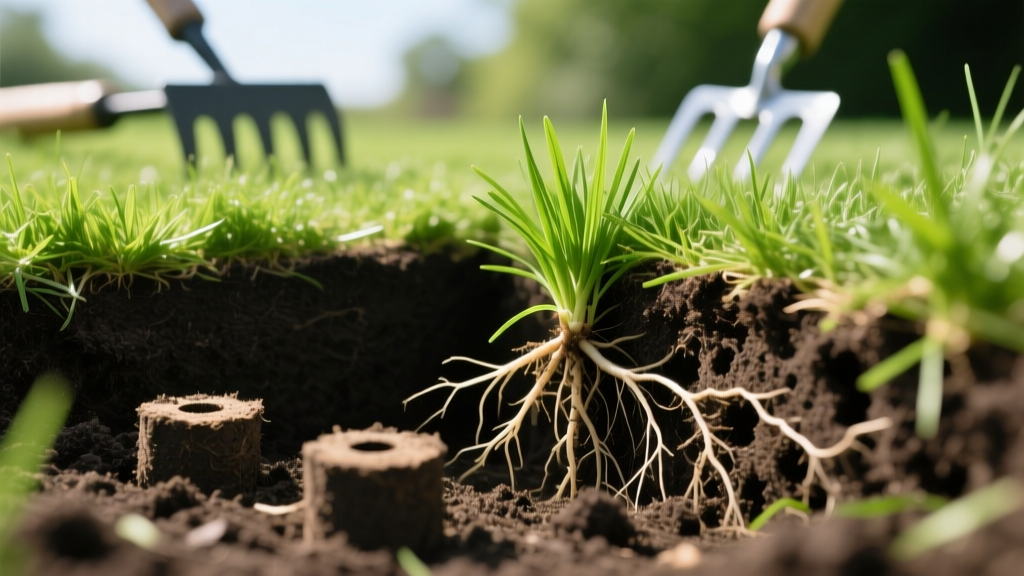
What Does Aerating Grass Do? Soil Science & Root Growth Explained
When homeowners ask, 'what does aerating grass do?', the standard answer is usually limited to 'it helps the soil breathe.' While technically true, this explanation barely scratches the surface of the complex agronomic and physical changes that occur below the turf canopy. Aeration is not merely a cosmetic lawn care practice; it is a critical soil management intervention designed to reverse mechanical compaction, restore pore space geometry, and reactivate microbial nutrient cycling.
This guide breaks down the exact physics and biology of lawn aeration, providing a diagnostic framework to determine if your soil requires intervention, alongside current equipment specifications and service costs.
The Physics of Soil Compaction and Bulk Density
To understand what aerating grass does, you must first understand the enemy: soil compaction. Healthy topsoil consists of roughly 50% solid matter (minerals and organic material) and 50% pore space (split evenly between water and oxygen). When foot traffic, heavy mowing equipment, or intense rainfall compresses the soil, the macropores collapse.
The Bulk Density Threshold: Soil scientists measure compaction using 'bulk density' (mass of dry soil per unit volume). Ideal turfgrass soil has a bulk density of 1.1 to 1.3 g/cm³. Once clay-heavy soils exceed 1.5 g/cm³, root penetration physically halts, and water infiltration drops below 0.5 inches per hour, leading to surface runoff and shallow root systems.
Mechanical core aeration physically removes cylindrical plugs of soil (typically 0.5 to 0.75 inches in diameter and 2 to 3 inches deep). By extracting these cores, the machine artificially lowers the bulk density of the surrounding soil matrix, allowing the compacted earth to expand laterally into the empty holes.
Biological Impact: Root Respiration and ATP Production
Beyond physical decompaction, what does aerating grass do for the plant's biology? Turfgrass roots require oxygen for cellular respiration—the process that generates ATP (adenosine triphosphate), the energy currency plants use to absorb water and synthesize nutrients.
In compacted soil, oxygen levels in the pore space drop below 10%, shifting the soil microbiome from aerobic (beneficial bacteria and earthworms) to anaerobic (pathogenic fungi and denitrifying bacteria). By restoring oxygen levels to the optimal 20-30% range, core aeration achieves three specific biological outcomes:
- Enhanced Nutrient Uptake: Aerobic microbes mineralize organic nitrogen into plant-available nitrate at a significantly higher rate.
- Thatch Degradation: Oxygen fuels the microbes responsible for breaking down the thatch layer, preventing it from exceeding the critical 0.5-inch threshold that blocks water penetration.
- Deeper Root Architecture: With reduced physical resistance and adequate oxygen, cool-season grasses like Kentucky Bluegrass and Tall Fescue can push roots from a shallow 2 inches down to 6 or 8 inches, drastically improving drought tolerance.
Core vs. Spike vs. Liquid Aeration: A Structural Comparison
Not all aeration methods yield the same agronomic results. The University of Minnesota Extension strongly advises against spike aeration for heavy soils. Below is a structural comparison of the three primary methods available to homeowners.
| Method | Mechanism of Action | Effect on Soil Density | Best Use Case |
|---|---|---|---|
| Core (Plug) Aeration | Extracts 2-3 inch soil cylinders using hollow tines. | Decreases bulk density; relieves lateral pressure. | Heavy clay soils, high traffic areas, severe compaction. |
| Spike Aeration | Pokes solid holes using spikes or tines. | Increases lateral compaction around the hole walls. | Sandy soils that do not compact laterally; temporary relief. |
| Liquid Aeration | Applies surfactants (like ammonium lauryl sulfate) to break water tension. | Does not alter physical soil structure or bulk density. | Hydrophobic (water-repellent) soils; improving water infiltration. |
Diagnostic Framework: Does Your Soil Actually Need Aeration?
Do not aerate on a fixed calendar schedule; aerate based on soil diagnostics. Perform these three field tests to confirm compaction before renting heavy equipment.
1. The Screwdriver Penetration Test
Take a standard 6-inch flathead screwdriver and attempt to push it into the soil by hand. If the soil is adequately decompacted, it should slide in with mild, steady pressure. If you cannot penetrate past 2 or 3 inches without leveraging your body weight, your soil bulk density is too high.
2. The Core Sample Shear Test
Use a hand trowel or soil probe to extract a 4-inch deep wedge of turf. Examine the side profile. Look for a 'plow pan'—a distinct, pale, tightly packed horizontal layer of clay usually located 2 to 3 inches below the surface. If the roots are growing horizontally above this layer rather than vertically through it, mechanical core aeration is mandatory.
3. The Water Infiltration Rate Test
Cut the bottom off a plastic cylinder (like a coffee can) and push it 1 inch into the soil. Fill it with exactly 2 inches of water and time the drainage. According to Penn State Extension, healthy turf soil should absorb 1 inch of water in roughly 15 to 20 minutes. If the water remains pooled after 45 minutes, the macropores are collapsed.
2026 Equipment Specs and Service Costs
If your diagnostics confirm compaction, you must choose between professional services and DIY rental. The market for turf aeration equipment has shifted heavily toward cam-driven machines over older drum-style models.
- Professional Service Costs: In 2026, professional lawn care companies charge between $18 and $28 per 1,000 square feet for standalone core aeration. This usually includes a double-pass (running over the lawn in two perpendicular directions) to ensure adequate hole density (15-20 holes per square foot).
- DIY Drum Aerator Rentals: Standard rental centers offer drum aerators (e.g., Classen or Lesco models) for $90 to $130 for a 4-hour block. Warning: Drum aerators rely on the rotation of the heavy cylinder to pull the tines out, which can tear the turf canopy on turns.
- Cam-Driven Aerators (Prosumer): Machines like the Billy Goat AET62H or Ryan Lawnaire V use a cam mechanism that drives the tines straight down and pulls them straight up, eliminating turf tearing. These rent for $150 to $200 per day and are vastly superior for establishing lawns.
Frequently Asked Questions
Should I leave the soil plugs on the lawn or rake them up?
Leave them. The extracted cores contain vital microorganisms that will inoculate the thatch layer as they break down over the next two to three weeks. Mowing over them with a mulching blade will accelerate their reintegration into the soil profile.
What does aerating grass do if I have a heavy thatch problem?
Aeration is the most effective biological remedy for thatch. The soil plugs deposited on top of the thatch introduce mineral soil and aerobic microbes directly to the thatch layer, accelerating decomposition far faster than chemical dethatchers or mechanical power raking, which can damage healthy crowns.
Can I aerate a newly seeded lawn?
No. New turf requires a minimum of one full growing season to establish a root mass capable of withstanding the shear forces of aeration tines. Aerating seedlings will rip the immature root systems out of the soil matrix.

