Lawn Care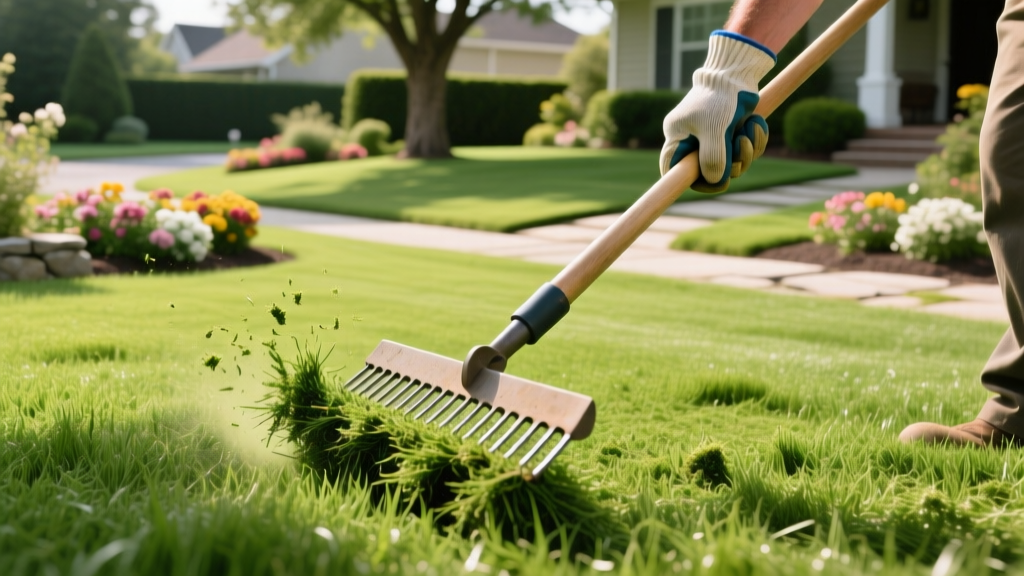
What Is a Thatcher and When Does Your Lawn Actually Need One?
Defining the Tool: What Is a Thatcher?
A thatcher (commonly referred to as a dethatcher or power rake) is a specialized piece of lawn care equipment designed to mechanically penetrate the turf canopy and physically extract, slice, or pull up the thatch layer. Thatch is the intermingled stratum of living and dead stems, roots, and crowns that accumulates between the soil surface and the green vegetation.
While a thin layer of thatch (under 0.5 inches) acts as a beneficial insulator and moisture retainer, excessive buildup creates a hydrophobic barrier. This prevents water, oxygen, and liquid fertilizers from reaching the root zone, ultimately leading to shallow root systems and increased susceptibility to drought and fungal diseases like brown patch. A thatcher solves this by aggressively grooming the soil line to restore the soil-to-turf interface.
The Anatomy of a Thatcher: Tines vs. Blades
Not all thatchers operate identically. The mechanism of action dictates the severity of the turf disruption. Understanding the difference is critical to avoiding catastrophic lawn damage.
- Spring-Tine Dethatchers: These utilize flexible, bouncing metal tines that scratch the surface and pull up loose, dead organic matter. They are ideal for annual maintenance on residential lawns with mild thatch accumulation (0.5 to 0.75 inches).
- Flail-Blade Power Rakes: These feature rigid, heavy-duty steel blades that slice deeply into the soil profile, severing stolons and rhizomes. They are aggressive tools reserved for severe thatch buildup (over 1 inch) and commercial turf renovation.
WARNING: Bunch-Type Grasses
Tall Fescue and Perennial Ryegrass are bunch-type grasses that rarely produce severe thatch. Aggressive power raking can sever their crowns and kill the plant. For these species, stick to gentle spring-tine dethatching or core aeration instead.
Dethatcher vs. Power Rake vs. Core Aerator
Homeowners frequently conflate these three tools. According to Penn State Extension, mechanical thatch removal and soil compaction relief are entirely different processes. Use this matrix to select the correct equipment for your lawn's specific pathology.
| Equipment | Mechanism | Target Depth | Best Use Case |
|---|---|---|---|
| Spring-Tine Dethatcher | Flexible tines scratch surface | 0 to 0.25 inches | Annual cleanup, mild thatch |
| Flail-Blade Power Rake | Rigid blades slice soil line | 0.25 to 0.5 inches | Severe thatch, turf renovation |
| Core Aerator | Hollow tines extract soil plugs | 2 to 3 inches deep | Relieving compaction, microbial thatch breakdown |
Identifying Thatch Buildup: The Wedge Cut Test
Never guess if your lawn needs a thatcher. Visual inspection of the surface is highly deceptive. Instead, perform a physical soil profile analysis.
- Take a flat spade or a heavy-duty soil probe and cut a 4x4 inch wedge into your lawn, going at least 3 inches deep.
- Lift the turf block and examine the cross-section.
- Identify the green grass blades at the top, the dark mineral soil at the bottom, and the spongy, light-brown organic layer sandwiched between them.
- Measure the brown layer with a tape measure. If it exceeds 0.5 inches, mechanical dethatching is required.
Types of Thatchers: 2026 Equipment Breakdown
The market offers varied solutions depending on lawn size and budget. Below is a breakdown of current, high-performance equipment categories.
1. Manual Thatching Rakes
Featuring curved, sharp steel tines designed to dig into the soil line. Models like the Ames 15-Tine Thatching Rake (approx. $45) are highly effective but physically exhausting. They are only practical for lawns under 1,500 square feet or for targeting isolated, heavily compacted zones.
2. Electric Dethatchers
Ideal for suburban lawns up to 5,000 square feet. These machines resemble push mowers and use a rotating cylinder of spring tines.
- Sun Joe TJ603E (14-inch, 9-Amp): Priced around $179, this is a top-tier residential unit. Its 14-inch path and adjustable depth gauge prevent scalping the soil.
- Greenworks 14-Inch Corded (10-Amp): Retailing near $149, it offers slightly more torque for dense Zoysia or Kentucky Bluegrass lawns.
3. Gas-Powered Commercial Units
For large estates or severe renovation projects, commercial flail-blade units are mandatory. The Billy Goat HR500H or Ryan Lawnaire series feature Honda GX engines and carbide-tipped flail blades. Purchasing these costs upwards of $2,500, making them strictly rental territory for most homeowners.
When to Thatch: Timing by Grass Species
Thatching causes significant turf stress. You must perform this task when the grass is entering its peak growth phase to ensure rapid recovery. According to the University of Minnesota Extension, timing errors can lead to massive weed invasion.
Cool-Season Grasses (Kentucky Bluegrass, Tall Fescue, Perennial Ryegrass)
Optimal Window: Late August to mid-September.
Why: Fall provides cool air and warm soil, triggering aggressive root growth and tillering before winter dormancy. Spring thatching is discouraged as it opens the canopy to summer weed seeds like crabgrass.
Warm-Season Grasses (Bermudagrass, Zoysiagrass, Centipedegrass)
Optimal Window: Late May to early June.
Why: These grasses break dormancy in spring. Wait until the lawn has fully greened up and has been mowed at least twice. Thatching too early in the spring exposes the vulnerable crowns to late frost damage.
The Hidden Costs of Thatching
Budgeting for thatch removal requires looking beyond the equipment. Debris disposal and recovery materials add to the final tally.
- DIY Electric Purchase: $140 - $200 (one-time cost).
- Commercial Rental (e.g., Home Depot, Sunbelt Rentals): $75 - $95 per day. Note: Commercial units weigh over 150 lbs and require a truck or trailer for transport.
- Professional Lawn Service: $0.15 - $0.25 per square foot. For a standard 5,000 sq. ft. lawn, expect to pay between $750 and $1,250, which usually includes debris haul-away.
- Debris Disposal: A heavily thatched 5,000 sq. ft. lawn can yield 15 to 20 cubic yards of debris—equivalent to filling a standard dump truck. Factor in municipal yard waste bag costs or a $150 dumpster rental.
Post-Thatching Recovery Protocol
Pulling the thatch is only 30% of the job. The exposed soil is highly vulnerable and must be capitalized on immediately.
- Mow and Rake: Mow the lawn to 1.5 inches before thatching. After running the thatcher, use a leaf blower or a stiff landscape rake to remove 100% of the extracted debris. Leaving it on the lawn will smother the remaining grass.
- Core Aerate (Optional but Recommended): If your soil is compacted clay, run a core aerator immediately after thatching. The absence of thatch allows the aerator tines to penetrate deeply into the mineral soil.
- Overseed: The grooves left by the thatcher are perfect seed-to-soil contact zones. Apply high-quality turf seed at a rate of 3 to 5 lbs per 1,000 square feet for Tall Fescue, or 1 to 2 lbs for Kentucky Bluegrass.
- Fertilize: Apply a starter fertilizer high in phosphorus (e.g., an NPK ratio of 18-24-12) at a rate of 1 lb of nitrogen per 1,000 square feet to drive immediate root establishment.
- Hydrate: Keep the top inch of soil consistently moist for 14 to 21 days until seed germination is complete.
Frequently Asked Questions
Can I use a standard leaf rake to dethatch my lawn?
No. Standard leaf rakes have flexible plastic or bamboo tines that glide over the turf canopy. They will only collect fallen leaves and surface clippings, failing to penetrate and extract the bound thatch layer at the soil line.
Do grass clippings cause thatch?