
Lawn Care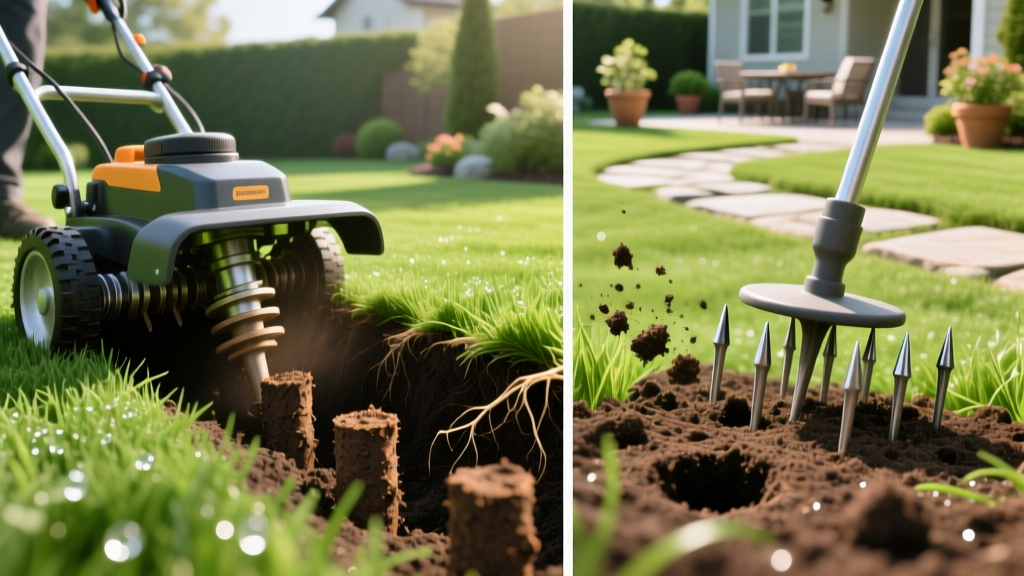
What Is an Aerator? Core vs Spike Lawn Aeration Explained
The Soil Science: What Is an Aerator Actually Doing?
At its most fundamental level, an aerator is a mechanical device engineered to alleviate soil compaction by creating voids in the earth, allowing oxygen, water, and dissolved nutrients to reach the root zone. However, understanding what is an aerator requires looking past the machine and into the soil profile. Turfgrass roots require a soil bulk density of less than 1.4 grams per cubic centimeter (g/cm³) in clay soils, and 1.6 g/cm³ in sandy soils, to penetrate effectively. When foot traffic, heavy mowing equipment, and natural settling push bulk density beyond these thresholds, soil pores collapse. The USDA Natural Resources Conservation Service identifies this physical degradation as the primary catalyst for shallow rooting, drought stress, and localized dry spot.
The 1.5 g/cm³ Compaction Threshold: In heavy clay loams, once soil bulk density exceeds 1.5 g/cm³, macroporosity drops below 10%. At this stage, surface watering simply runs off, and granular fertilizers remain trapped in the thatch layer. Mechanical aeration is the only proven method to physically fracture this hardpan layer and restore macroporosity.
Core vs. Spike vs. Liquid: Identifying the Right Aerator Type
Not all aerators perform the same function. The market is currently saturated with three distinct categories, but their efficacy varies wildly based on your soil composition and compaction severity.
| Aerator Type | Mechanism of Action | Best Use Case | Failure Mode |
|---|---|---|---|
| Core (Plug) | Hollow tines extract 2-4 inch soil cores, physically removing mass from the ground. | Heavy clay, high-traffic zones, severe compaction, pre-overseeding. | Tines clog if soil is overly wet; shallow penetration if soil is bone dry. |
| Spike | Solid metal spikes punch into the ground, displacing soil outward. | Sandy soils, mild compaction, quick maintenance between core cycles. | Worsens compaction in clay by smearing and compacting the walls of the hole. |
| Liquid (Surfactant) | Hose-end sprayers apply humic acid and sodium lauryl sulfate to soften soil. | Slight surface crusting, aiding water infiltration in hydrophobic soils. | Cannot physically break deep hardpan; entirely ineffective for severe clay compaction. |
According to turfgrass specialists at Penn State Extension, hollow-tine core aeration remains the undisputed gold standard for residential and commercial lawn renovation. Spike aerators, while cheaper and easier to use, actually cause lateral compression in clay soils, creating a tighter hardpan just below the spike depth.
Mechanical Anatomy: How Stand-On and Walk-Behind Aerators Work
When renting or purchasing equipment, you will encounter specific machine architectures. Understanding the mechanics of these machines prevents operator error and equipment damage.
Tine Specifications and Depth Penetration
The effectiveness of a core aerator is dictated by its tine diameter and the machine's downward force. Standard residential tow-behind aerators utilize 1/2-inch or 5/8-inch hollow tines. However, professional-grade walk-behind units, such as the Billy Goat AET55 or the Ryan Ren-O-Thin 544, utilize 3/4-inch heavy-wall tines.
- Target Depth: Minimum 3 inches, ideally 4 to 6 inches. This reaches the primary root zone of most cool-season and warm-season turfgrasses.
- Downward Force: Walk-behind aerators weigh between 200 and 350 lbs. Tow-behind models require you to add concrete blocks or water to the deck to achieve the necessary 150+ lbs of penetration force.
- Coring Action: Look for machines with 'offset' or 'dual-action' tine banks. These reduce the physical pulling force required by the operator by up to 40% compared to fixed-drum models.
The Hidden Costs: Renting vs. Buying vs. Hiring in 2026
Budgeting for aeration requires looking beyond the sticker price. Here is a breakdown of the real-world costs for homeowners managing a standard 5,000 sq. ft. lawn in 2026.
| Method | Estimated Cost (5k sq ft) | Labor & Time | Equipment Quality |
|---|---|---|---|
| DIY Tow-Behind (Purchase) | $250 - $450 | 2 hours (requires riding mower) | Low to Medium (shallow tines) |
| DIY Walk-Behind (Rental) | $85 - $130 / day | 3-4 hours (heavy physical labor) | High (commercial grade) |
| Professional Service | $100 - $175 | 0 hours | High (stand-on commercial units) |
Pro Tip: If renting a walk-behind aerator, always rent a pickup truck or trailer. These machines weigh over 250 lbs and will not fit in a standard SUV hatchback. Furthermore, never attempt to load a walk-behind aerator into a truck bed alone; the center of gravity is heavily biased toward the tine drum, making it a severe crush hazard on ramps.
Diagnostic Checklist: Does Your Lawn Actually Need Aeration?
Do not aerate on a fixed calendar schedule. Aerate based on soil diagnostics. Use this framework to determine if your lawn requires mechanical intervention:
- The Screwdriver Test: Take a standard 6-inch flathead screwdriver and attempt to push it into the soil by hand. If you cannot sink it to the handle with moderate, steady pressure, your soil bulk density is too high.
- Thatch Measurement: Cut a small wedge of turf with a shovel. If the spongy, brown organic layer between the green grass and the mineral soil exceeds 0.5 inches, core aeration is required to introduce soil microbes that break down thatch.
- Water Pooling: Run your irrigation system for 10 minutes. If water begins to pool on the surface or run off into the street before the cycle ends, the soil's infiltration rate has been choked by surface crusting.
For optimal results, timing is critical. Cool-season grasses (Kentucky Bluegrass, Tall Fescue) should be aerated in early fall (late August to September) to coincide with peak root growth. Warm-season grasses (Bermuda, Zoysia) must be aerated in late spring to early summer (May to June) when they are actively growing and can quickly recover from the mechanical stress. The University of Maryland Extension emphasizes that aerating dormant turf can lead to severe root desiccation and weed invasion.
Common Aeration Failures and How to Avoid Them
Even with the right equipment, improper execution can damage your turf. Avoid these three critical failure modes:
1. Smearing from Excessive Moisture
Aerating immediately after a heavy rain is a catastrophic mistake. When soil moisture exceeds field capacity, the hollow tines do not extract a clean core. Instead, they smear the wet clay, glazing the walls of the hole. This creates an impermeable seal that actually prevents water from entering the void. Fix: Water the lawn deeply 24 hours before aeration, but halt irrigation if the soil becomes muddy or sticks to your boots.
2. Bouncing Tines in Drought Conditions
In late summer droughts, clay soil bakes into a concrete-like state. Standard walk-behind aerators will simply bounce across the surface, extracting 1-inch crumbs rather than 3-inch cores. Fix: You must pre-soak the lawn with 1 inch of water over two consecutive days prior to the aeration pass to soften the hardpan.
3. Smothering the Turf with Leftover Plugs
While it is generally recommended to leave soil cores on the lawn to break down and deposit beneficial microbes into the thatch, this rule has an exception. If your lawn has a severe thatch layer (>0.75 inches) or you are using the aeration pass to prepare for heavy overseeding, the leftover plugs will block seed-to-soil contact. Fix: Run a lawn mower with a bagging attachment over the yard immediately after aeration to pulverize and collect the plugs, exposing the open holes for seed and fertilizer.

