
Lawn Care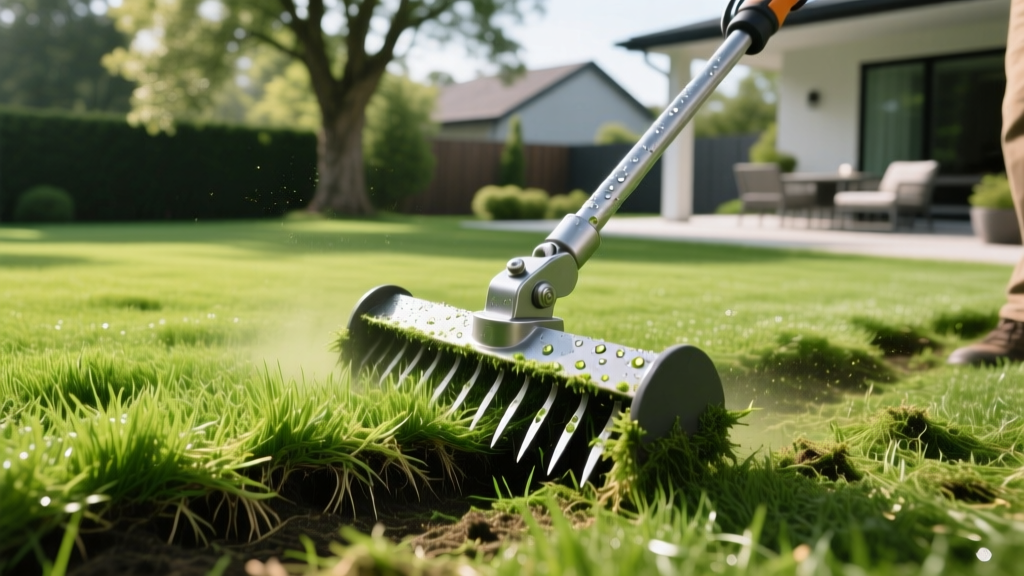
What Is a Dethatcher and When Does Your Lawn Actually Need One?
Defining the Dethatcher: Mechanics and Purpose
A dethatcher is a specialized lawn care machine equipped with vertically oriented spring tines or rigid blades designed to penetrate the turf canopy, slice through the thatch layer, and pull dead organic matter to the surface. While standard lawn mowers cut grass horizontally, dethatchers operate on the vertical axis to physically extract the barrier between your soil and your grass blades.
Thatch itself is a tightly intermingled layer of living and dead stems, stolons, rhizomes, and roots that accumulates between the zone of green vegetation and the underlying soil surface. According to the Clemson University Home & Garden Information Center, a thatch layer exceeding 0.5 inches in thickness becomes detrimental, blocking water infiltration, trapping fungal spores, and preventing fertilizer from reaching the root zone.
Expert Insight: Many homeowners mistakenly believe grass clippings cause thatch. In reality, clippings are mostly water and decompose rapidly. Thatch is primarily composed of lignin-rich tissues—specifically the lower stems, crown tissues, and rhizomes—which resist rapid microbial breakdown.
The Anatomy of Thatch Removal Tools
Not all thatch-removal tools are created equal. The term 'dethatcher' is often used as a catch-all, but the industry categorizes these machines by their cutting mechanism and intended thatch depth.
| Tool Type | Cutting Mechanism | Ideal Thatch Depth | Best Use Case |
|---|---|---|---|
| Manual Thatch Rake | Curved, heavy-duty steel tines | 0.25 - 0.5 inches | Small patch repairs, spot treatments |
| Electric Dethatcher | Rotating cylinder with flexible spring tines | 0.5 - 0.75 inches | Standard residential lawns (under 5,000 sq ft) |
| Power Rake | Rigid, free-swinging flail blades | > 0.75 inches | Severe thatch buildup, commercial turf renovation |
| Tow-Behind Dethatcher | Weighted trays with fixed metal tines | 0.5 - 1.0 inches | Large properties (1+ acres) with riding mowers |
The Pencil Test: Diagnosing Your Lawn
Before renting or purchasing equipment, you must verify that your lawn actually requires dethatching. Performing this service on a lawn with a healthy thatch layer (under 0.5 inches) will unnecessarily stress the turf crown and expose soil to weed seeds.
Step-by-Step Diagnostic Procedure
- Extract a Core Sample: Use a sharp spade or a soil probe to cut a 3-inch deep, wedge-shaped plug of turf from an inconspicuous area of your lawn.
- Identify the Layers: Look at the cross-section. You will see green grass at the top, followed by a spongy, brownish layer (thatch), and finally the dark mineral soil at the bottom.
- Measure the Thatch: Place a ruler against the brown layer. If it measures 0.5 inches or less, your microbial soil activity is healthy; do not dethatch. If it measures 0.75 inches or more, mechanical removal is required.
Machine Pricing and Rental Economics
Choosing between buying and renting depends on your lawn size and the severity of the thatch. As of 2026, equipment pricing reflects recent supply chain stabilizations but remains higher than pre-2020 baselines.
- Manual Thatch Rakes: Tools like the Ames True Temper 15-Inch Thatch Rake cost between $35 and $45. These are highly effective for lawns under 1,000 square feet but require intense physical labor.
- Electric Walk-Behinds: The Sun Joe AJ801E 12-Inch Electric Dethatcher retails for approximately $139 to $159. These feature 5-position depth adjustments and are ideal for suburban lots up to 5,000 square feet.
- Gas-Powered Rentals: For thick thatch exceeding 1 inch, you need a commercial power rake (e.g., Billy Goat HLR-20H). Renting a gas-powered walk-behind dethatcher from a local equipment yard typically costs $85 to $110 for a half-day. This is the most cost-effective route for lawns between 5,000 and 10,000 square feet requiring heavy-duty flail blades.
- Tow-Behind Attachments: The Agri-Fab 40-Inch Tow-Behind Dethatcher costs around $115 to $130. It requires a lawn tractor and utilizes cinder blocks or sandbags on the weight tray to force the tines into the thatch layer.
Timing Protocols: Cool-Season vs. Warm-Season Grasses
Dethatching inflicts mechanical trauma on the turf crown. Therefore, it must be timed to coincide with your grass species' peak vegetative growth phase to ensure rapid recovery. The University of Minnesota Extension emphasizes that dethatching during dormancy or environmental stress periods (like summer drought) can lead to permanent turf loss.
Optimal Dethatching Calendar
- Cool-Season Grasses (Kentucky Bluegrass, Perennial Ryegrass, Tall Fescue): Late August through early October. The soil is still warm, promoting root growth, and autumn weed competition is lower. Early spring (April) is a secondary option, but it risks disrupting pre-emergent herbicide barriers.
- Warm-Season Grasses (Bermudagrass, Zoysiagrass, St. Augustine): Late May through early June, immediately after the lawn has fully exited dormancy and begun aggressive spring green-up. Never dethatch warm-season grasses in the fall, as the open canopy invites winter kill and frost damage.
Critical Post-Dethatching Recovery Steps
Pulling the thatch out is only half the process. The extraction leaves the soil surface exposed and the turf canopy thinned. Failing to execute a recovery protocol will result in a weed-infested lawn within 30 days.
- Debris Removal: Rake and bag the extracted thatch immediately. Leaving it on the lawn will smother the remaining grass and create a fungal breeding ground.
- Core Aeration (Optional but Recommended): If your soil is compacted clay, follow up dethatching with core aeration. The dethatcher clears the path, allowing the aerator tines to penetrate the soil without clogging on thatch.
- Overseeding: Apply turf-type tall fescue or Kentucky bluegrass seed at a rate of 4 to 6 lbs per 1,000 square feet. The grooves left by the dethatcher tines act as natural seed trenches, improving seed-to-soil contact.
- Starter Fertilizer: Apply a high-phosphorus starter fertilizer (e.g., a 10-18-10 NPK ratio) to accelerate root development in the newly exposed and seeded areas.
Warning: Never dethatch a lawn suffering from active grub damage or severe drought stress. The mechanical pulling action of the tines will rip out weakened root systems, entirely destroying the turf stand. Always verify root anchorage before operating a dethatcher.
Frequently Asked Questions
Can I use a standard leaf rake to dethatch my lawn?
No. Standard leaf rakes feature flexible, wide tines designed to glide over the grass surface to collect fallen leaves. They lack the rigidity and vertical penetration required to slice through matted thatch. Using a leaf rake will only scratch the surface and potentially pull out healthy, shallow-rooted grass.
Does leaving grass clippings on the lawn cause thatch?
This is a persistent myth. Grass clippings are 80% water and contain easily decomposable cellulose. As long as you follow the 'one-third rule' (never cutting off more than one-third of the grass blade height at a single mowing), clippings will filter down to the soil surface and decompose within a few days, actually feeding the soil microbes that break down thatch.
How often should I dethatch my lawn?
Dethatching is not an annual maintenance task like mowing or fertilizing. Most well-managed lawns only require dethatching every 3 to 5 years. If you find yourself needing to dethatch annually, you likely have an underlying soil biology issue, such as over-application of quick-release synthetic nitrogen fertilizers, heavy pesticide use that harms earthworm populations, or highly acidic soil (pH below 6.0) that inhibits microbial decomposition.

