
Lawn Care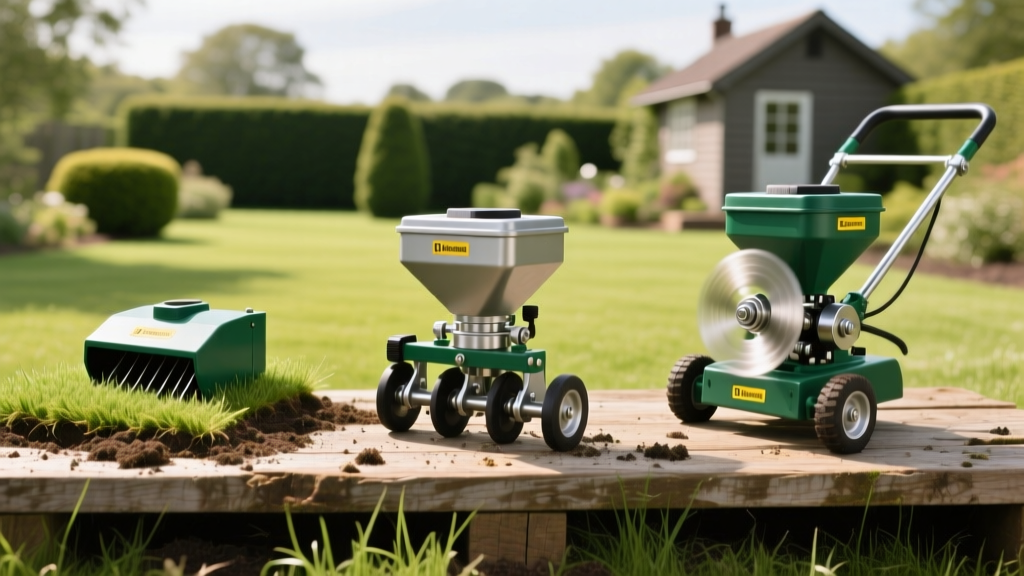
What Is a Seeder? Drop, Broadcast, and Slit Lawn Models Explained
Defining the Machine: What Is a Seeder?
At its core, a lawn seeder is a calibrated mechanical distribution system designed to deliver grass seed at a precise, uniform rate across a specified area. While many homeowners use the terms "spreader" and "seeder" interchangeably, a true seeder encompasses a broader category of turf equipment. This includes simple gravity-fed drop spreaders, centrifugal broadcast models, and heavy-duty mechanical slit seeders that actively cut into the soil to deposit seed directly into the earth.
Understanding what a seeder is requires looking past the hopper. The critical components that define a high-quality seeder are the metering gate (which controls the volume of seed released), the agitator (which prevents seed from clumping or "bridging" over the opening), and the delivery mechanism (whether that is a simple drop chute, a spinning impeller, or a steel slicing blade). Choosing the wrong type for your specific turfgrass and soil condition is the leading cause of failed overseeding projects.
The Core Mechanics: How Seed Flow is Controlled
Grass seed varies wildly in size and weight. Kentucky Bluegrass seed is incredibly fine and light, while Tall Fescue seed is larger and heavier. If a seeder lacks precision engineering, wind will blow Bluegrass seed off-target, and heavy Fescue seed will overwhelm the metering gate.
- Gravity and Agitation: Drop and broadcast seeders rely on gravity. An internal agitator (usually a flexible wire or rotating fin) breaks up clumps caused by ambient humidity, ensuring a continuous flow to the metering plate.
- The Metering Plate: This is the adjustable gate at the bottom of the hopper. Moving the control lever opens or closes this gate, dictating how many seeds fall per square foot as the wheels turn.
- Ground-Driven Gearing: Premium seeders use a gear or belt drive connected to the main wheels. This ensures that if you walk faster, the impeller or drop rate speeds up proportionally, maintaining a consistent application rate regardless of your walking pace.
The Big Three: Drop, Broadcast, and Slit Seeders Compared
According to turf management protocols outlined by NC State University's TurfFiles, matching the seeder type to your lawn's current condition is non-negotiable for successful germination. Below is a direct comparison of the three primary seeder categories available to homeowners and professionals in 2026.
| Seeder Type | Best Application | Seed-to-Soil Contact | Wind Interference | Avg. Cost (2026) | Top Model Example |
|---|---|---|---|---|---|
| Drop Seeder | Small lawns, precise borders, patch repair | Poor (surface only) | None | $70 - $140 | Scotts Classic Drop (70021) |
| Broadcast Seeder | Large open lawns, new construction seeding | Poor (surface only) | High | $50 - $180 | Lesco High Wheel Spreader |
| Slit Seeder | Severe turf renovation, compacted clay soils | Excellent (sub-surface) | None | $95/day (Rental) | Classen TS-20 Pro |
Deep Dive: Slit Seeders (The Renovation Heavyweights)
When homeowners ask "what is a seeder" in the context of rescuing a dead, weedy lawn, the answer is almost always a slit seeder (also known as a slice seeder). Unlike drop and broadcast models that scatter seed on top of the soil, a slit seeder features a series of heavy-duty steel blades or discs mounted on a rotating shaft.
As the machine is pushed (or driven, in the case of tractor-mounted units), these blades cut vertical furrows into the soil—typically 1/4 to 1/2 inch deep. A drop tube positioned directly behind the blades deposits the seed straight into the freshly cut slit. A trailing roller or chain mat then closes the furrow over the seed.
Warning: When NOT to Use a Slit Seeder
Do not use a slit seeder on lawns with extensive shallow irrigation lines, invisible dog fences, or buried low-voltage landscape lighting. The steel blades will slice through these obstacles. Always call 811 to mark deep utilities, but remember that shallow homeowner-installed wires will not be marked.
Why Slit Seeders Dominate Renovation Projects
Research from the University of Minnesota Extension emphasizes that seed-to-soil contact is the primary driver of germination success. Seed left on the surface dries out rapidly and is easily eaten by birds. By placing the seed directly into a moist soil trench, slit seeders can increase germination rates by up to 40% compared to broadcast seeding, even without prior core aeration.
Calibration Math: The 100-Square-Foot Drop-Cloth Method
The biggest mistake homeowners make is trusting the arbitrary numbers printed on the seed bag's spreader settings. These settings assume a perfectly calibrated, brand-new machine. To guarantee accuracy, you must calibrate your drop or broadcast seeder using physical weight.
- Calculate the Target: If your Tall Fescue seed requires 8 lbs per 1,000 sq ft, you need exactly 0.8 lbs (12.8 ounces) for a 100 sq ft test area.
- Prepare the Test Zone: Lay out a 10 ft x 10 ft tarp or drop cloth on your driveway.
- Load and Weigh: Pour slightly more than 12.8 oz of seed into the hopper. Weigh the exact amount on a digital kitchen scale.
- Execute the Pass: Walk the 10-foot length of the tarp at your normal, steady mowing pace with the gate open.
- Measure the Remainder: Weigh the seed left in the hopper. Subtract this from your starting weight. If you dispensed 10 oz, your gate is too closed. If you dispensed 15 oz, your gate is too open. Adjust and repeat until you hit exactly 12.8 oz.
Buying vs. Renting: 2026 Equipment Cost Breakdown
Deciding whether to purchase or rent depends entirely on the seeder type and your long-term lawn care strategy.
Drop and Broadcast Seeders: Always Buy
Purchasing a high-quality broadcast seeder with pneumatic tires and a rust-proof polyethylene hopper costs between $120 and $180 in 2026. Because you will use this tool 4 to 6 times a year (for spring/fall seeding, crabgrass preventer, and winterizer fertilizer), buying is the only logical choice. Avoid cheap $30 plastic models; the gears strip after two seasons, leading to massive over-application and seed waste.
Slit Seeders: Always Rent
A commercial-grade walk-behind slit seeder (like a Billy Goat or Classen) costs between $2,200 and $3,500 to purchase. Furthermore, they weigh upwards of 175 lbs, making storage and transport a nightmare for the average homeowner. Renting from a local equipment yard typically costs $85 to $115 for a four-hour half-day rental in 2026, which is more than enough time to renovate a 5,000 sq ft lawn.
"The secret to renting a slit seeder is to book it for a Friday afternoon. Equipment yards often don't rent them out on weekends, meaning a Friday 2 PM pickup gives you all Friday evening and Saturday morning to use the machine before it's due back."
Common Operator Mistakes and Troubleshooting
Even with the right equipment, operator error ruins thousands of lawns every autumn. Watch out for these specific failure modes:
- Seed Bridging (Clumping): High humidity causes seed to stick together, forming a "bridge" over the metering gate. You will walk the entire lawn, but no seed will fall. Fix: Wipe the inside of the hopper with an anti-static dryer sheet, or mix a cup of dry, fine masonry sand into the seed to improve flow.
- The "Turn-and-Spill" Burn: With broadcast seeders, the impeller keeps spinning when you stop or turn around at the end of a pass, dumping a concentrated pile of seed or fertilizer that will burn the grass. Fix: Engage the edge-guard feature, or physically close the hopper gate before reaching the end of the run, turning around, and reopening it as you start the next pass.
- Overlapping Errors: Drop seeders require exact wheel-to-wheel overlapping. If you overlap by 2 inches instead of 0 inches, you will create visible dark green stripes (if fertilizing) or thick, competing clumps of grass (if seeding). Fix: Use a physical marker line or string for your first few passes until your spacing muscle memory is locked in.
Frequently Asked Questions
Can I use a fertilizer spreader as a grass seeder?
Yes, most modern broadcast and drop spreaders are dual-purpose. However, you must thoroughly clean the hopper and metering plate with compressed air and a dry brush after using granular fertilizer. Fertilizer residue is highly corrosive and will cause the metal metering gate to rust and seize, ruining the machine for future seeding.
What is the best seeder for overseeding an existing thick lawn?
If the existing lawn is thick, a slit seeder is required to cut through the thatch and deposit the seed into the soil. If you only have a broadcast seeder, you must perform a core aeration first, leaving the soil plugs on the lawn, and then broadcast the seed so it falls into the aeration holes.
How fast should I walk when using a drop seeder?
The industry standard calibration speed is 3.0 miles per hour, which translates to a brisk, purposeful walking pace. If you stroll slowly, the seeder will over-apply; if you power-walk, it will under-apply. Maintain a consistent, metronomic pace for the entire application.

