
Lawn Care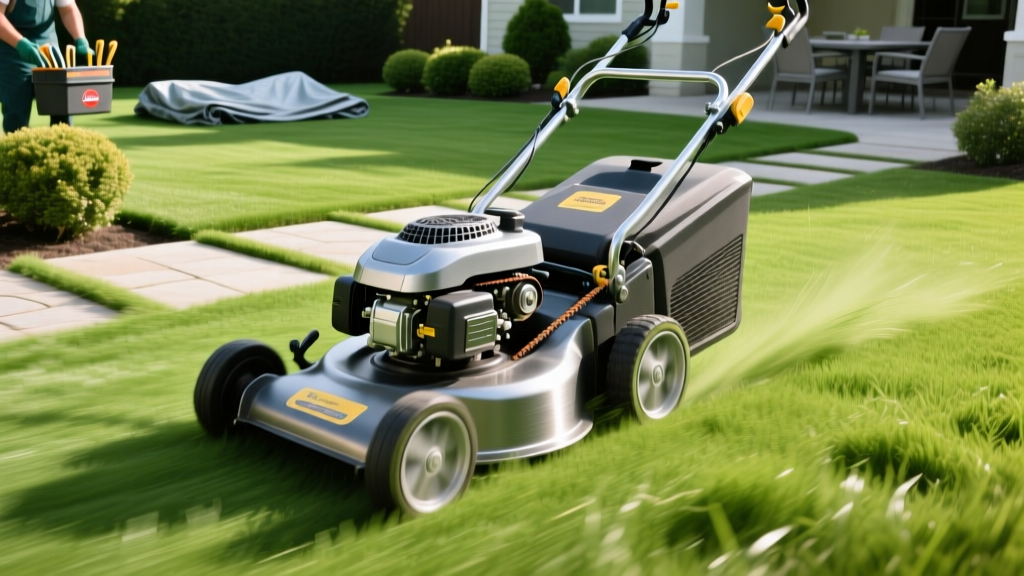
What Is a Self-Propelled Lawn Mower? The Complete Drive-System Guide
At its core, a self-propelled lawn mower is a walk-behind cutting machine equipped with a drivetrain that transfers power from the engine or electric motor directly to the wheels. Unlike a standard push mower, where the operator must supply all the forward momentum, a self-propelled model requires the user only to squeeze a drive bail or press a thumb lever to engage the transmission. The machine pulls or pushes itself forward, allowing the operator to guide it at a steady, comfortable walking pace.
This technology fundamentally changes the physical demands of lawn care, particularly for properties ranging from 1/4 to 3/4 of an acre, or yards featuring thick, wet turf and moderate inclines. However, not all self-propelled systems are engineered equally. Understanding the mechanical differences between front-wheel, rear-wheel, and all-wheel drive configurations—as well as transmission types—is critical for selecting a machine that will not stall out on your specific terrain.
The Mechanics: How Self-Propelled Drive Systems Actually Work
In traditional gas-powered models, the engine’s crankshaft spins a primary pulley connected via a Kevlar-reinforced V-belt to a transmission gear case mounted on the axle. When you squeeze the drive lever on the handlebar, a steel tension cable pulls an idler pulley, tightening the drive belt and transferring rotational force to the wheels.
In modern 2026 battery-electric models, such as the EGO Power+ 21-inch Select Cut (LM2135SP), the mechanical belt is often eliminated entirely. Instead, a dedicated brushless DC motor is integrated directly into the rear axle housing, controlled by a microprocessor that adjusts torque output based on the resistance detected by the drive sensors. This electronic variable-speed drive reduces maintenance by removing the most common failure point in gas mowers: the drive belt.
Front-Wheel vs. Rear-Wheel vs. All-Wheel Drive: A Decision Matrix
Choosing the correct drive configuration depends entirely on your yard’s topography and your preferred mowing style (bagging vs. mulching). According to Consumer Reports, matching the drive wheels to your terrain is the single biggest factor in preventing operator fatigue and wheel slip.
| Drive Type | Mechanics & Traction | Best Use Case | Drawbacks | Avg. Price Range (2026) |
|---|---|---|---|---|
| Front-Wheel Drive (FWD) | Pulls the mower. Front wheels lose traction if lifted. | Flat yards; heavy bagging (weight shifts to rear, keeping front wheels grounded). | Struggles on hills; front wheels spin when bag is full and operator leans back. | $250 - $400 |
| Rear-Wheel Drive (RWD) | Pushes the mower. Weight shifts to rear on inclines, maximizing traction. | Hilly terrain; heavy mulching; thick, wet grass. | Harder to pull backward; rear wheels can tear turf if spun aggressively. | $350 - $550 |
| All-Wheel Drive (AWD) | Powers all four wheels simultaneously via dual transmissions or linked axles. | Steep, uneven terrain; sandy or loose soil; commercial applications. | Heaviest; most expensive; complex maintenance; overkill for flat lawns. | $500 - $750 |
Single-Speed vs. Variable Speed (CVT) Transmissions
Entry-level self-propelled mowers typically feature a single-speed gear transmission. Once engaged, the mower travels at a fixed speed (usually around 2.5 to 3.0 mph). If your walking pace is slower, you find yourself fighting the machine; if faster, the mower pulls away from you.
Mid-to-high-tier models utilize Continuously Variable Transmissions (CVT). Toro’s patented Personal Pace system, for example, uses a dual-cable setup where the harder you push the drive bar forward, the more the transmission pulleys alter their diameter, seamlessly increasing the mower's speed from 0 to 4.5 mph. This prevents the jarring stop-and-go motion that causes uneven grass striping and operator wrist fatigue.
Market Shift Warning: If you are researching gas mowers, note that Honda Power Equipment officially exited the U.S. gas lawnmower market in late 2023. The legendary Honda Versamow CVT system is no longer available in new models. Buyers seeking top-tier CVT performance in 2026 must look to Toro's gas lineup or pivot to electronic variable-speed battery platforms like EGO or Ryobi.
Slope Safety and Terrain Limits
While self-propelled mowers are designed to conquer hills, they are bound by strict physics and safety regulations. The U.S. Consumer Product Safety Commission (CPSC) explicitly warns against operating walk-behind mowers on slopes greater than 15 degrees (a 26.8% grade). Beyond this threshold, the mower's center of gravity shifts dangerously, and the operator's footing becomes unreliable, creating a severe rollover and crush hazard.
How to Measure Your Yard's Slope
Do not guess your slope percentage. Use a standard 2-foot carpenter's level and a tape measure:
- Place the level flat against the ground on the incline.
- Raise the lower end of the level until the bubble is perfectly centered.
- Measure the vertical distance from the ground to the bottom edge of the raised end of the level.
- If that measurement exceeds 6.4 inches, your slope is greater than 15 degrees. You must switch to a string trimmer, a push-reel mower, or a specialized slope-rated riding tractor.
"Traction is only half the battle on a slope. The operator's ability to maintain a stable stance and control the descent is the true limiting factor of any walk-behind self-propelled system." — Turf Management Safety Guidelines
Routine Drivetrain Maintenance & Troubleshooting
The drivetrain of a self-propelled mower requires specific maintenance that push mowers do not. Neglecting these components leads to the most common complaint: a mower that 'creeps' forward when the lever is released, or fails to move when the lever is fully squeezed.
- Drive Belt Inspection: Every 50 hours of use, tilt the mower (carburetor side up for gas models) and inspect the V-belt. Look for glazing, fraying, or a 'burnt rubber' smell. Replacement belts (typically 1/2-inch width, Kevlar-corded) cost between $12 and $18 at hardware stores.
- Cable Tension Adjustment: If the mower creeps forward at idle, the drive cable is too tight. Locate the barrel adjuster near the handlebar mount and turn it counter-clockwise by 1/4 turns until the creep stops. If the mower struggles to climb hills, turn it clockwise to increase tension.
- Pinion Gear Wear: FWD mowers often use plastic or soft-metal pinion gears inside the wheel hubs to reduce manufacturing costs. If the front wheels spin but the mower doesn't move (and the axle is turning), the internal gear teeth are stripped. Replace the wheel assembly (approx. $25-$40 per side).
- Undercarriage Cleaning: Caked, wet grass clippings around the transmission housing act as an insulator, causing the gear case oil to overheat and degrade. Scrape the housing clean after mowing in damp conditions.
Final Verdict: Do You Need Self-Propulsion?
If your lawn is under 1/4 acre, entirely flat, and features thin, dry grass, a standard push mower will save you $100+ and eliminate the weight and mechanical complexity of a drivetrain. However, for properties between 1/4 and 3/4 acre, or any yard featuring thick St. Augustine, Bermuda, or wet Fescue, a self-propelled mower—specifically an RWD model with a variable-speed transmission—is a non-negotiable upgrade that will drastically reduce mowing time and physical strain.

