
Lawn Care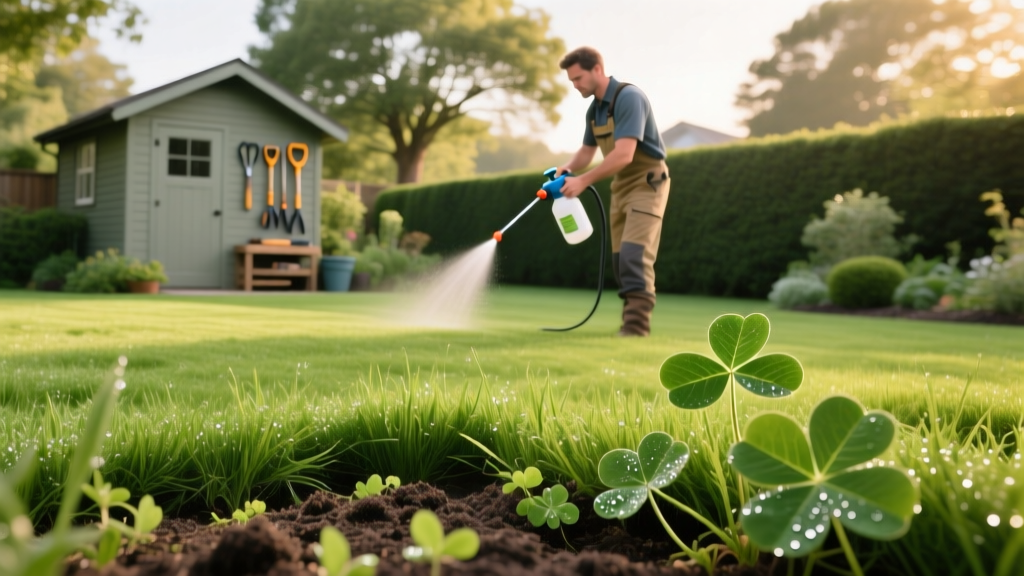
What Kills Clover? Proven Herbicides and Organic Fixes for Lawns
The Clover Conundrum: Why It Invades and How It Survives
When homeowners ask, "what kills clover?", the answer requires more than a simple product recommendation. Clover (Trifolium repens and Trifolium pratense) is a perennial broadleaf weed that thrives in the exact conditions where turfgrass struggles: compacted soil, low nitrogen, and inconsistent moisture. Unlike annual weeds that die off with the first frost, clover builds a resilient root system and spreads via creeping stolons, making it a persistent adversary in both cool-season and warm-season lawns.
To effectively eradicate clover, you must understand its biological defenses. Clover leaves feature a thick, waxy cuticle that naturally repels water-based liquid herbicides. Furthermore, its symbiotic relationship with Rhizobium bacteria allows it to fix atmospheric nitrogen, meaning it will easily outcompete your turfgrass in nutrient-poor soils. According to the University of Minnesota Extension, simply applying a generic weed killer without addressing the underlying soil fertility will result in clover returning within a single growing season.
Expert Insight: If your lawn is heavily infested with clover, your soil is likely nitrogen-deficient. Clover is an indicator weed. Eradication must be paired with a robust nitrogen fertilization program to prevent reinvasion.
Identifying the Target: White, Red, and Microclover
Before selecting a chemical or organic control method, accurately identify the clover species in your yard. Misidentification can lead to ineffective herbicide selection and wasted money.
- White Clover (Trifolium repens): The most common lawn invader. Features three-leaflet (trifoliate) leaves with pale green V-shaped chevrons and small, white-to-pink ball-shaped flower heads. Spreads aggressively via above-ground stolons.
- Red Clover (Trifolium pratense): Larger, more upright growth habit with hairy stems and distinct pinkish-purple flower heads. Often found in unmowed or poorly maintained turf areas.
- Microclover (Trifolium repens var. nanum): A dwarf cultivar intentionally mixed into eco-lawns. It has smaller leaves, fewer flowers, and tolerates low mowing. Note: Do not use selective broadleaf herbicides on lawns where microclover is an intentional component.
Chemical Warfare: Selective Herbicides That Actually Work
The most common mistake homeowners make is relying on 2,4-D as a standalone active ingredient. While 2,4-D controls many broadleaf weeds, clover exhibits high tolerance to it. To effectively kill clover, you need a multi-active-ingredient formulation that includes Triclopyr, Quinclorac, Dicamba, or Carfentrazone.
| Active Ingredient | Mode of Action | Top Commercial Product (2026) | Clover Efficacy |
|---|---|---|---|
| Carfentrazone + 2,4-D + MCPP + Dicamba | PPO Inhibitor & Synthetic Auxins | SpeedZone Broadleaf Herbicide | Excellent (Fast burn-down) |
| Triclopyr + Fluoxypyr | Synthetic Auxins | Confront Broadleaf Herbicide | Excellent (Deep root kill) |
| Quinclorac + 2,4-D + Dicamba | Synthetic Auxins & Cellulose Inhibitor | Drive XLR8 (Mixed tank) | Very Good (Systemic control) |
| Mesotrione | HPPD Inhibitor | Tenacity Turf Herbicide | Good (Bleaches and starves) |
For residential use, Ortho WeedClear for Lawns (containing 2,4-D, Quinclorac, and Dicamba) is a highly accessible consumer option, typically priced around $25 for a 20 oz ready-to-spray bottle. For professional-grade results, SpeedZone remains the industry standard. As of early 2026, a gallon of SpeedZone averages $130 but treats up to 43,000 square feet, making it vastly more cost-effective for large properties.
Temperature Warning: Never apply synthetic auxin herbicides (2,4-D, Dicamba, Triclopyr) when ambient temperatures exceed 85°F. High heat increases the risk of herbicide volatility, which can vaporize the chemical and drift onto neighboring ornamental shrubs, tomatoes, or gardens, causing severe phytotoxicity.
The Missing Link: Surfactants and the Waxy Cuticle
Because clover leaves are highly hydrophobic, liquid herbicides often bead up and roll off the leaf surface before they can be absorbed. You must add a Non-Ionic Surfactant (NIS) to your tank mix. The surfactant breaks the surface tension of the water, allowing the herbicide to spread evenly across the waxy cuticle and penetrate the plant tissue.
Mixing Ratio: Add 0.25% to 0.5% v/v of a high-quality NIS (such as Southern Ag Surfactant or Prime Source Quik-Sol). In practical terms, this equates to 1 to 2 teaspoons of surfactant per gallon of mixed herbicide. Skipping this step will reduce your clover kill rate by up to 60%.
Organic and Cultural Controls: Starving the Clover
If you maintain an organic lawn or prefer to avoid synthetic chemicals, your options are more labor-intensive but entirely viable. The goal of organic clover control is to induce oxidative stress or alter the soil environment so turfgrass outcompetes the weed.
1. Iron HEDTA (FeHEDTA) Treatments
Chelated iron, specifically Iron HEDTA, is a naturally occurring compound that is highly toxic to broadleaf weeds but safe for most turfgrasses. Products like Fiesta Turf Weeder (4.43% FeHEDTA) work by causing rapid oxidative stress, turning clover leaves black and necrotic within hours.
Application Protocol: Apply at a rate of 2.5 to 3.0 fluid ounces per 1,000 square feet. Because FeHEDTA is a contact herbicide with limited systemic movement, you must ensure thorough foliar coverage. Expect to make 2 to 3 applications spaced 21 days apart to exhaust the clover's root reserves.
2. Corn Gluten Meal (Pre-Emergent)
While corn gluten meal (CGM) will not kill established clover, it inhibits seed germination. Applying CGM at a rate of 20 lbs per 1,000 square feet in early spring (when soil temperatures reach 55°F) prevents new clover seedlings from establishing. As a bonus, CGM breaks down into a slow-release nitrogen source (roughly 10-0-0 NPK), which feeds your grass and helps it shade out existing clover.
3. Manual Extraction
For isolated patches, manual removal is effective if done correctly. You must extract the entire taproot. Use a stand-up weeder with a serrated claw (such as the Fiskars Stand-Up Weeder) to grip the base of the stolon and leverage the root out. If the taproot snaps, the clover will regenerate within two weeks.
Step-by-Step Post-Emergent Application Protocol
Follow this exact sequence to maximize herbicide efficacy and minimize turf stress when treating a clover infestation.
- Day -2 (Mowing): Mow your lawn to its standard height. This removes excess turfgrass blade that might intercept the herbicide, ensuring the chemical reaches the low-growing clover stolons.
- Day 0 (Application): Mix your chosen multi-active-ingredient herbicide with water and a non-ionic surfactant. Apply using a pump sprayer or backpack sprayer calibrated to deliver 1.5 gallons of solution per 1,000 square feet. Spray when temperatures are between 65°F and 80°F, with low wind (under 5 mph).
- Day 0 to +2 (Waiting Period): Do not water, irrigate, or allow rainfall on the treated area for at least 48 hours. The herbicide requires this time to translocate from the leaves down into the taproot.
- Day +3 (Hydration): Water the lawn deeply (0.5 inches) to help the soil absorb any residual herbicide and to relieve any minor turf stress.
- Day +14 (Evaluation): Inspect the clover. If it has yellowed and curled, the treatment is working. If green growth persists at the crown, a second application is required. Wait 21 to 28 days before reapplying to avoid chemical burn on your grass.
FAQ: Clover Eradication Edge Cases
Will vinegar kill clover?
Horticultural vinegar (20% to 30% acetic acid) will burn the foliage of clover, but it is strictly a contact burn-down agent. It will not kill the taproot, and the clover will resprout within a week. Furthermore, high-concentration vinegar is highly caustic, lowers soil pH drastically, and can harm soil microbiology. It is not recommended for long-term clover control.
Why did my pre-emergent fail to stop clover?
Most standard pre-emergents (like Prodiamine or Dithiopyr) are formulated to target grassy weeds (crabgrass, poa annua). While they offer some suppression of broadleaf seeds, clover primarily spreads vegetatively via stolons in established lawns, rendering pre-emergents largely irrelevant for stopping an existing infestation. As noted by the Clemson University Home & Garden Information Center, post-emergent selective herbicides are mandatory for vegetative spread.
Can I just let the clover stay in my lawn?
From an ecological standpoint, clover is an excellent pollinator food source and provides free nitrogen to the soil. If you maintain a "bee lawn" or an eco-turf, leaving clover is beneficial. However, if you desire a uniform, high-density monoculture of Kentucky bluegrass or Bermuda grass, clover will eventually choke out the turf during summer droughts when it utilizes its deep taproot to monopolize available soil moisture.

