
Lawn Care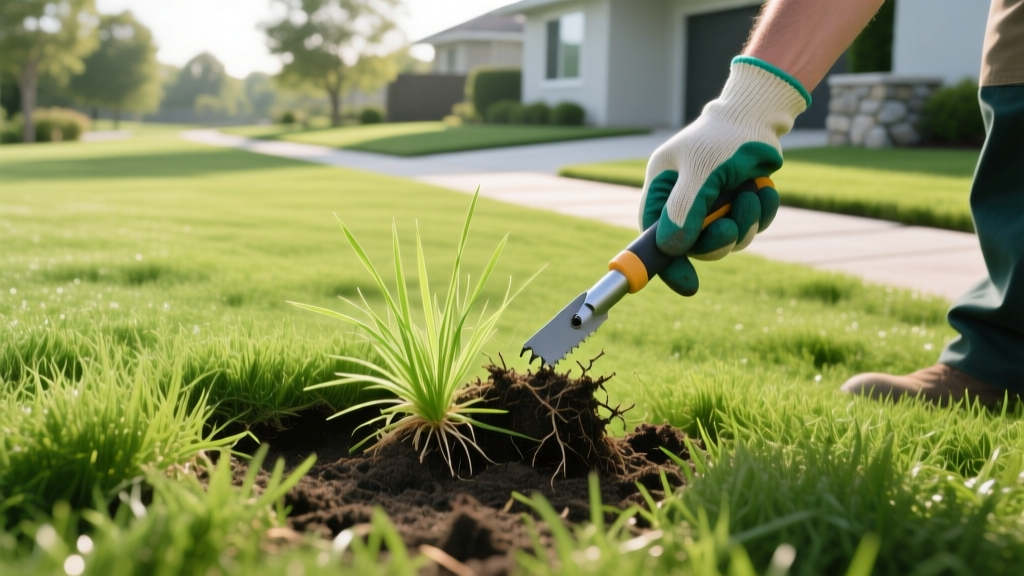
What Kills Crabgrass Permanently: The Lifecycle Eradication Guide
The Biological Reality: Why 'Permanent' Means Breaking the Cycle
To understand what kills crabgrass permanently, you must first accept a biological fact: crabgrass (Digitaria sanguinalis and Digitaria ischaemum) is a summer annual. It naturally dies when the first hard frost hits in autumn. Therefore, 'permanent' eradication does not mean killing the existing plant forever; it means permanently exhausting and preventing the replenishment of the crabgrass seed bank in your soil.
A single mature crabgrass plant can produce between 15,000 and 150,000 seeds, which remain viable in the top two inches of soil for up to three years. If you merely kill the visible plants in July without addressing the seeds, the infestation will return the following spring. Permanent eradication requires a three-phase approach: establishing a chemical barrier before germination, targeting active tillers with selective post-emergents, and altering the turf canopy to starve surviving seeds of light.
Critical Germination Threshold: Crabgrass seeds do not germinate based on the calendar date or air temperature. They require a consistent soil temperature of 53°F to 55°F at a 1-inch depth for three consecutive days. Monitoring soil temperature via a digital probe thermometer is the only accurate way to time your permanent eradication strategy.
Phase 1: Pre-Emergent Herbicides (The Chemical Barrier)
According to Penn State Extension, pre-emergent herbicides are the cornerstone of permanent crabgrass control. These chemicals do not prevent the seed from germinating; rather, they inhibit the development of the radicle (the first root) during cell division. When the seedling attempts to establish a root system, it encounters the chemical barrier in the top 0.5 inches of soil and dies before emerging.
| Active Ingredient | Trade Name Example | Application Window | Est. Cost per 1,000 sq. ft. |
|---|---|---|---|
| Prodiamine | Barricade 65 WDG | Early Spring (Forsythia bloom) | $0.04 - $0.06 |
| Dithiopyr | Dimension 2EW | Early to Mid-Spring | $0.08 - $0.12 |
| Pendimethalin | Pendulum 2G | Early Spring | $0.05 - $0.07 |
The Dithiopyr Advantage: If you miss the early spring window and soil temperatures have already breached 55°F, Dithiopyr (Dimension) is the only pre-emergent that offers early post-emergent activity. It can kill crabgrass seedlings that have just germinated and are in the 1-tiller stage, effectively rescuing a delayed application schedule.
Phase 2: Post-Emergent Control (Targeting Active Growth)
If the pre-emergent barrier fails, or if crabgrass invades bare patches mid-summer, you must use post-emergent herbicides. The University of California Integrated Pest Management Program notes that post-emergent efficacy drops drastically as the plant matures. You must identify the 'tiller' stage of the weed to select the correct chemical.
The Tiller-Stage Decision Matrix
- 1 to 2 Tillers (Seedling Stage): The plant has only the main shoot and one or two side branches. Action: Apply Quinclorac (Drive XLR8) or Fenoxaprop-p-ethyl (Acclaim Extra). One application at the labeled rate will kill the plant down to the root.
- 3 to 5 Tillers (Juvenile Stage): The plant is spreading horizontally. Action: Quinclorac will still work, but requires a two-part split application spaced 14 to 21 days apart to prevent the plant from recovering via its established lateral nodes.
- 6+ Tillers (Mature Stage): The plant has a deep, fibrous root system and is producing seed heads. Action: Herbicides will severely burn the foliage but often fail to kill the crown. Manual extraction using a stand-up weeder that removes the entire taproot is the only permanent solution at this stage.
Warning on Quinclorac Phytotoxicity: Quinclorac is highly effective on crabgrass but can cause severe stunting and yellowing in certain desirable turfgrasses, specifically St. Augustinegrass and certain cultivars of Kentucky Bluegrass. Always verify your turf species on the product label before mixing.
Phase 3: Cultural Starvation (Shading Out Survivors)
Chemical controls only manage the population; cultural practices permanently alter the environment so crabgrass cannot survive. Crabgrass is a heliophile—it requires high levels of Photosynthetically Active Radiation (PAR) hitting the soil surface to trigger seed germination and sustain seedling growth.
- Elevate Mowing Height: Maintain your cool-season turf (Tall Fescue, Kentucky Bluegrass) at 3.5 to 4.0 inches. Research demonstrates that a dense canopy at this height blocks up to 85% of sunlight from reaching the soil surface, physically preventing crabgrass seeds from photosynthesizing.
- Shift Nitrogen Timing: Crabgrass thrives on heavy spring nitrogen, which fuels rapid vegetative growth before the summer heat. Transition to a fall-heavy fertilization program (e.g., 70% of your annual nitrogen applied between September and November). This builds deep turf roots without feeding the spring crabgrass flush.
- Deep, Infrequent Irrigation: Crabgrass possesses a shallow, fibrous root system (typically confined to the top 2 inches of soil). Watering deeply (0.5 to 0.75 inches per session) but infrequently (twice a week) forces desirable turf roots deeper while allowing the topsoil to dry out, stressing and killing shallow crabgrass seedlings.
Critical Mistakes That Reactivate the Seed Bank
Homeowners often unknowingly destroy their permanent eradication efforts through improper lawn maintenance timing.
| Common Mistake | Biological Consequence | Corrective Protocol |
|---|---|---|
| Core Aeration after pre-emergent application | Punctures the chemical barrier, bringing untreated soil and buried seeds to the surface. | Aerate in the fall, or apply a split-application of pre-emergent immediately after spring aeration. |
| Scalping the lawn in spring to 'remove thatch' | Opens the canopy, allowing full solar radiation to hit the soil and trigger mass germination. | Never cut below 3 inches in spring. Use a dedicated dethatching rake in early fall if necessary. |
| Mowing with a dull blade | Shreds turf tips, causing dieback that thins the canopy and creates micro-gaps for crabgrass invasion. | Sharpen or replace mower blades every 25 hours of operation to ensure clean, healing cuts. |
Frequently Asked Questions
Will overseeding kill crabgrass permanently?
Overseeding does not kill existing crabgrass, but it is a vital long-term eradication strategy. By introducing aggressive, modern turfgrass cultivars (like TTTF - Turf-Type Tall Fescue) into thin areas in the early fall, you create a dense biological mat that outcompetes crabgrass for water and soil nutrients the following spring. You must wait until the new grass has been mowed at least three times before applying any pre-emergent herbicides, as pre-emergents will also stop your new grass seeds from rooting.
Does vinegar or boiling water kill crabgrass permanently?
Acetic acid (horticultural vinegar) and boiling water are non-selective contact burn-downs. They will destroy the foliage of the crabgrass plant but will not translocate to the root crown or affect the seeds in the soil. The plant will likely resprout from its nodes within 10 days, and the bare soil left behind will immediately be colonized by new crabgrass seeds. For permanent results, systemic herbicides or physical extraction are required.
How long does it take to permanently eradicate a severe infestation?
Because crabgrass seeds remain viable in the soil for up to three years, a complete eradication program takes a minimum of 24 to 36 months of strict adherence to pre-emergent timing and canopy management. If you apply pre-emergents flawlessly for two consecutive springs and maintain a 4-inch mowing height, the viable seed bank will deplete, and the weed will be permanently removed from your lawn's ecosystem.

