
Lawn Care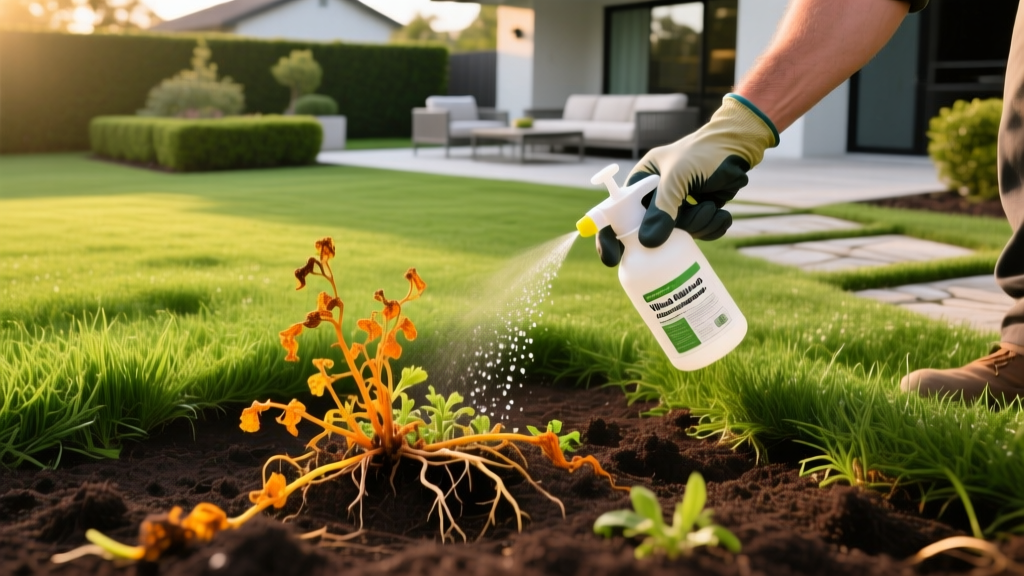
What Kills Weeds Permanently? Soil Sterilants and Systemic Herbicides
The search for what kills weeds permanently often leads homeowners down a path of ineffective home remedies or dangerously misapplied chemicals. Biologically speaking, true permanent eradication in living soil is a myth due to the persistent nature of the weed seed bank. However, achieving long-term vegetation control—ranging from one to five years without a single sprout—is entirely possible when you match the correct active ingredient to the specific zone of your property.
To eliminate weeds long-term, you must understand the critical distinction between soil sterilants (used for hardscapes and gravel) and systemic herbicides paired with pre-emergents (used for living turf). Applying the wrong chemistry will either destroy your lawn or result in weeds returning within three weeks.
The Science of the Weed Seed Bank
Before selecting a treatment, you must understand why weeds return. According to Penn State Extension, a single square foot of unmanaged soil can harbor between 10,000 and 100,000 viable weed seeds. Species like common lambsquarters and pigweed can remain dormant in the soil profile for up to 40 years, waiting for sunlight and moisture to trigger germination.
Warning on Soil Sterilants: Products marketed as 'total vegetation killers' often contain Imazapyr or Prometon. These are soil sterilants that prevent root growth. If applied near the drip line of desirable trees, shrubs, or adjacent lawns, the chemical will translocate through the soil and kill your landscaping. Never use soil sterilants on or near living turf.
Chemical Matrix: Active Ingredients for Long-Term Control
The effectiveness of a weed killer depends entirely on its active ingredient, not the brand name on the bottle. Below is a breakdown of the primary chemicals used for long-term eradication, their persistence in the soil, and their appropriate use cases.
| Active Ingredient | Mechanism | Soil Persistence | Lawn Safety | Avg. Cost (per 1,000 sq ft) |
|---|---|---|---|---|
| Glyphosate (41%) | Systemic (kills existing roots) | Binds to soil, inactive in 3-14 days | No (Non-selective) | $0.15 - $0.25 |
| Imazapyr | Soil sterilant & systemic | 25 to 142 days (up to 1 year in clay) | No (Highly toxic to roots) | $0.40 - $0.60 |
| Prometon | Soil sterilant (root inhibitor) | 6 to 12 months | No | $0.50 - $0.80 |
| Prodiamine (65 WDG) | Pre-emergent (seed inhibitor) | 3 to 6 months | Yes (Turf safe) | $0.10 - $0.15 |
Zone 1: Driveways, Gravel, and Fencerows
For non-turf areas where you want to prevent all vegetation for up to a year, you need a combination of a fast-acting systemic and a long-residual soil sterilant. Products containing Glyphosate + Imazapyr (such as Spectracide Triad or professional-grade GroundClear Vegetation Killer Concentrate) are the industry standard for residential hardscapes.
Application Protocol: Apply when weeds are actively growing and under 6 inches tall. Use a pump sprayer calibrated to deliver 1.5 gallons per 1,000 square feet. The Glyphosate kills the existing foliage within 72 hours, while the Imazapyr moves into the soil to prevent new seeds from germinating for 6 to 12 months. Do not apply if rain is expected within 24 hours, as runoff will carry the Imazapyr into adjacent lawn zones.
Zone 2: Living Lawns and Turfgrass
You cannot use soil sterilants on a lawn without killing the grass. To achieve what is effectively 'permanent' control in turf, you must break the weed life cycle using a two-pronged approach: post-emergent eradication followed by pre-emergent prevention.
- Eradicate Existing Weeds: Use a selective systemic herbicide containing 2,4-D, Dicamba, and Quinclorac (e.g., SpeedZone or Trimec). These chemicals mimic plant hormones, causing broadleaf weeds to grow uncontrollably until they collapse, while leaving monocot grasses (like Fescue, Bermuda, or Kentucky Bluegrass) unharmed.
- Prevent Future Germination: Once the existing weeds are dead, apply a professional-grade pre-emergent like Prodiamine 65 WDG. At a rate of 0.185 ounces per 1,000 square feet, Prodiamine creates a chemical barrier in the top inch of soil that stops weed seeds from developing roots. Applied in early spring (when soil temps hit 55°F) and early fall, this barrier effectively halts the seed bank.
Non-Chemical Eradication: Soil Solarization
If you are preparing a new garden bed or renovating a severely overgrown area and refuse to use synthetic chemicals, soil solarization is the only method that approaches permanent eradication by literally cooking the seed bank and soil-borne pathogens.
According to the University of California Integrated Pest Management (UC IPM) program, solarization can reduce weed viability by 90% to 100% in the top 6 inches of soil when executed correctly. Black plastic does not work for this; it absorbs heat but does not trap it in the soil.
Step-by-Step Solarization Protocol
- Preparation: Rototill the area and remove large debris. Water the soil deeply to a depth of 12 inches. Moist soil conducts heat significantly better than dry soil, pushing lethal temperatures deeper into the root zone.
- Material Selection: Purchase clear, 6-mil thick polyethylene plastic (UV-treated if possible to prevent tearing). A 10x100 foot roll typically costs around $150 to $180 at agricultural supply stores.
- Installation: Lay the plastic tightly over the soil. Trench the edges and bury them in 6 inches of soil to create an airtight seal. Any gaps will allow heat to escape.
- Duration: Leave the plastic in place for 4 to 6 weeks during the hottest part of the summer (June through August). Soil temperatures must reach at least 140°F at a 2-inch depth to kill tough weed seeds like bermudagrass rhizomes and nutsedge tubers.
The Edge Cases: Why Some Weeds Survive 'Permanent' Treatments
Even with meticulous chemical or solarization treatments, certain invasive species possess biological adaptations that allow them to survive. Understanding these failure modes is critical for long-term management.
'Yellow nutsedge (Cyperus esculentus) produces subterranean tubers called nutlets that can survive deep in the soil profile, far below the reach of standard pre-emergent barriers or solarization heat. Eradicating nutsedge requires repeated applications of Sulfentrazone or Halosulfuron-methyl over two consecutive growing seasons to exhaust the tuber's energy reserves.'
Similarly, field bindweed features a taproot that can extend up to 20 feet into the soil. Systemic herbicides like Glyphosate often kill the top growth before the chemical can translocate to the deepest root nodes. For bindweed, you must allow the weed to grow to the flowering stage before spraying, ensuring maximum downward translocation of the herbicide into the root system.
Decision Framework: Choose Your Eradication Method
Use this rapid assessment guide to determine the correct protocol for your specific property zone:
Scenario A: Gravel Driveway or Fence Line (No desirable plants within 10 feet)
Action: Apply Imazapyr + Prometon soil sterilant. Expect 6-12 months of bare ground.
Scenario B: Living Lawn with Broadleaf Weeds (Dandelions, Clover)
Action: Spray 2,4-D + Dicamba post-emergent. Follow up 14 days later with Prodiamine pre-emergent.
Scenario C: Overgrown Garden Bed Preparation (Chemical-Free)
Action: Mow low, water deeply, and apply 6-mil clear plastic for 6 weeks during peak summer heat.
Scenario D: Cracks in Concrete or Pavers
Action: Use a non-selective contact burner (Pelargonic acid) or a targeted Glyphosate gel applicator to avoid soil sterilant runoff damaging adjacent lawn edges.
Action: Apply Imazapyr + Prometon soil sterilant. Expect 6-12 months of bare ground.
Scenario B: Living Lawn with Broadleaf Weeds (Dandelions, Clover)
Action: Spray 2,4-D + Dicamba post-emergent. Follow up 14 days later with Prodiamine pre-emergent.
Scenario C: Overgrown Garden Bed Preparation (Chemical-Free)
Action: Mow low, water deeply, and apply 6-mil clear plastic for 6 weeks during peak summer heat.
Scenario D: Cracks in Concrete or Pavers
Action: Use a non-selective contact burner (Pelargonic acid) or a targeted Glyphosate gel applicator to avoid soil sterilant runoff damaging adjacent lawn edges.
Ultimately, asking what kills weeds permanently requires shifting your mindset from a one-time application to a zone-based management strategy. By respecting the biological limits of the soil seed bank and deploying targeted chemistries or thermal treatments based on the specific area of your property, you can achieve a virtually weed-free landscape that requires only minimal annual maintenance.

