
Lawn Care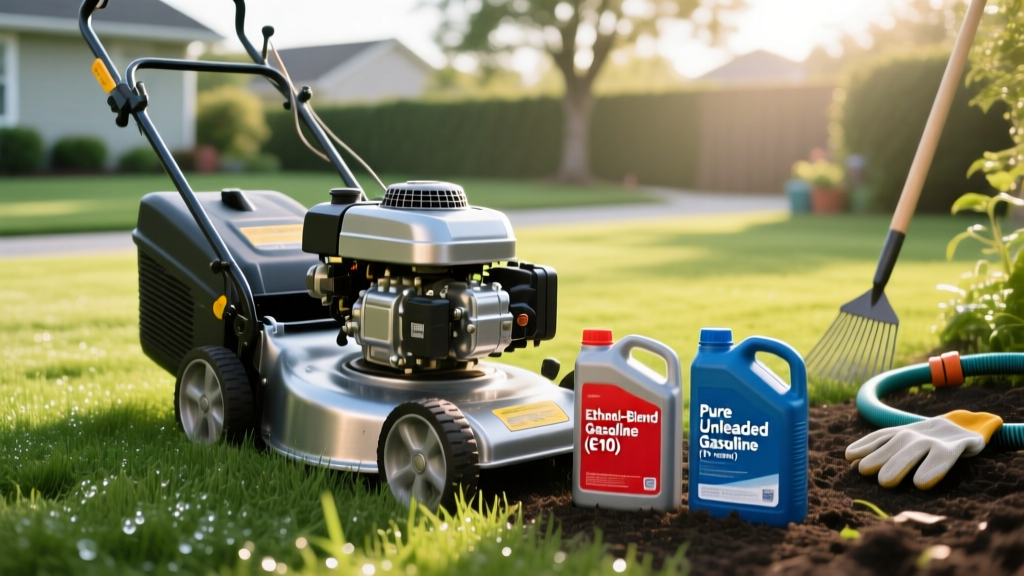
What Kind of Gas for Lawn Mower Engines: Ethanol vs. Unleaded Guide
Choosing the correct fuel for your outdoor power equipment is the single most critical factor in extending the life of your engine. When homeowners ask, "what kind of gas for lawn mower engines is best?" the short answer is fresh, 87-octane unleaded gasoline with a maximum of 10% ethanol (E10), or ideally, ethanol-free (E0) gasoline. However, the nuances of fuel chemistry, octane ratings, and ethanol-induced phase separation dictate whether your mower will start on the first pull next spring or require a $150 carburetor replacement.
This guide breaks down the exact fuel specifications for modern 4-stroke and 2-stroke small engines, the hidden costs of premium fuels, and the chemical realities of ethanol degradation.
The Octane Misconception: Do You Need Premium?
A pervasive myth in lawn care is that higher octane fuel (91 or 93 premium) provides more power or burns cleaner in small engines. This is fundamentally incorrect. Octane is a measure of a fuel's resistance to pre-detonation (knocking) under high compression.
- Small Engine Compression Ratios: Most walk-behind mowers and riding tractors (equipped with Briggs & Stratton, Honda, or Kawasaki engines) operate at low compression ratios between 6:1 and 8.5:1.
- Automotive Compression Ratios: Premium fuel is formulated for modern car engines with compression ratios of 10:1 to 14:1.
Because small engines do not generate the cylinder pressure required to auto-ignite 87-octane fuel, using 91-octane premium is a waste of money. In fact, higher octane fuels burn slower and can leave behind heavier carbon deposits on the spark plug and piston crown of a low-compression engine. Stick to standard 87-octane unleaded unless the manufacturer explicitly states otherwise (which is exceedingly rare for air-cooled lawn equipment).
The Ethanol Problem: E10 vs. Ethanol-Free (E0)
Ethanol is an alcohol-based biofuel added to gasoline to oxygenate the burn and reduce emissions. While modern automobiles with closed-loop fuel injection and sealed tanks handle ethanol easily, small engines with vented gas caps and carburetors suffer severe consequences.
⚠️ WARNING: The Phase Separation Threat
Ethanol is highly hygroscopic, meaning it absorbs moisture directly from the humid air through your mower's vented gas cap. Once E10 fuel absorbs approximately 0.5% water by volume, it reaches saturation. The ethanol and water molecules then detach from the gasoline and sink to the bottom of the tank—a process called phase separation. Because the fuel pickup tube sits at the bottom of the tank, the engine sucks in a highly corrosive, low-combustion water/ethanol slurry. This causes the engine to run lean, overheat, score the piston cylinder, and corrode the brass jets inside the carburetor.
According to the U.S. Environmental Protection Agency (EPA), E10 (up to 10% ethanol) is approved for use in all small engines. However, E15 (15% ethanol) and E85 are strictly prohibited and will rapidly destroy rubber fuel lines, plastic float bowls, and aluminum carburetor bodies.
Fuel Type Comparison Matrix
| Fuel Type | Ethanol % | Avg. Cost / Gallon | Shelf Life | Best Application |
|---|---|---|---|---|
| Regular Unleaded (E10) | Up to 10% | $3.20 - $3.80 | 30-45 Days | Weekly mowing (use immediately) |
| Ethanol-Free (E0 / Rec Fuel) | 0% | $4.50 - $5.50 | 6+ Months | Infrequent use, winter storage |
| Pre-Mixed Canned Fuel | 0% | $25.00 - $32.00 | 2-5 Years | 2-stroke tools, emergency backup |
| E15 / E85 | 15% - 85% | Varies | N/A | NEVER USE |
2-Stroke vs. 4-Stroke: Mixing Ratios and Oil Types
Identifying what kind of gas for lawn mower engines also requires knowing your engine cycle. Most modern walk-behind mowers and riding tractors utilize 4-stroke engines, which feature a separate oil crankcase. You pour straight, unmixed gasoline into the fuel tank.
However, handheld equipment like string trimmers, leaf blowers, and chainsaws typically use 2-stroke engines. These require oil to be pre-mixed directly into the gasoline to lubricate the internal components, as they lack a dedicated oil sump.
The 2-Stroke Mixing Formula
Never guess your mixing ratio. Using too little oil will seize the engine; using too much will foul the spark plug and clog the muffler spark arrestor. Always check the manufacturer's sticker on the engine shroud.
- 40:1 Ratio: 3.2 fluid ounces of 2-cycle oil per 1 gallon of gasoline.
- 50:1 Ratio: 2.6 fluid ounces of 2-cycle oil per 1 gallon of gasoline.
Expert Tip: Use only high-quality, synthetic 2-stroke oil certified to ISO-L-EGD or JASO FD standards. Avoid cheap, mineral-based marine oils (TC-W3) in air-cooled landscaping tools, as they are designed for water-cooled outboard motors and will leave heavy ash deposits in air-cooled cylinders.
Fuel Stabilization: Saving Your Carburetor
If you must use E10 pump gas, fuel stabilization is non-negotiable if the fuel will sit in the tank or carburetor for more than 30 days. Gasoline begins to oxidize and form gummy varnish deposits within weeks, which clogs the microscopic passages of a carburetor's main jet and emulsion tube.
💡 Pro-Tip: Treat the Gas Can, Not Just the Tank
Do not wait until you fill the mower to add stabilizer. Add a fuel treatment like STA-BIL 360 Marine or Sea Foam Motor Treatment directly into your plastic gas can at the gas station. This ensures the fuel is protected from the moment it leaves the pump, preventing phase separation and varnish buildup inside the can itself.
Step-by-Step End-of-Season Fuel Prep
To avoid the dreaded "spring start-up failure," follow this exact procedure before storing your mower for the winter:
- Add Stabilizer: Pour the exact dose of fuel stabilizer (per the bottle's instructions) into your gas can, then fill it with fresh E10 or E0 gasoline. Shake to mix.
- Fill the Tank: Pour the treated fuel into your mower's gas tank, filling it to about 95% capacity. This leaves minimal room for humid air to condense inside the tank.
- Run the Engine: Start the mower and let it run for 10 to 15 minutes. This is critical: it circulates the treated fuel out of the tank, through the fuel lines, and entirely into the carburetor float bowl, protecting the internal brass and aluminum components.
- Shut Off: Turn the ignition key to the off position. Do not turn off the fuel valve and let the carburetor run dry unless the manufacturer specifically mandates a dry-storage protocol (most modern carburetors with rubber seals degrade faster when left completely dry).
Are Pre-Mixed Canned Fuels Worth the Cost?
Brands like TruFuel and VP Small Engine Fuels sell pre-mixed, ethanol-free, high-octane (92+) fuel in sealed metal cans. At roughly $25 to $32 per gallon, they are vastly more expensive than pump gas.
When to buy it: Canned fuel is highly recommended for 2-stroke handheld tools that are used infrequently, or for emergency backup generators where fuel reliability is a matter of safety. The sealed cans boast a shelf life of 2 to 5 years unopened.
When to skip it: For a 4-stroke walk-behind mower that you use every week from April to October, pump gas (E0 or stabilized E10) is perfectly adequate. The fuel cycles through the system too quickly to degrade, making the premium price of canned fuel unnecessary.
Frequently Asked Questions
Can I use winter-blend gasoline in my lawn mower?
Yes, but with caution. Refineries switch to winter-blend gasoline in the autumn, which has a higher Reid Vapor Pressure (RVP) to help cars start in freezing weather. In a small engine operating at high ambient summer temperatures, winter-blend gas can vaporize in the fuel lines, causing "vapor lock" and engine stalling. Always try to buy fresh summer-blend fuel during the mowing season.
Will Sea Foam clean an already clogged carburetor?
Sea Foam is an excellent preventative cleaner and can dissolve minor, fresh varnish deposits. However, if your carburetor is already suffering from severe phase separation corrosion (white, crusty aluminum oxide) or hardened green varnish blocking the idle circuit, no chemical additive will fix it. The carburetor must be removed, disassembled, and cleaned in an ultrasonic bath, or replaced entirely.
Where can I find ethanol-free gas near me?
Ethanol-free (E0) gas is often sold at marinas, small regional airports, and select rural gas stations. You can use resources like the Briggs & Stratton maintenance guides or community-driven maps like Pure-Gas.org to locate verified E0 pumps in your specific zip code.

