
Lawn Care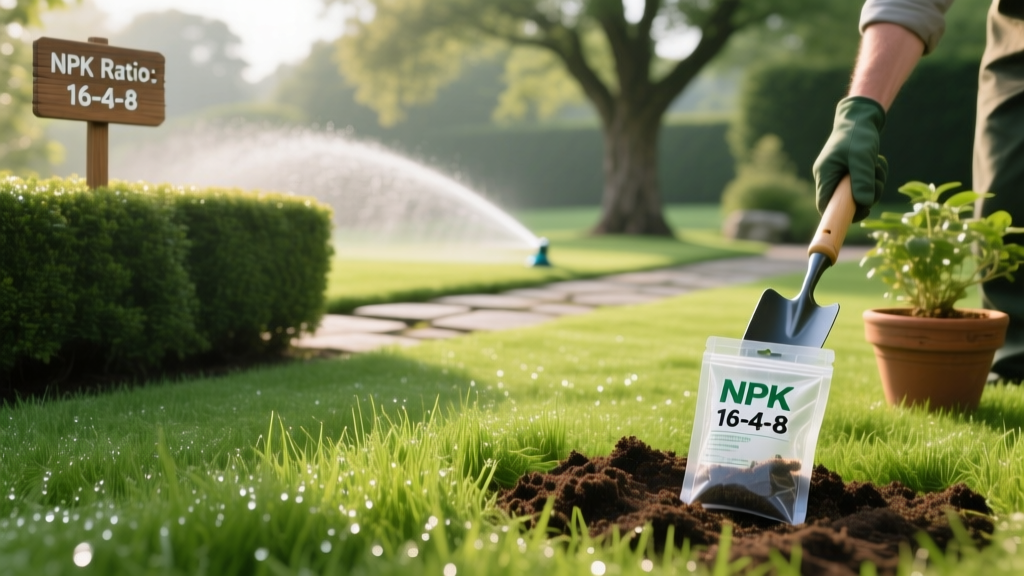
What NPK Means in Fertilizer: Lawn Nutrition Ratios Explained
Walk into any garden center, and you will see dozens of bags adorned with three prominent numbers. When homeowners ask what NPK means in fertilizer, the short answer is that it represents the percentage by weight of the three primary macronutrients required for turfgrass survival: Nitrogen (N), Phosphorus (P), and Potassium (K). However, treating these numbers as a simple marketing label is the most common mistake in lawn care. Understanding the exact chemical breakdown, the salt index of the carrier, and the true cost per pound of actual nutrient is what separates a mediocre lawn from a championship-grade turf.
The Core Triad: Breaking Down N, P, and K
Each letter in the NPK sequence dictates a specific physiological function within the grass plant. Applying the wrong ratio at the wrong time can lead to excessive thatch, disease susceptibility, or environmental runoff.
Nitrogen (N): The Engine of Vegetative Growth
Nitrogen is responsible for leaf blade elongation, chlorophyll production, and the deep green color associated with healthy turf. It is highly mobile in the soil and easily leached by heavy rainfall.
- Quick-Release Sources: Urea (46-0-0) and Ammonium Sulfate (21-0-0) provide immediate greening within 48 hours but carry a high salt index, increasing the risk of fertilizer burn if not watered in immediately.
- Slow-Release Sources: Methylene Urea (MU) or Polymer-Coated Sulfur-Coated Urea (PCSCU) release nitrogen gradually over 8 to 12 weeks, driven by soil temperature and microbial activity, providing steady growth without the 'flush and crash' cycle.
Phosphorus (P): The Root Architect
Phosphorus drives root system development, seedling establishment, and energy transfer (ATP) within the plant. Unlike nitrogen, phosphorus binds tightly to soil particles and does not leach easily. Because of this, established lawns rarely need phosphorus unless a soil test confirms a deficiency.
⚠️ Regulatory Warning: Due to severe eutrophication risks in freshwater ecosystems, the Environmental Protection Agency (EPA) and numerous state legislatures strictly limit phosphorus in turf fertilizers. In states like New York, Minnesota, and Michigan, applying phosphorus to an established lawn without a verified soil test deficiency is illegal and carries heavy fines.
Potassium (K): The Stress Shield
Potassium regulates stomatal opening (water retention), thickens cell walls, and activates over 60 essential plant enzymes. It is the critical nutrient for preparing turf for environmental stressors like summer drought, winter freeze, and heavy foot traffic. Muriate of Potash (0-0-60) is the most common and affordable source, though Sulfate of Potash (0-0-50) is preferred for salt-sensitive grasses like St. Augustine or centipedegrass.
Decoding the Guaranteed Analysis Label
The three numbers on the bag represent the percentage of total bag weight dedicated to that specific nutrient. If you purchase a 50-pound bag of fertilizer with an NPK ratio of 20-0-5, the math dictates exactly what you are putting on your lawn:
- Nitrogen (20%): 50 lbs × 0.20 = 10 lbs of actual Nitrogen.
- Phosphorus (0%): 50 lbs × 0.00 = 0 lbs of actual Phosphorus.
- Potassium (5%): 50 lbs × 0.05 = 2.5 lbs of actual Potassium.
- Inert Filler: The remaining 37.5 lbs consists of sand, limestone, or pelletizing agents that ensure even distribution through a broadcast spreader.
Matching NPK Ratios to Grass Types and Seasons
According to turfgrass researchers at the University of Minnesota Turf Science Program, the ideal NPK ratio shifts dramatically based on your grass species and the current season. Applying a high-nitrogen spring formula in the fall will result in tender, cold-susceptible growth that will die off during the first hard freeze.
Cool-Season Grasses (Kentucky Bluegrass, Tall Fescue, Perennial Ryegrass)
- Early Spring (April): 20-0-5 or 16-4-8. Focus on moderate nitrogen to repair winter damage without pushing excessive top growth that depletes root reserves.
- Late Fall (November): 24-0-10 or 32-0-10. A high-nitrogen, high-potassium 'winterizer' application is critical. The grass stores this nitrogen in its crown for an aggressive green-up the following April.
Warm-Season Grasses (Bermudagrass, Zoysia, St. Augustine)
- Spring Green-Up (May): 15-0-15 or 16-4-8. Warm-season grasses need a balanced approach to support stolon and rhizome expansion as soil temperatures cross 65°F.
- Peak Summer (July/August): 28-0-3 or similar high-N, low-K formulations. Push vegetative growth during their peak metabolic window, but taper off nitrogen 6 weeks before the first expected frost to allow the grass to harden off.
The Hidden Variables: Secondary and Micronutrients
While NPK forms the foundation, premium fertilizers include secondary macronutrients and micronutrients that correct specific soil deficiencies. Iron (Fe) is the most common additive. Products like Lesco Iron Plus incorporate chelated iron, which bypasses soil pH lockout to provide a deep, dark blue-green color without the aggressive growth flush associated with nitrogen. If your soil pH is above 7.0 (alkaline), standard ferrous sulfate will bind to the soil and become unavailable to the roots; you must use chelated iron (Fe-EDDHA) for it to be effective.
Cost Analysis: Price Per Pound of Actual Nitrogen
Marketing heavily influences fertilizer pricing. To make an economically sound decision, you must ignore the price of the bag and calculate the Cost Per Pound of Actual Nitrogen (CPN). This metric reveals the true value of the product. Below is a comparative analysis based on current retail averages:
| Product | Bag Size | NPK Ratio | Retail Cost | Lbs of Actual N | Cost per Lb of N |
|---|---|---|---|---|---|
| Generic Urea (Professional Grade) | 50 lbs | 46-0-0 | $40.00 | 23.0 lbs | $1.74 |
| Scotts Turf Builder (Consumer Grade) | 14 lbs | 24-25-4 | $35.00 | 3.36 lbs | $10.41 |
| Milorganite (Organic Biosolid) | 32 lbs | 5-2-0 | $22.00 | 1.6 lbs | $13.75 |
While Milorganite is an excellent soil builder that introduces vital carbon and micronutrients, relying on it as your primary nitrogen source is economically inefficient. Professional landscapers typically use a synthetic slow-release nitrogen source for the bulk of their NPK requirements and supplement with a light, 5 lb/1000 sq ft application of Milorganite purely for microbial stimulation.
Expert Troubleshooting: When NPK Goes Wrong
Even with the perfect ratio, application errors can devastate a lawn. The most frequent issue is fertilizer burn, which is actually a desiccation event caused by the salt index of the fertilizer drawing moisture out of the grass roots via osmosis. Synthetic fertilizers like ammonium sulfate have a salt index of 69.2, while organic options like feather meal sit near 1.0. If you apply a high-salt synthetic fertilizer to a drought-stressed lawn without immediately irrigating with 0.25 inches of water, the leaf tips will scorch and turn white within 48 hours.
Furthermore, nutrient antagonism can occur when NPK ratios are unbalanced. Excessive potassium applications (over 2 lbs per 1,000 sq ft annually) can chemically block the plant's ability to absorb magnesium and calcium, leading to interveinal chlorosis (yellowing between leaf veins) that mimics an iron deficiency. As noted by Penn State Extension turfgrass specialists, a comprehensive soil test is the only reliable way to diagnose these hidden chemical lockouts before applying corrective amendments.
'Never guess your soil's nutritional needs. A $20 laboratory soil test from a university extension will save you hundreds of dollars in wasted fertilizer and prevent irreversible environmental damage from phosphorus runoff.'

