
Lawn Care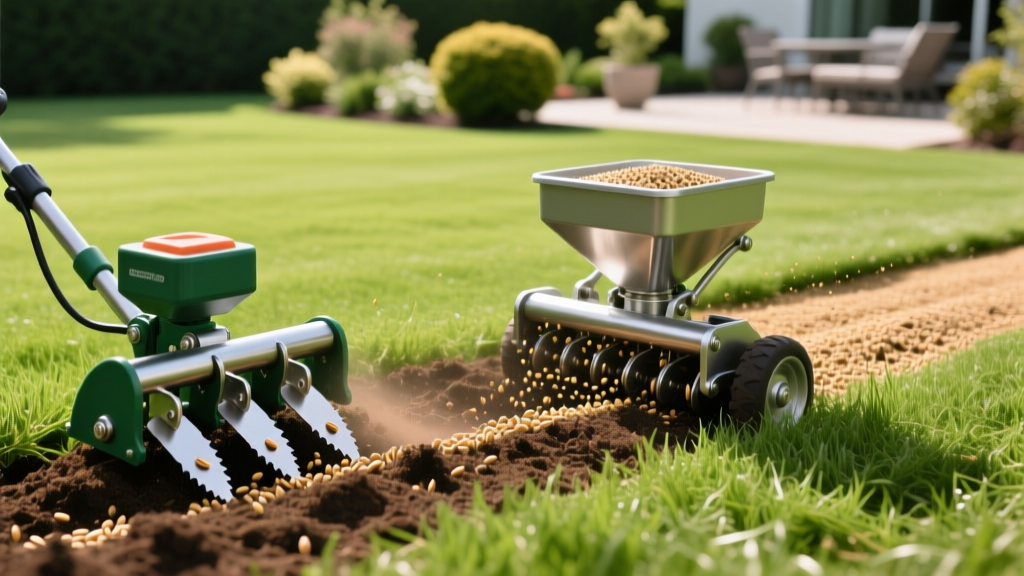
What's a Seeder? Slit vs. Broadcast Types and Costs
The Core Distinction: Seeder vs. Fertilizer Spreader
When homeowners ask, "What's a seeder?", they are often confusing the machine with a standard broadcast spreader. A fertilizer spreader relies on gravity and centrifugal force to scatter seed across the surface of the lawn. This method leaves seed vulnerable to wind, birds, and drying out, especially if a thick layer of thatch prevents the seed from reaching the soil.
A dedicated lawn seeder, specifically a slit seeder or slice seeder, is a mechanized tool designed to cut into the soil and deposit seed directly into the furrow. By physically breaking the soil surface and the thatch layer, a seeder guarantees seed-to-soil contact, which is the single most critical variable for germination. According to turfgrass researchers at Penn State Extension, direct seed-to-soil contact can increase germination rates by up to 40% compared to surface broadcasting on unprepared lawns.
What's a Seeder? 3 Primary Machine Types
The term "seeder" encompasses several distinct pieces of equipment. Selecting the right one depends on your lawn's current condition, specifically the thickness of your thatch layer and the severity of soil compaction.
1. Slit Seeders (Slice Seeders)
Slit seeders use a series of rotating, horizontally mounted blades (either fixed knives or flail blades) to slice shallow furrows into the soil, typically 1/4 to 1/2 inch deep. As the blades cut, a drop tube deposits seed directly into the slit.
Best for: Lawns with moderate thatch (under 0.5 inches) and bare patches requiring aggressive renovation.
Top Models: Billy Goat SSP18 (residential/light commercial), Ryan Lawnaire (commercial).
2. Broadcast Overseeders (Aerator-Seeders)
These hybrid machines combine a core aerator or heavy-duty dethatcher with a broadcast spreader. They pull plugs or tear up thatch while simultaneously dropping seed over the freshly exposed soil. While they do not place seed neatly into a furrow, the aeration process creates thousands of micro-depressions where seed naturally falls and is protected from drying out.
3. Drop Seeders
Drop seeders release seed in a precise, narrow band directly beneath the hopper without cutting the soil. They are essentially highly calibrated spreaders used primarily on lawns that have already been heavily dethatched or core-aerated.
| Seeder Type | Mechanism | Seed-to-Soil Contact | Avg Purchase Cost | Best Lawn Condition |
|---|---|---|---|---|
| Slit / Slice Seeder | Rotating blades cut furrows | Excellent (90%+) | $1,200 - $3,500+ | Moderate thatch, bare spots |
| Aerator-Overseeder | Core pulling + broadcast | Good (70-80%) | $2,500 - $4,000 | Compacted soil, thick turf |
| Drop Seeder | Gravity drop (no cutting) | Fair (Requires prep) | $150 - $400 | Pre-aerated, thin thatch |
Financial Breakdown: Renting vs. Buying in 2026
Understanding the economics of seeding equipment is crucial for equipment selection. For a standard 5,000-square-foot residential lawn, purchasing a commercial-grade slit seeder is rarely justifiable.
- Rental Costs: Expect to pay between $85 and $125 per day for a walk-behind slit seeder from major equipment rental yards (e.g., Sunbelt Rentals or local hardware stores). This usually includes a basic orientation but not the fuel or the seed.
- Residential Purchase: Entry-level residential slit seeders, like the Billy Goat SSP18, retail between $1,200 and $1,500. These feature smaller engines (typically 5.5 to 6.5 HP) and lighter frames, making them easier to maneuver but less durable under daily commercial use.
- Commercial Purchase: Commercial units from brands like Ryan or Classen range from $2,800 to over $4,500. These feature heavy-gauge steel decks, hydrostatic drives, and easily replaceable blade assemblies.
The Break-Even Point: If you manage more than 1.5 acres of turf or run a landscaping route with more than 15 residential properties, purchasing a commercial unit pays for itself within two autumn seasons compared to daily rental fees.
Maintenance Protocol: Calibration and Blade Care
A seeder is only as effective as its calibration and blade sharpness. Neglecting maintenance leads to uneven seed distribution, wasted seed, and engine strain.
The 100-Square-Foot Calibration Method
Never rely on the factory settings printed on the seed bag; hopper agitators and gate heights vary wildly between manufacturers. Use this exact calibration protocol:
- Weigh out exactly 8 ounces of your chosen grass seed on a digital kitchen scale.
- Pour the seed into the empty seeder hopper and set the drop rate to a medium setting (usually 4 or 5 out of 10).
- Measure a 10 ft by 10 ft test area on your driveway or a tarp (100 square feet).
- Push the seeder over the 100 sq ft area at your normal walking pace (approx. 3 mph).
- Collect and weigh the remaining seed. If you used 2 ounces of seed over 100 sq ft, your application rate is 20 ounces per 1,000 sq ft (1.25 lbs per 1,000 sq ft). Adjust the gate up or down and repeat until you hit the exact target rate recommended by your seed supplier.
Blade Sharpening and Furrow Clearing
The cutting blades on a slit seeder endure immense friction from rocks, roots, and clay.
Fixed Knives: These create clean, narrow slits. Inspect them every 10 hours of use. If the cutting edge rounds off past 1/16th of an inch, remove them and sharpen them on a bench grinder, maintaining the original bevel angle.
Flail Blades: These are hinged, chopping blades designed for heavy thatch. They cannot be easily sharpened and must be replaced. Expect to replace flail blades every 40 to 50 hours of operation. Running dull flail blades causes the machine to bounce over the thatch rather than penetrating it, resulting in seed left entirely on the surface.
Warning: Hopper Oxidation
Grass seed naturally retains moisture, and many modern seed blends are pre-coated with starter fertilizers containing highly corrosive salts. Leaving seed in the hopper overnight will cause rapid flash-rust on the metal agitator bar and drop gates. After every use, empty the hopper completely, use compressed air to blow out the drop tubes, and coat the interior metal surfaces with a light layer of silicone spray or fluid film to prevent oxidation.
Grass seed naturally retains moisture, and many modern seed blends are pre-coated with starter fertilizers containing highly corrosive salts. Leaving seed in the hopper overnight will cause rapid flash-rust on the metal agitator bar and drop gates. After every use, empty the hopper completely, use compressed air to blow out the drop tubes, and coat the interior metal surfaces with a light layer of silicone spray or fluid film to prevent oxidation.
Proper seeding equipment transforms a patchy, thin lawn into a dense, resilient turf. By selecting the correct machine for your thatch levels, calibrating the drop rate to the exact ounce, and maintaining the cutting blades, you ensure that every pound of seed reaches the soil environment required for successful germination. For further reading on seasonal timing and soil preparation, consult the NC State TurfFiles lawn establishment guidelines to align your seeding schedule with your specific regional climate zone.

