
Lawn Care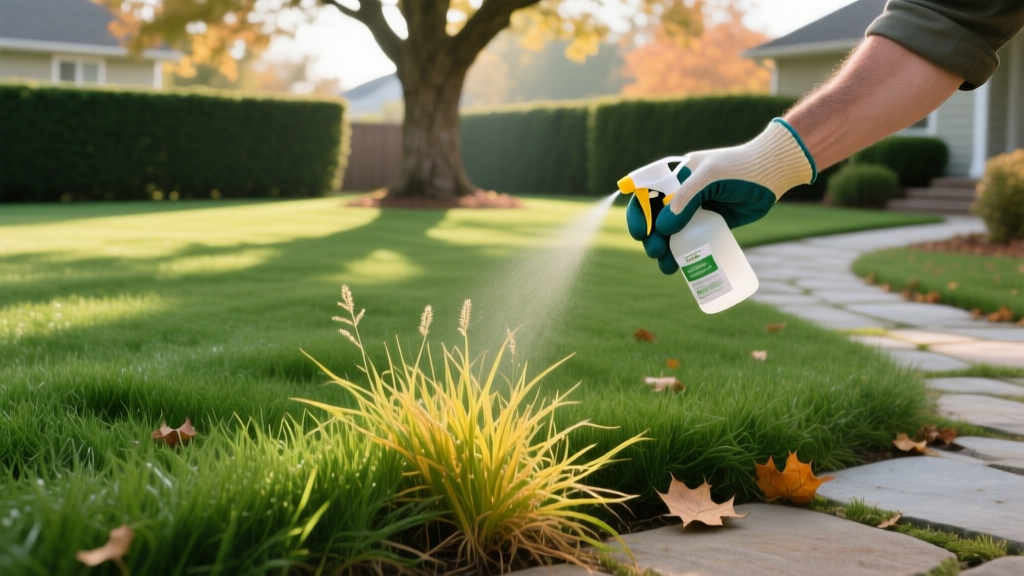
When Does Crabgrass Die? Spot Treatment and Fall Recovery Guide
The Biological Trigger: When Does Crabgrass Actually Die?
Smooth crabgrass (Digitaria sanguinalis) and hairy crabgrass (Digitaria ciliaris) are warm-season annual weeds. Their life cycle is strictly governed by soil temperature, not just the calendar. To answer the question of when does crabgrass die, you must look at the ground, not the air.
Crabgrass undergoes rapid senescence (biological aging and death) when soil temperatures at a 2-inch depth consistently drop below 50°F. While the first hard frost (air temperatures between 28°F and 32°F) will rapidly kill the upper foliage, turning the once-vibrant green clumps into a purple, then bleached-white mat, the root system and crown officially die only when the soil profile cools below that 50°F threshold.
'Crabgrass is a true thermophilic annual. Once the soil temperature drops below 50 degrees Fahrenheit for several consecutive days in late autumn, the plant ceases all metabolic activity and dies. No herbicide is required at this stage.' — University of Minnesota Turfgrass Science
Depending on your USDA Hardiness Zone, this soil temperature drop typically occurs between late September (Zone 5) and late November (Zone 7). By the time you see the characteristic white, papery dead clumps scattered across your lawn, the plant has already completed its life cycle, dropped thousands of seeds, and died.
The Spot-Treatment Trap: Why Fall Herbicide Applications Fail
Many homeowners notice dying crabgrass in October and attempt to spot-treat it with post-emergent herbicides like Quinclorac (Drive XLR8) or Fenoxaprop-p-ethyl (Acclaim Extra). This is a critical waste of money and chemicals.
Warning: Stop Spraying Dying Weeds
Post-emergent systemic herbicides require active plant translocation to move the chemical from the leaves down to the roots. Because dying crabgrass has shut down its vascular system to conserve energy for seed production, it will not absorb or translocate the herbicide. You are effectively spraying a dead plant. Save your chemical budget for spring pre-emergents.
Crabgrass Death Timeline and Action Matrix
Understanding the exact timeline of crabgrass senescence allows you to pivot from active weed killing to lawn recovery. Use this matrix to determine your spot-treatment strategy based on the current soil temperature.
| Soil Temp (2-inch depth) | Crabgrass Status | Required Action | Recommended Product |
|---|---|---|---|
| 70°F - 90°F (Summer) | Peak vegetative growth | Active post-emergent spot treatment | Quinclorac 75 DF ($45/gal) |
| 55°F - 69°F (Early Fall) | Seed drop & early senescence | Manual removal & pre-emergent prep | Hand pulling / Raking |
| 50°F - 54°F (Mid Fall) | Foliage dying, turning purple | Stop herbicides; begin aeration | Core Aerator / Dethatcher |
| Below 50°F (Late Fall) | Completely dead (white/papery) | Overseed bare spots & apply winterizer | TTTF Seed / 18-24-12 Fertilizer |
Step-by-Step Fall Recovery Protocol for Crabgrass Scars
When crabgrass dies, it leaves behind unsightly, sprawling brown scars in your turf. Because crabgrass thrives in thin, compacted soil, these scars are prime real estate for next year's weed seeds if left untreated. According to Penn State Extension, establishing a dense turf canopy is the only long-term biological defense against crabgrass.
Phase 1: Debris Removal and Soil Fracturing
- Rake the Dead Clumps: Use a metal thatching rake to aggressively pull up the dead crabgrass carcasses. This removes the physical barrier blocking sunlight and exposes the soil.
- Core Aeration: Rent a walk-behind core aerator (approx. $80-$100 per day). Make two passes over the affected areas in perpendicular directions. Crabgrass loves compacted soil; pulling 3-inch plugs fractures the compaction and allows oxygen to reach the roots of your desirable grass.
Phase 2: Strategic Overseeding
- Seed Selection: For cool-season lawns, use a blend of Turf-Type Tall Fescue (TTTF). TTTF has a deep root system and aggressive tillering habit that outcompetes crabgrass seedlings in the spring. Avoid cheap 'contractor grade' seed mixes, which often contain annual ryegrass.
- Application Rate: Apply TTTF seed at a heavy rate of 8 to 10 lbs per 1,000 square feet over the scarred areas.
- Starter Fertilizer: Apply a high-phosphorus starter fertilizer (such as a 18-24-12 N-P-K ratio) at the time of seeding. Phosphorus is critical for rapid root development in cool autumn soils.
Phase 3: The Spring Pre-Emergent Shield
The ultimate spot-treatment for dead crabgrass is preventing its return. The seeds dropped in late summer will remain dormant in the soil until spring. You must apply a pre-emergent herbicide when soil temperatures reach 50°F to 55°F for three consecutive days in the spring (usually when Forsythia bushes bloom).
- Prodiamine (Barricade): Provides up to 6 months of residual control. Cost: ~$120 per gallon (covers 2+ acres). Excellent for full-lawn blanket applications.
- Dithiopyr (Dimension): Offers early post-emergent control, meaning it will kill crabgrass even if it has just germinated (up to the 2-leaf stage). Cost: ~$140 per gallon. Ideal if you frequently miss the early spring application window.
Troubleshooting: Why is My 'Crabgrass' Still Green in November?
If you have verified that soil temperatures have been below 50°F for weeks, yet you still have wide-bladed, light-green grassy weeds thriving, you are likely dealing with a case of mistaken identity.
Goosegrass (Eleusine indica)
Goosegrass is often confused with crabgrass, but it is significantly more cold-tolerant. It features a distinct silver or white center at the base of the stem and a zipper-like seed head. Goosegrass can survive well into late autumn and requires specific herbicides like MSMA or specialized quinclorac blends for control, as standard crabgrass killers often fail against it.
Dallisgrass (Paspalum dilatatum)
Unlike crabgrass, Dallisgrass is a perennial weed. It will not die in the winter; it will simply go dormant and return from its deep, woody root system the following spring. Spot-treating Dallisgrass requires multiple applications of MSMA or Fluazifop over several weeks, as single applications rarely kill the deep rhizomes.
Frequently Asked Questions
Does crabgrass die in the winter?
Yes. Crabgrass is a true annual. It completes its life cycle and dies completely by late autumn or early winter. However, a single mature crabgrass plant can drop up to 150,000 seeds before it dies, which will overwinter in your soil and germinate the following spring.
Should I pull dead crabgrass out of my lawn?
Yes, but only in the fall. Raking out dead crabgrass clumps in October or November removes the physical thatch barrier, allowing sunlight to reach your desirable turfgrass and preparing the soil surface for fall overseeding. Do not pull it in the spring, as pulling can disturb the soil and bring dormant crabgrass seeds to the surface to germinate.
What kills crabgrass instantly?
Nothing kills crabgrass 'instantly' without damaging surrounding turf. Non-selective herbicides like Glyphosate (Roundup) will kill it in 3 to 5 days but will also kill your lawn. Selective herbicides like Quinclorac take 7 to 14 days to show complete necrosis. For immediate visual relief, manual extraction with a stand-up weeding tool is the fastest method for isolated clumps.

