
Lawn Care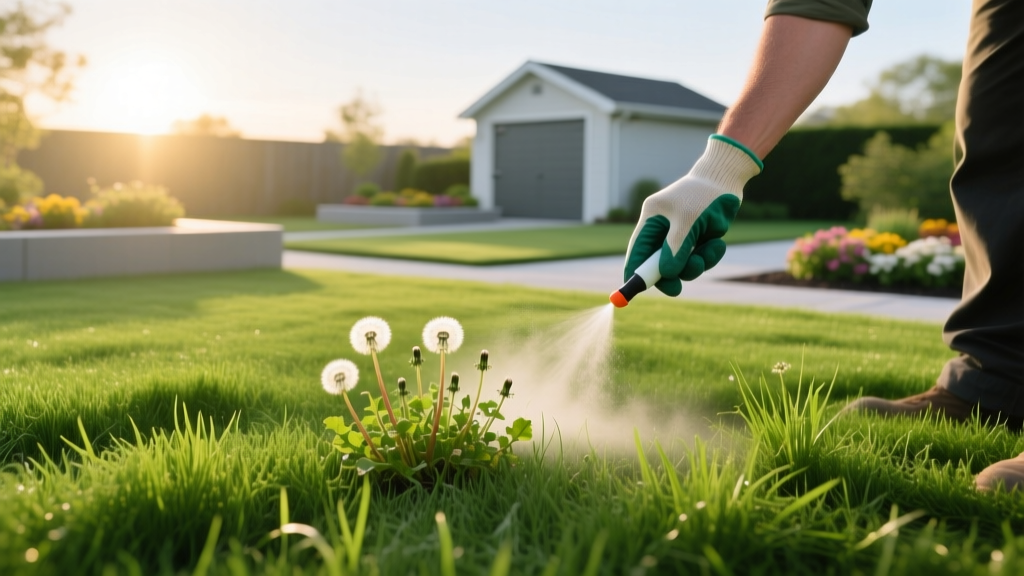
When to Weed and Feed a New Lawn: Spot-Treatment Rules
Establishing a new lawn is an exercise in patience, but the sudden appearance of weeds in young turf often triggers a panicked response. Many homeowners immediately reach for a broadcast 'weed and feed' product, assuming it will nourish the new grass while eliminating the invaders. Applying a standard broadcast weed and feed to a new lawn is one of the most common and catastrophic mistakes in turf management. The herbicides in these combination products will severely stunt root development in young grass, while the high-nitrogen synthetic fertilizers can burn tender, unestablished blades.
Instead of broadcast applications, managing weeds in a new lawn requires a strategic, targeted approach. This guide details exactly when you can safely treat a new lawn, which active ingredients are approved for young turf, and how to execute precise spot-treatments that eliminate weeds without sacrificing your new grass.
The Root Development Problem: Why Broadcast Herbicides Fail
When grass seed germinates or sod is laid, the plant directs nearly all its energy into establishing a deep, resilient root system. During this critical establishment phase, the turf's vascular system is highly sensitive. Systemic post-emergent herbicides—the chemicals in most weed and feed products designed to travel through the plant's veins to kill the root—cannot distinguish between a mature weed and a vulnerable, three-week-old grass shoot.
Warning: Pre-Emergent Herbicides and Seed Germination
Never apply a pre-emergent herbicide (like prodiamine or dithiopyr) to a lawn that was recently seeded. Pre-emergents work by creating a chemical barrier in the soil that stops cell division in germinating seeds. This barrier will kill your new grass seed just as effectively as it kills crabgrass. According to the University of Minnesota Extension, you must wait until the new lawn has been mowed at least two to three times before applying any pre-emergent controls.
The 3-Mow Rule: Calculating Your Treatment Timeline
Turfgrass scientists and agronomists universally recommend the '3-Mow Rule' as the baseline metric for herbicide tolerance. A new lawn must be mowed a minimum of three times at its recommended cutting height before it has developed the root mass and leaf tissue necessary to metabolize chemical stress. However, this timeline varies significantly depending on your grass species and establishment method.
| Grass Species | Establishment Method | Minimum Wait for Post-Emergents | Minimum Wait for Pre-Emergents |
|---|---|---|---|
| Tall Fescue | Seed | 3-4 Mows (approx. 6-8 weeks) | 6 Months |
| Kentucky Bluegrass | Seed | 4-5 Mows (approx. 8-10 weeks) | 6 Months |
| Bermudagrass | Sod | 2-3 Mows (approx. 4-6 weeks) | 3-4 Months |
| Zoysiagrass | Plugs/Sprigs | 10-12 Weeks | 12 Months |
Spot-Treatment Protocols for Common New Lawn Weeds
Once your lawn has passed the 3-mow threshold, you can begin targeted post-emergent spot-treatments. Never use a hose-end sprayer for blanket coverage on a new lawn. Instead, use a 1-gallon or 2-gallon pump sprayer to treat only the specific weeds. The NC State Turfgrass Program emphasizes that spot-treating reduces chemical load on the soil and protects the still-developing rhizomes of your new turf.
1. Crabgrass: The Opportunistic Invader
Crabgrass thrives in the thin, bare spots common in newly seeded lawns. To treat crabgrass in young cool-season lawns (Fescue, Bluegrass), Quinclorac is the gold standard active ingredient. Professional products like Drive XLR8 or consumer-grade Bayer Advanced All-In-One contain Quinclorac.
- Mixing Rate: 0.73 fluid ounces of Quinclorac per 1,000 square feet.
- The Surfactant Requirement: Quinclorac requires a Methylated Seed Oil (MSO) surfactant to penetrate the waxy cuticle of the crabgrass leaf. Without MSO, the herbicide will bead up and roll off, wasting your money and delaying control.
- Edge Case: Do not use Quinclorac on newly established St. Augustine or Centipede grass, as it will cause severe chlorosis (yellowing) and stunting.
2. Broadleaf Weeds: Dandelion, Clover, and Plantain
Broadleaf weeds compete aggressively for water and nutrients. A three-way herbicide blend containing 2,4-D, Dicamba, and MCPP (found in products like SpeedZone or Trimec) is highly effective.
- Mixing Rate: 1.4 fluid ounces per gallon of water.
- Temperature Restriction: Never apply 2,4-D when ambient temperatures exceed 85°F. At high temperatures, the chemical volatilizes (turns into a gas) and can drift into neighboring flower beds, killing ornamental shrubs and tomatoes.
3. Yellow Nutsedge: The Moisture Indicator
If nutsedge is appearing in your new lawn, it is often a sign of overwatering or poor soil drainage during the establishment phase. Nutsedge is a sedge, not a grass or broadleaf, so standard weed and feeds will not touch it. You need Halosulfuron-methyl (brand name SedgeHammer).
- Mixing Rate: 0.9 grams (one provided packet) per 1 to 2 gallons of water.
- Application Note: Halosulfuron is slow-acting. It takes 14 to 21 days to see the nutsedge yellow and die. Do not reapply prematurely, as the residual soil activity can stress young turf roots if overdosed.
Execution: The 5-Step Spot-Treatment Flow
- Calibrate the Sprayer: Fill your pump sprayer with exactly 1 gallon of water. Mark the spray pattern on your driveway. A standard cone nozzle should cover a 3-foot swath. This ensures you are applying the correct volume per square foot.
- Check the Forecast: Ensure no rain is expected for 24 hours and wind speeds are below 5 mph to prevent herbicide drift onto desirable plants.
- Mix the Solution: Add water to the tank first, then the herbicide, then the surfactant. This prevents the chemical from foaming excessively and ensures proper emulsification.
- Target the Center: Spray the weed until the leaves are wet, but not dripping. A fine mist is superior to heavy droplets. Keep the nozzle 12 to 18 inches from the ground.
- Delay the Next Mow: Wait at least 48 hours after spot-treating before mowing the lawn again. This gives the systemic herbicide time to translocate down into the weed's root system.
Feeding the New Lawn Safely (Without the Weed Risk)
Because you cannot use a combination 'weed and feed' product, you must decouple your weed control from your nutritional program. Young lawns have specific nutritional needs that differ vastly from mature turf.
Expert Insight: 'Newly seeded lawns require high levels of phosphorus to drive root development, while new sod requires steady, slow-release nitrogen to push lateral growth without burning the shallow, cut roots,' notes the Penn State Extension. Using a mature-turf high-nitrogen fertilizer on new seed will result in rapid, weak top-growth that collapses under summer heat stress.
What to Buy Instead of Weed and Feed
For newly seeded lawns, purchase a dedicated Starter Fertilizer with an N-P-K ratio around 18-24-12. The elevated phosphorus (the middle number) is critical for seedling vigor. Apply this at the time of seeding, and again 4 to 6 weeks later.
For newly laid sod, use a slow-release organic or polymer-coated nitrogen source, such as Milorganite (5-2-0) or Scotts Turf Builder Starter Food for New Grass. These products feed the soil microbes and provide a steady drip of nutrients over 8 to 10 weeks, eliminating the risk of fertilizer burn that plagues cheap, fast-release synthetic weed and feeds.
Frequently Asked Questions
Can I just pull the weeds by hand instead of spraying?
Hand-pulling is highly recommended for the first 4 weeks of a lawn's life when herbicides are strictly prohibited. However, pulling mature weeds like dandelions or plantain from soft, newly seeded soil often pulls the surrounding grass seedlings up with them. If the weed is larger than a golf ball, use a targeted spot-spray once the 3-mow rule is satisfied.
Will a thick layer of mulch or straw help prevent weeds in my new seed?
Straw (specifically weed-free wheat straw, not hay) is excellent for retaining moisture over new seed, but it does not block weed germination. Furthermore, applying traditional bark mulch over grass seed will smother the seedlings and block the sunlight required for photosynthesis, killing your new lawn before it starts.
My new lawn is 80% weeds. Should I kill it all and start over?
If weed coverage exceeds 60% after the first full growing season, renovation is often more cost-effective than ongoing chemical rehabilitation. In late summer, apply a non-selective herbicide (glyphosate) to kill the entire area, wait 14 days, rake out the dead material, and reseed using a certified weed-free turf blend.

