
Lawn Care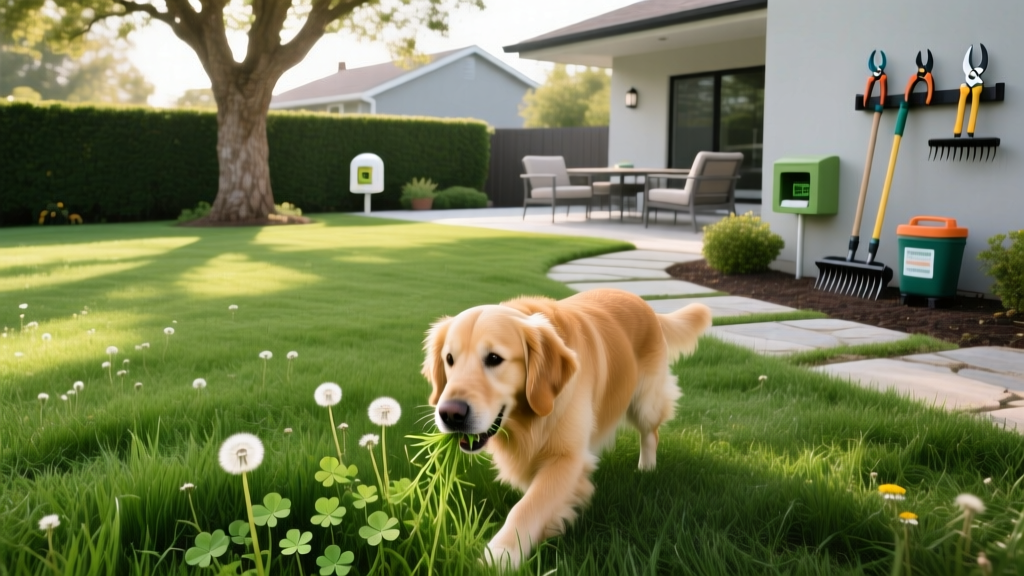
Why Do Dogs Chew Grass? A Turf Safety & Lawn Repair Guide
The Veterinary Consensus: Why Do Dogs Chew Grass?
Canine grass-grazing presents a dual challenge for turf managers: mechanical uprooting of the grass crown and the secondary chemical burn from localized nitrogen loading. Before addressing the agronomic repair, it is critical to understand the behavioral driver. According to the American Kennel Club, less than 25% of dogs vomit after eating grass. The prevailing veterinary consensus rejects the outdated "upset stomach" theory for most cases. Instead, grass chewing is typically driven by pica (a craving for non-food items due to nutritional deficits), a biological drive for insoluble fiber, or an inherited scavenging instinct from wild canids that consumed the stomach contents of herbivorous prey.
Agronomic Insight: When a dog chews grass, they rarely shear the blade cleanly like a mower. They grab the leaf tip and pull, which frequently extracts the entire grass crown and root system, leaving a divot that exposes bare soil to weed invasion.
Mechanical vs. Chemical Lawn Damage
Diagnosing the exact type of canine-induced turf damage dictates your repair protocol. Dogs destroy lawns through two distinct mechanisms: physical extraction (chewing and digging) and chemical overload (urine and feces).
| Damage Feature | Mechanical (Chewing/Pulling) | Chemical (Urine Burn) |
|---|---|---|
| Visual Symptom | Torn crowns, bare patches, uneven divots, exposed soil. | Yellow/brown necrotic center with a dark green outer halo. |
| Root Impact | Physical uprooting; destroys the meristematic growing point. | Nitrogen salt toxicity; osmotic stress dehydrates roots. |
| Soil Alteration | Soil compaction from paw traffic around the grazing site. | Spike in localized soil pH and soluble salt concentration. |
| Primary Repair | Core aeration, topdressing, and overseeding. | Deep leaching with water, followed by gypsum application. |
Turf Toxicity: Is the Grass Safe for Grazing?
If your dog is actively chewing your lawn, the botanical and chemical composition of your turf is a primary health concern. The Environmental Protection Agency (EPA) strictly advises keeping pets off lawns treated with synthetic herbicides and insecticides until the application is completely dry, though residual systemic chemicals remain in the leaf tissue.
The Hidden Danger: Foxtail Weeds
The greatest threat to a grass-chewing dog is not the turfgrass itself, but invasive weeds like Foxtail (Hordeum murinum). Foxtails produce barbed seed awns that can lodge in a dog's gums, throat, or nasal passages when chewed, leading to severe infections or requiring surgical extraction. Maintain a strict pre-emergent and post-emergent weed control program to ensure broadleaf and grassy weeds are eradicated from grazing zones.
Safe Turfgrass Cultivars
- Tall Fescue (e.g., 'Titan Ultra' or 'RTF'): Wide blades, deep root systems, and high tolerance to mechanical tearing. Non-toxic if ingested.
- Bermudagrass (e.g., 'Midiron' or 'TifTuf'): Excellent wear tolerance. While safe, its coarse texture can sometimes cause mild gastrointestinal irritation in dogs with sensitive stomachs.
- Perennial Ryegrass: Fast-germinating and safe, but lacks the deep-rooted resilience to survive repetitive pulling.
The 4-Step Protocol to Repair Chewed and Torn Turf
Repairing mechanical damage from grass chewing requires restoring both the soil profile and the plant crown. Follow this precise agronomic sequence for optimal recovery.
- Debride and Rake: Use a steel spring-tine rake to aggressively remove dead, torn grass blades and loosen the top 1/2 inch of compacted soil in the divot. This scarification is mandatory for seed-to-soil contact.
- Neutralize Salts (If Urine is Present): If the chewing site overlaps with urine burn, apply calcium sulfate (gypsum) at a rate of 2 to 3 pounds per 100 square feet. Gypsum displaces toxic sodium salts in the soil matrix without drastically altering the pH, unlike lime.
- Topdress with Compost: Fill the divots with a 1/4-inch layer of screened, peat-free compost. Avoid heavy manure-based composts, as the high nitrogen content can burn emerging seedlings and attract dogs back to the spot due to the odor.
- Overseed with Traffic-Tolerant Blends: Apply seed at 5 to 8 pounds per 1,000 square feet. For cool-season lawns, use a 100% Tall Fescue blend (such as Jonathan Green Black Beauty). For warm-season lawns, plant Bermudagrass seed or lay sod plugs. Keep the area continuously moist (watering 3x daily for 5 minutes) until germination occurs in 7-14 days.
Cost Breakdown: Deterrents vs. Dog-Run Landscaping
Homeowners generally choose between chemical deterrents to stop the behavior or physical landscaping to contain it. Below is a comparative cost analysis for a standard 5,000 sq. ft. lawn.
| Strategy | Material Cost | Longevity & Efficacy |
|---|---|---|
| Bitter Apple / Citrus Sprays | $12 - $18 per 16oz bottle | Low efficacy; washes off after rain/irrigation. Requires daily reapplication. |
| Clover-Grass Seed Mix | $45 per 10 lbs (covers 1,000 sq ft) | High efficacy; micro-clover resists urine burn and satisfies canine foraging urges safely. |
| Cedar Mulch Dog Run (10x10) | $150 - $250 (mulch + landscaping fabric) | Permanent solution; redirects chewing/digging behavior away from primary turf. |
Lawn Care FAQ: Dogs and Turf
Will my dog get sick from eating lawn clippings?
Fresh clippings are generally safe, but clippings that have sat in the sun for 24+ hours begin to ferment and can harbor toxic molds or cause severe gastric bloat. Always use a bagging attachment or rake clippings immediately if your dog is a known grazer.
Does adding tomato juice to my dog's water prevent lawn burn?
No. This is a persistent myth. Urine burn is caused by nitrogen concentration, not acidity. Altering your dog's water pH with tomato juice or apple cider vinegar is ineffective and can cause urinary tract stones. The only proven mitigation is diluting the urine by encouraging higher water intake or immediately watering the lawn spot after the dog urinates.
Are organic fertilizers safe if my dog chews the grass?
While synthetic pesticides pose high toxicity risks (refer to the ASPCA Poison Control database for specific plant and chemical toxicities), organic fertilizers like blood meal or bone meal can be highly attractive to dogs due to their scent. Ingestion of large quantities of blood meal can cause iron toxicity and severe vomiting. Opt for fully composted, odorless organic amendments rather than raw animal by-products.

