
Lawn Care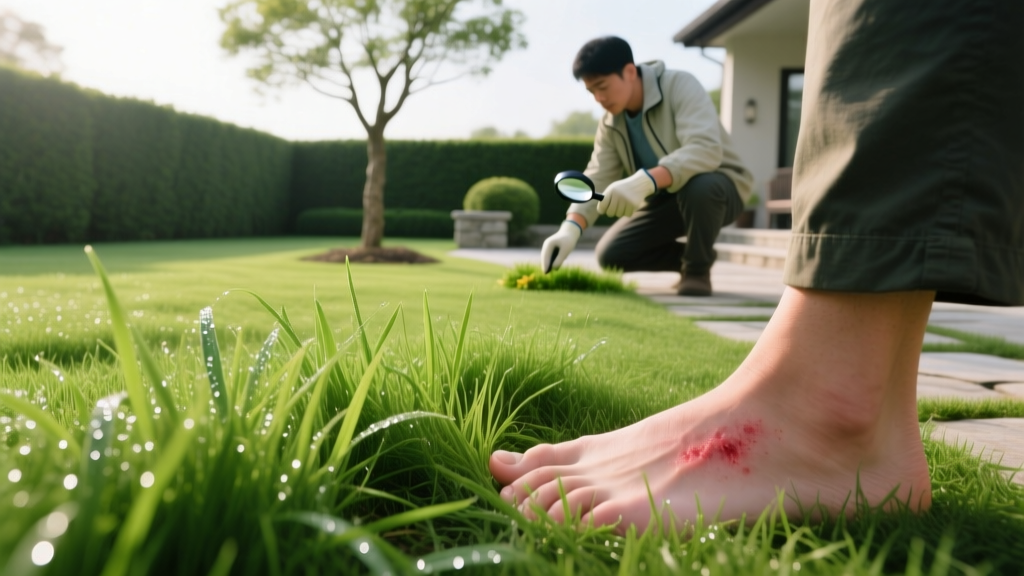
Why Does Grass Make You Itchy? Causes, Treatments & Lawn Fixes
Stepping onto a lush lawn should be a pleasant experience, but for many homeowners and gardeners, it results in an immediate, maddening itch. If you have ever asked yourself, "why does grass make you itchy?" the answer is rarely a single culprit. The irritation is usually a complex interaction between the microscopic anatomy of turfgrass, chemical compounds in plant sap, hidden arthropods, or invasive weeds masquerading as turf. Understanding the exact mechanism behind your contact dermatitis is the first step toward both clinical relief and targeted lawn care adjustments.
The Anatomy of a Grass Itch: Mechanical vs. Chemical Irritation
Grass blades are not smooth surfaces. Depending on the turfgrass species, the physical and chemical composition of the leaf can trigger immediate localized histamine responses in human skin.
Microscopic Serrations and Silica Phytoliths
Many cool-season and warm-season grasses, particularly tall fescue and bermudagrass, deposit silica in their epidermal cells, forming microscopic structures called phytoliths. Additionally, the edges of grass blades are lined with trichomes—tiny, hair-like projections that act as a defense mechanism against herbivores. When bare skin brushes against these blades, the silica-reinforced trichomes create thousands of micro-abrasions on the epidermis. This mechanical friction strips away the skin's protective lipid barrier, allowing sweat and environmental allergens to penetrate the dermis and trigger an itch response.
Calcium Oxalate and Sap Allergens
Beyond physical abrasion, turfgrass sap contains chemical irritants. Species like St. Augustinegrass and centipedegrass produce calcium oxalate crystals and specific alkaloids in their sap. When a mower tears the grass blade rather than slicing it cleanly, or when the turf is heavily bruised by foot traffic, these compounds are released. If you have minor cuts or compromised skin barriers, contact with this sap causes chemical contact dermatitis, characterized by a burning, stinging itch rather than a simple mechanical tickle.
The Pest Factor: Chiggers and the Burrowing Myth
Often, the grass itself is entirely innocent, and the itch is caused by arthropods living within the turf canopy. The most notorious of these is the chigger (the larval stage of mites in the Trombiculidae family).
Debunking the Burrowing Myth: A pervasive myth suggests chiggers burrow under the skin and must be suffocated with nail polish or petroleum jelly. This is biologically false. Chiggers inject digestive enzymes into the skin that liquefy tissue cells, which the mite then consumes. The intense itch and the resulting red welt (often with a white center) is an allergic reaction to the hardened feeding tube (stylostome) left behind in the skin, not a burrowing insect.
Chiggers thrive in dense, shaded, and moist turf areas, particularly where grass borders wooded edges or overgrown brush. If your itch is concentrated around the ankles, behind the knees, or at the waistline after walking through tall grass, chiggers are the highly probable cause.
Diagnostic Matrix: Identifying Your Specific Grass Itch
Accurately diagnosing the source of the irritation dictates whether you need a dermatological treatment or a lawn care intervention. Use the matrix below to identify your specific trigger.
| Culprit | Symptom Onset | Rash Appearance | Primary Lawn Fix |
|---|---|---|---|
| Mechanical (Trichomes) | Immediate (during contact) | Faint red streaks, no raised welts | Sharpen mower blades; raise mowing height |
| Chemical (Sap/Oxalates) | 15 to 30 minutes | Diffuse redness, burning sensation | Water lawn deeply to dilute sap; avoid mowing wet grass |
| Chiggers (Mites) | 3 to 6 hours post-exposure | Intense red welts, often clustered at clothing lines | Apply Bifenthrin; reduce thatch and shade |
| Pollen/Mold Spores | Delayed (hours to days) | Hives, eczema flare-ups, widespread redness | Mow before grass heads out; bag clippings |
Weed Invaders and Phytophotodermatitis
Sometimes the culprit hiding in your lawn is not a grass at all. Invasive broadleaf weeds like wild parsnip (Pastinaca sativa) and giant hogweed (Heracleum mantegazzianum) frequently infiltrate neglected turf. These plants contain furanocoumarins, which cause phytophotodermatitis. When the plant sap gets on your skin and is subsequently exposed to ultraviolet (UV) sunlight, it triggers a severe phototoxic reaction resulting in massive blisters and long-lasting hyperpigmentation. If your "grass itch" turns into severe blistering 24 to 48 hours after mowing or weeding, suspect a phototoxic weed invader.
Clinical Relief: Step-by-Step Treatment Protocol
Once you are out of the turf, immediate decontamination is critical to halt the histamine cascade.
- Dry Brush First: If you suspect chiggers, do not immediately jump into a hot shower, which can open pores and worsen the reaction. Use a dry towel to vigorously wipe down the affected areas to dislodge unattached mites.
- Cold Water Wash: Shower with cool or lukewarm water and a mild, fragrance-free soap (such as Cetaphil or CeraVe) to wash away grass sap, pollen, and remaining pests.
- Topical Corticosteroids: Apply an over-the-counter 1% hydrocortisone cream to localized welts. For widespread mechanical irritation, a calamine lotion or a pramoxine-based anti-itch cream provides better surface coverage without thinning the skin.
- Oral Antihistamines: For severe allergic reactions to grass pollen or sap, a second-generation oral antihistamine like Cetirizine (Zyrtec) or Fexofenadine (Allegra) blocks systemic histamine receptors without causing severe drowsiness.
Turf Management: Cultural Practices to Reduce Irritants
To stop asking why does grass make you itchy, you must alter the microenvironment of your lawn to reduce mechanical friction, chemical sap release, and pest habitats. According to turfgrass specialists at Penn State Extension, managing the physical structure of the turf canopy is paramount.
Thatch Reduction and Aeration
Thatch—the layer of dead and living organic matter between the soil surface and the green vegetation—is the primary breeding ground for chiggers and a reservoir for fungal spores. If your thatch layer exceeds 0.5 inches, it must be mechanically removed. Rent a vertical mower (power rake) and set the blades to penetrate 0.25 inches into the soil surface. Follow up with core aeration using a machine that pulls 3-inch plugs to improve soil drainage and accelerate microbial breakdown of remaining organic matter.
Targeted Pest Control Applications
If chiggers are a recurring annual problem, cultural controls alone will not suffice. Apply a pyrethroid-based insecticide, such as Bifenthrin (commonly sold as Talstar P or Bifen IT), targeted specifically at the lawn perimeter and shaded transition zones. The standard application rate is 0.5 to 1.0 fluid ounces per 1,000 square feet. Apply in late spring (May/June) when soil temperatures consistently reach 70°F, which coincides with the hatching of the first generation of chigger larvae. Water the lawn lightly after application to move the active ingredient into the thatch layer where the mites reside.
Mower Maintenance and Cutting Height
Dull mower blades shred grass tips rather than slicing them cleanly. This shredding exponentially increases the release of calcium oxalate sap and exposes the jagged, silica-rich internal structure of the leaf, worsening mechanical irritation. Sharpen your mower blades every 25 hours of operation. Furthermore, raise your mowing deck. Keeping cool-season grasses at a 3.5 to 4-inch height shades the soil, naturally suppressing weed seed germination (including phototoxic weeds) and reducing the humidity at the soil level that chiggers require to survive.
Expert Insight: Never mow a wet lawn if you suffer from grass-induced contact dermatitis. Water acts as a solvent for grass sap and pollen, creating a highly concentrated, easily transferable liquid that clings to skin and clothing. Wait until the morning dew has completely burned off or 24 hours after a rainfall event before engaging in turf maintenance.
By combining proper dermatological response with aggressive thatch management, precise chemical applications, and meticulous mowing practices, you can reclaim your yard. The itch is not an unavoidable tax on homeownership; it is a symptom of an imbalanced turf ecosystem that can be corrected with targeted lawn care.

