
Lawn Care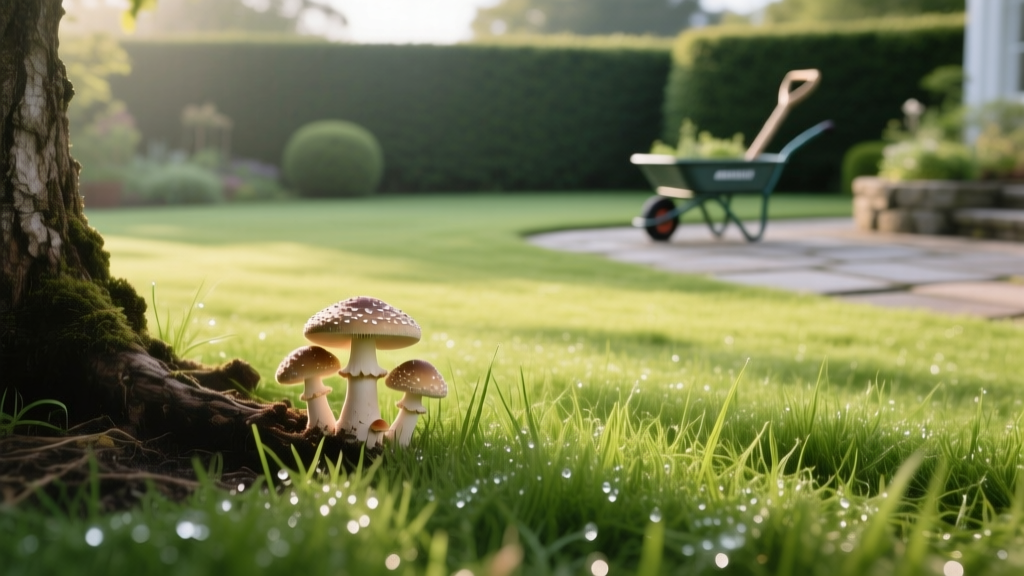
Why Are Mushrooms Growing in My Grass? Causes and Fixes
Seeing unfamiliar fungal fruiting bodies dotting your turf can be alarming, prompting the immediate question: why are mushrooms growing in my grass? The short answer is that mushrooms are the reproductive structures of a vast, subterranean fungal network called mycelium. They emerge when specific environmental conditions—namely high moisture, moderate temperatures, and abundant decaying organic matter—align perfectly. While they rarely attack living grass directly, their presence is a biological indicator of underlying soil and moisture dynamics that require correction.
The Biology Behind Lawn Mushrooms
To effectively manage fungal outbreaks, you must understand what you are dealing with. The mushrooms you see above ground represent only about 5% of the total fungal organism. The remaining 95% is the mycelium network living in the top 2 to 4 inches of your soil profile.
Most lawn mushrooms are saprophytic, meaning they feed on dead and decaying organic matter. They are actively recycling nutrients back into the soil. However, when their fruiting bodies push through your turf, they disrupt the visual uniformity of the lawn and can pose toxicity risks to pets and children. In rare cases, certain fungi are pathogenic (like the fungi causing Fairy Ring or Brown Patch), which can actively starve grass roots of water and nutrients, leading to localized turf death.
4 Primary Triggers: Why Are Mushrooms Growing in My Grass?
If you are battling recurring fungal flushes, your lawn is likely suffering from one or more of the following environmental triggers.
1. Buried Organic Matter and Construction Debris
The most common catalyst for sudden mushroom populations in established lawns is decaying wood buried beneath the soil surface. Old tree stumps, severed roots from removed shrubs, or even discarded lumber from home construction provide a massive, long-term food source for saprophytic fungi. As long as the wood remains, the mycelium will persist and fruit during wet spells.
2. Excessive Thatch Accumulation
Thatch is the intermingled layer of living and dead stems and roots that develops between the green vegetation and the soil surface. A thatch layer exceeding 0.5 inches acts like a sponge, trapping moisture against the soil line and creating an ideal incubator for fungal spores. Furthermore, thick thatch prevents water and air from penetrating the soil, weakening grass roots while empowering surface-level fungi.
3. Soil Compaction and Poor Drainage
Fungi thrive in consistently moist, poorly oxygenated environments. If your soil is heavily compacted—common in high-traffic areas or heavy clay soils—water pools near the surface rather than percolating downward. This sustained surface moisture triggers mycelium to produce mushrooms. According to the University of Minnesota Extension, improving soil drainage is the single most effective long-term cultural control for lawn mushrooms.
4. Microclimates: Shade and Low Airflow
Areas of your lawn bordered by dense shrubbery, fences, or overhanging tree canopies dry out much slower than exposed turf. The lack of direct sunlight and restricted wind movement keeps the topsoil damp for days after a rain event, providing the extended moisture window mushrooms need to mature and release spores.
Lawn Mushroom Identification Matrix
Not all mushrooms are created equal. Use this matrix to identify common lawn fungi and determine your threat level and required response.
| Fungal Type | Visual Characteristics | Threat to Turf | Toxicity Risk | Primary Management Strategy |
|---|---|---|---|---|
| Fairy Ring (Chlorophyllum molybde) | Large white/tan caps forming distinct rings or arcs; often surrounded by dark green or dead grass. | High (Hydrophobic mycelium repels water, killing grass roots). | Moderate to High (Gastrointestinal distress if ingested). | Core aeration, wetting agents, targeted Azoxystrobin fungicide. |
| Ink Caps (Coprinus spp.) | Tall, slender, pale caps that rapidly dissolve into a black, inky liquid as they mature. | None (Strictly saprophytic). | Low (Generally non-toxic, but messy). | Physical removal, reduce surface moisture, dethatching. |
| Puffballs (Calvatia spp.) | Round, stemless, white-to-brown spheres that release a cloud of brown dust when kicked or crushed. | None (Feeds on decaying roots/wood). | Low (Spore inhalation can cause respiratory irritation). | Remove buried wood/debris, physical removal before spore release. |
| Amanita (Amanita spp.) | Classic 'toadstool' shape with white gills, a ring on the stem, and a cup-like volva at the base. | None (Often symbiotic with nearby tree roots). | Extreme (Potentially fatal if ingested by pets/humans). | Immediate physical removal and disposal; limit pet access. |
Actionable Eradication and Prevention Protocol
Eliminating mushrooms requires a multi-tiered approach targeting the environment rather than just the visible fruiting bodies. Follow this step-by-step protocol to reclaim your turf.
- Disrupt the Spore Cycle (Immediate Action): Do not simply kick or stomp on mushrooms, as this violently releases millions of spores into the surrounding turf, guaranteeing future outbreaks. Instead, wear gloves, pluck the mushrooms at the base, and dispose of them in a sealed plastic bag in your municipal trash (not your compost bin). Mowing the lawn with a bagging attachment is also highly effective for removing young flushes before they drop spores.
- Relieve Compaction via Core Aeration: Rent a walk-behind core aerator or hire a professional to pull 3- to 4-inch soil plugs across the affected area. This physically fractures compacted soil, allowing oxygen to reach the root zone and accelerating the drying of the topsoil. Leave the plugs on the lawn to break down naturally; the soil microbes in the plugs will help decompose the thatch layer.
- Optimize Irrigation Schedules: Transition from frequent, shallow watering to deep, infrequent irrigation. Your lawn needs approximately 1 to 1.5 inches of water per week, applied in 1 or 2 sessions. Watering deeply early in the morning (between 4:00 AM and 8:00 AM) ensures the grass blades dry quickly in the sun, depriving surface fungi of the prolonged leaf-wetness periods they require to fruit.
- Dethatch and Remove Food Sources: Use a power dethatcher (set to a depth that just scratches the soil surface) to rip out excessive thatch. If you suspect buried construction debris or a rotting tree stump is the root cause, you must excavate the area, remove the decaying wood entirely, and backfill with fresh, well-draining topsoil before re-seeding.
- Apply Targeted Fungicides (For Pathogens Only): Over-the-counter contact fungicides will not kill the underground mycelium of saprophytic mushrooms. However, if you are dealing with a pathogenic Fairy Ring that is killing your grass, apply a systemic fungicide containing Azoxystrobin (e.g., Scotts DiseaseEx at 0.31% active ingredient) or Propiconazole. Apply at the curative rate specified on the label (typically 2.0 to 4.0 lbs per 1,000 sq ft for granular forms) and water it in immediately with 0.25 inches of irrigation to move the active ingredient into the soil profile.
⚠️ Toxicity and Safety Warning
Never attempt to identify wild lawn mushrooms for culinary consumption. Species like Amanita phalloides (Death Cap) can easily be mistaken for edible varieties by amateurs and contain amatoxins that cause irreversible liver failure. If you have dogs that are prone to foraging, physically remove all fruiting bodies immediately and consider installing temporary fencing until the mycelium exhausts its current food source.
Frequently Asked Questions
Will applying nitrogen fertilizer kill the mushrooms?
No, nitrogen will not directly kill the fungi. However, applying 0.5 to 1.0 lb of actual nitrogen per 1,000 square feet will stimulate rapid turfgrass growth. A thicker, denser grass canopy shades the soil surface, reducing soil-level moisture and making the environment less hospitable for mushroom fruiting. The Clemson University Home & Garden Information Center notes that maintaining a vigorous turf is the best natural defense against fungal encroachment.
Are mushrooms a sign of dog waste in the lawn?
This is a common myth. While some specific fungi (like Panaeolus foenisecii, the mower's mushroom) can occasionally fruit near decaying animal waste, the vast majority of lawn mushrooms are feeding on decaying plant matter, roots, and thatch. Dog waste is more likely to cause localized nitrogen burn (yellow spots with dark green borders) than to trigger widespread mushroom outbreaks.
Can I use lime to get rid of lawn mushrooms?
Applying pelletized limestone alters soil pH, making it more alkaline. While some fungi prefer slightly acidic conditions, adjusting your soil pH should only be done based on a professional soil test. Blindly applying lime to raise pH above 7.0 can lock up vital micronutrients like iron and manganese, causing severe chlorosis (yellowing) in your grass without necessarily eliminating the deep-rooted mycelium network.
Expert Synthesis: Eradicating lawn mushrooms is rarely a one-weekend project. Because the mycelium network is deeply integrated into the soil ecology, your goal should be environmental suppression rather than total eradication. By systematically reducing surface moisture, eliminating thatch, and relieving compaction, you force the fungi back into a dormant state where they quietly recycle organic matter without disrupting your turf's surface.
For more information on managing complex turfgrass diseases and fungal networks, consult the UC Statewide IPM Program guidelines on soil-borne pathogens and cultural lawn management.

