
Lawn Care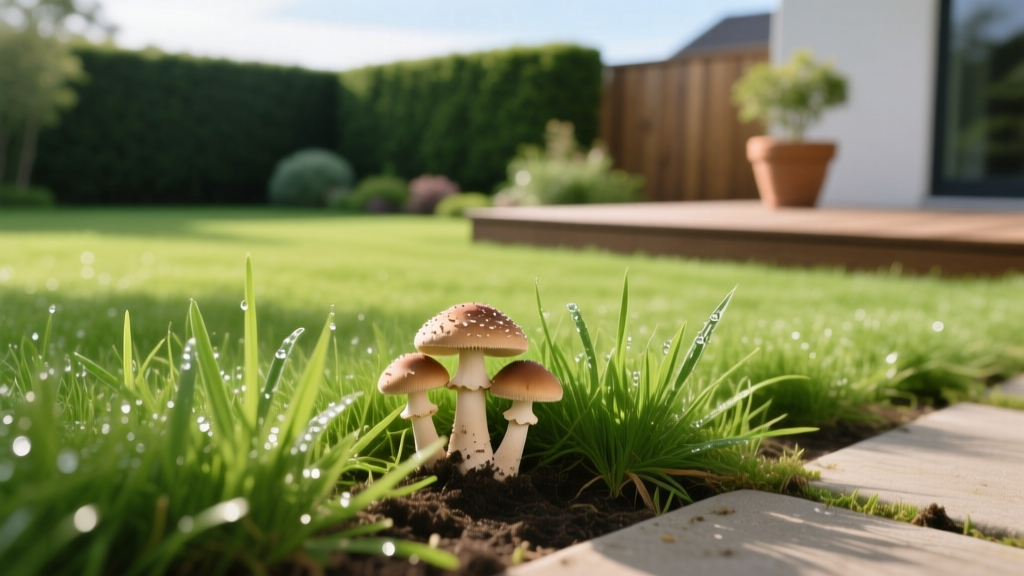
Why Do I Have Mushrooms Growing in My Lawn? (Causes & Fixes)
If you find yourself asking, why do I have mushrooms growing in my lawn, the answer lies entirely beneath the surface. Mushrooms are simply the reproductive fruiting bodies of a much larger, hidden underground organism called mycelium. While their sudden appearance after a heavy rain can be alarming, they are rarely a sign of turf disease. Instead, they are biological indicators of specific soil conditions—namely, high moisture, shade, and an abundance of decaying organic matter.
Understanding the exact environmental triggers allows you to shift from simply plucking mushrooms by hand to implementing structural lawn care fixes that eliminate the root cause.
The Biological Purpose of Turf Fungi
Before attempting eradication, it is crucial to understand that the mycelium network feeding these mushrooms is actually beneficial to your soil ecosystem. According to University of Minnesota Extension, saprophytic fungi break down dead organic matter—such as buried tree roots, construction lumber, and thick thatch layers—converting it into bioavailable nutrients for your grass.
Expert Insight: Mushrooms do not parasitize living grass roots. They are nature's recycling system. Eradicating the mycelium entirely is nearly impossible and ecologically counterproductive; the goal is to manage the fruiting by altering the surface environment.
The 4 Primary Environmental Triggers
Mushrooms will only push through the turf canopy when four specific conditions align. Identifying which trigger is active in your yard dictates your remediation strategy.
- Buried Organic Debris: In newly constructed homes, builders often bury stumps, roots, and scrap lumber under topsoil. As this wood decays, it provides a massive, multi-year food source for fungi.
- Soil Compaction and Poor Drainage: Clay-heavy soils or lawns with heavy foot traffic develop hardpan layers. Water pools in the top 2 inches of soil, creating the persistent dampness mycelium requires to fruit.
- Excessive Thatch Buildup: A thatch layer exceeding 0.5 inches acts like a sponge, holding moisture against the soil surface and providing a direct food source for fungal networks.
- Microclimate Shade: Areas shaded by dense tree canopies or structures receive less UV radiation and airflow, preventing the topsoil from drying out between irrigation cycles.
Identification Matrix: Common Lawn Mushrooms
Not all lawn mushrooms indicate the same underlying issue. Use this matrix to identify your specific outbreak and determine if toxicity is a concern for pets or children.
| Common Name | Scientific Name | Visual Characteristics | What It Indicates | Toxicity Risk |
|---|---|---|---|---|
| Fairy Ring | Marasmius oreades | Dark green rings of grass with mushrooms on the perimeter | Decaying turf roots; severe soil water-repellency | Moderate (GI distress) |
| Inky Caps | Coprinus spp. | Tall, white, bell-shaped caps that dissolve into black ink | Buried wood, high nitrogen, or fresh woodchips | Low (but reacts with alcohol) |
| Puffballs | Lycoperdon spp. | White, spherical, stemless balls that release brown dust | General organic decay, high soil moisture | Low (if pure white inside) |
| Green-spored Lepiota | Chlorophyllum molybdeum | Large white umbrella cap with greenish spore print | Thick thatch, frequent shallow irrigation | High (Severe vomiting) |
Step-by-Step Eradication and Prevention Framework
To stop mushrooms from fruiting, you must disrupt the moisture and food supply. Follow this targeted cultural control protocol.
Step 1: Deep Core Aeration
Rent a heavy-duty core aerator (avoid spike aerators, which worsen compaction). Set the machine to pull plugs that are 3 inches deep and 0.5 inches wide. Run the aerator over the affected area in two perpendicular directions to achieve a density of 15 to 20 holes per square foot. This breaks the hardpan, allowing water to drain past the mycelium's active zone.
Step 2: Mechanical Dethatching
If your thatch layer exceeds 0.5 inches, rent a power dethatcher (vertical mower).
- For Cool-Season Grasses (Fescue, Bluegrass): Set blades to penetrate 0.25 inches into the soil.
- For Warm-Season Grasses (Bermuda, Zoysia): Set blades to penetrate 0.5 inches into the soil.
Step 3: Accelerate Wood Decay with Nitrogen
If mushrooms are feeding on buried construction debris or old tree roots, you can speed up the decomposition process by adding nitrogen. Apply 1 lb of actual nitrogen per 1,000 square feet.
Calculation Example: If using Milorganite (6-4-0), which is 6% nitrogen, you must apply 16.6 lbs of product per 1,000 sq ft to deliver the required 1 lb of actual N. This feeds the bacteria that outcompete the fungi, eventually exhausting the buried food source.
Step 4: Recalibrate Irrigation
Shift from daily light watering to deep, infrequent cycles. Apply 0.5 inches of water twice a week rather than 0.2 inches daily. Use a rain gauge to measure output. This forces grass roots to grow deeper while allowing the top 1 inch of soil to dry out completely between waterings, depriving surface mycelium of the constant moisture needed to produce mushrooms.
⚠️ Warning: What NOT to Do
Do not use broad-spectrum chemical fungicides. According to Clemson University Extension, fungicides are largely ineffective against saprophytic lawn mushrooms because the active mycelium is protected deep underground. Furthermore, applying bleach, boiling water, or excessive lime will destroy beneficial soil microbes, damage grass roots, and fail to kill the deep fungal network. Physical removal (mowing or raking) is the only safe way to manage the visible fruiting bodies while you implement the cultural fixes above.
Frequently Asked Questions
Are lawn mushrooms a sign of healthy soil?
Yes, indirectly. Their presence indicates high organic matter content and active biological decomposition. However, it also signals that your soil drainage may be poor or your thatch layer is too thick, which can eventually suffocate turfgrass roots.
Will adjusting my soil pH kill the mushrooms?
No. While some fungi prefer slightly acidic environments, altering your soil pH to extreme levels to kill mushrooms will severely lock out essential nutrients (like iron and phosphorus) for your grass. Always base pH adjustments on a professional soil test, aiming for a turf-optimal range of 6.0 to 7.0, regardless of fungal activity.
How long does it take for buried wood to stop producing mushrooms?
Depending on the size of the buried wood and local moisture levels, a decaying tree stump or construction timber can fuel mushroom outbreaks for 3 to 7 years. Accelerating decay with targeted nitrogen applications can reduce this timeline by 30% to 40%.

