
Lawn Care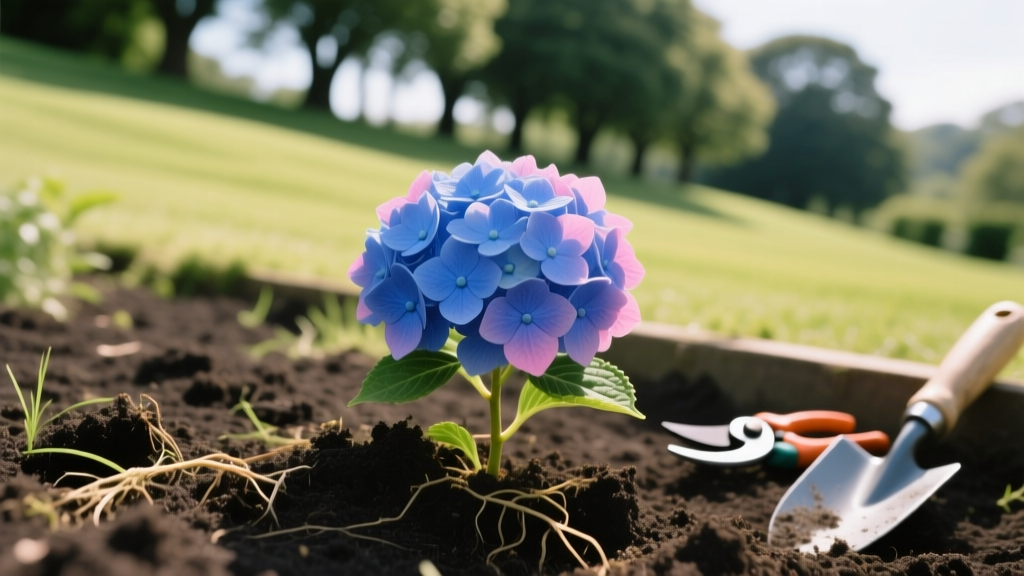
Why Does Soil pH Affect Flower Color? Hydrangea Science Explained
The Core Question: Why Does Soil pH Affect Flower Color?
When gardeners ask why soil pH affects flower color, the answer almost exclusively points to one remarkable plant genus: Hydrangea. While soil pH dictates nutrient availability for all plants, the direct, visible manipulation of petal pigmentation via soil acidity is a rare botanical phenomenon. The color shift is not actually caused by the hydrogen ion concentration (pH) itself, but rather by how pH controls the solubility of aluminum in the soil.
In acidic soils (pH below 6.0), aluminum ions (Al³⁺) are highly soluble and easily absorbed by the plant's root system. Once inside the plant, these ions travel to the sepals and bind with anthocyanin pigments—specifically delphinidin-3-monoglucoside. This chemical complex alters the way light reflects off the petals, resulting in vivid blue or purple hues. In alkaline soils (pH above 7.0), aluminum binds with hydroxide ions to form insoluble aluminum hydroxide. The plant cannot absorb it, the pigment remains unaltered, and the flowers bloom pink or red.
⚠️ The White Hydrangea Myth: Not all hydrangeas change color. Only Hydrangea macrophylla (bigleaf) and Hydrangea serrata (mountain) possess the delphinidin pigment required for this reaction. White-flowering varieties like Hydrangea arborescens ('Annabelle') and Hydrangea paniculata ('Limelight', 'PeeGee') lack this pigment entirely. No amount of soil acidifying will turn a 'Limelight' hydrangea blue; they will only shift from white to pink or burgundy as they age in the autumn.
The Chemistry Matrix: pH, Aluminum, and Pigmentation
Understanding the exact thresholds of soil chemistry is critical for precise color manipulation. Guessing your soil's acidity will lead to unpredictable, often muddy-purple blooms. According to research published by Clemson University Extension, the transition between colors requires maintaining specific pH bands over several months.
| Target Color | Required Soil pH | Aluminum Availability | Primary Soil Amendment |
|---|---|---|---|
| True Blue | 5.0 to 5.5 | Highly Soluble (Abundant) | Aluminum Sulfate / Elemental Sulfur |
| Purple / Mauve | 5.6 to 6.5 | Moderately Soluble | None (Transitional Zone) |
| Deep Pink | 6.8 to 7.5 | Insoluble (Locked Out) | Garden Lime / Dolomitic Lime |
Step-by-Step Guide to Altering Soil pH
Changing soil pH is a slow biological process. You cannot change the color of an already open bloom. Treatments must be applied in the late fall or early spring, allowing 2 to 6 months for the soil chemistry to shift and the plant to uptake the minerals before the summer flowering cycle.
Shifting Blooms to Blue (Lowering pH)
To achieve true blue flowers, you must both lower the soil pH and introduce free aluminum. The most efficient product for this is aluminum sulfate (often sold as soil acidifier).
- Measure: Apply 1/2 cup of aluminum sulfate per 10 square feet of soil area around the drip line of the shrub.
- Dissolve: For faster uptake, dissolve the granules in 1 gallon of water and use it as a soil drench. This prevents root burn from concentrated dry salts.
- Maintain: Reapply every 4 to 6 weeks during the growing season until the desired pH (5.0–5.5) is reached on a soil test.
Shifting Blooms to Pink (Raising pH)
To force pink blooms, you must raise the pH above 6.8 and actively lock out any existing aluminum. Use pelletized garden lime (calcium carbonate) or dolomitic lime.
- Measure: Apply 1 cup of pelletized lime per 10 square feet of soil area.
- Incorporate: Lightly scratch the lime into the top 2 inches of soil using a hand cultivator, being careful not to sever the shallow hydrangea feeder roots.
- Water: Water deeply to activate the lime. Note that raising pH is generally slower than lowering it; expect the process to take up to 8 months for heavy clay soils.
🛑 The Phosphorus Trap: High levels of phosphorus in the soil will bind with aluminum to create aluminum phosphate, an insoluble compound that the plant cannot absorb. If you are trying to turn your hydrangeas blue but keep using "bloom booster" fertilizers (which typically have a high middle N-P-K number, like 10-30-10) or bone meal, the phosphorus will lock out the aluminum. To get blue flowers, use a low-phosphorus fertilizer (e.g., 12-4-8) and rely on aluminum sulfate for the color shift.
Accurate Testing: Don't Guess Your Soil Chemistry
Visual estimation of soil acidity is unreliable. Before purchasing amendments, you must establish a baseline. The UMass Extension Landscape, Nursery and Urban Forestry Program strongly recommends laboratory testing over cheap analog probes, which often suffer from calibration drift and yield inaccurate readings in high-organic mulch beds.
- Mail-In Laboratory Tests ($15 - $25): Collect 6 to 8 core samples from the top 4 inches of soil around the hydrangea's drip line, mix them in a clean plastic bucket, and mail a 1-cup subsample to a university extension soil lab. This provides exact pH, buffer pH (which tells you how much lime/sulfur is needed to change the pH), and baseline phosphorus levels.
- High-Quality Home Kits ($30 - $40): If you need immediate results, use a chemical dye kit like the Luster Leaf Rapitest 1601. These use reagent powders and colorimetric charts that are significantly more accurate than digital metal-probe testers sold at big-box hardware stores.
Frequently Asked Questions
Can I use coffee grounds or vinegar to lower soil pH for blue flowers?
While coffee grounds are slightly acidic, their buffering capacity is incredibly weak. You would need hundreds of pounds to shift the pH of a single garden bed, and they do not contain the aluminum required for the pigment complex. Similarly, watering with diluted white vinegar provides a temporary pH drop that washes away with the next rain and can severely damage soil microbiology and plant roots. Stick to elemental sulfur or aluminum sulfate for stable, long-term results.
Why are my blue hydrangea leaves turning brown at the edges?
This is a classic symptom of aluminum toxicity. If you over-apply aluminum sulfate in an attempt to force a rapid color change, the plant absorbs toxic levels of aluminum, leading to marginal leaf necrosis (browning edges) and stunted root growth. If you observe this, flush the soil heavily with water to leach excess salts and cease all aluminum applications until the plant recovers and a soil test confirms safe pH levels.
Will my pink hydrangeas stay pink if I plant them near a concrete foundation?
Yes. Concrete and mortar leach calcium carbonate (lime) into the surrounding soil over time, naturally keeping the soil pH alkaline (often above 7.5). Hydrangeas planted in these foundation beds will almost always bloom pink due to the continuous, passive liming effect of the masonry, making it incredibly difficult and expensive to maintain the acidic conditions required for blue blooms.

