
Lawn Care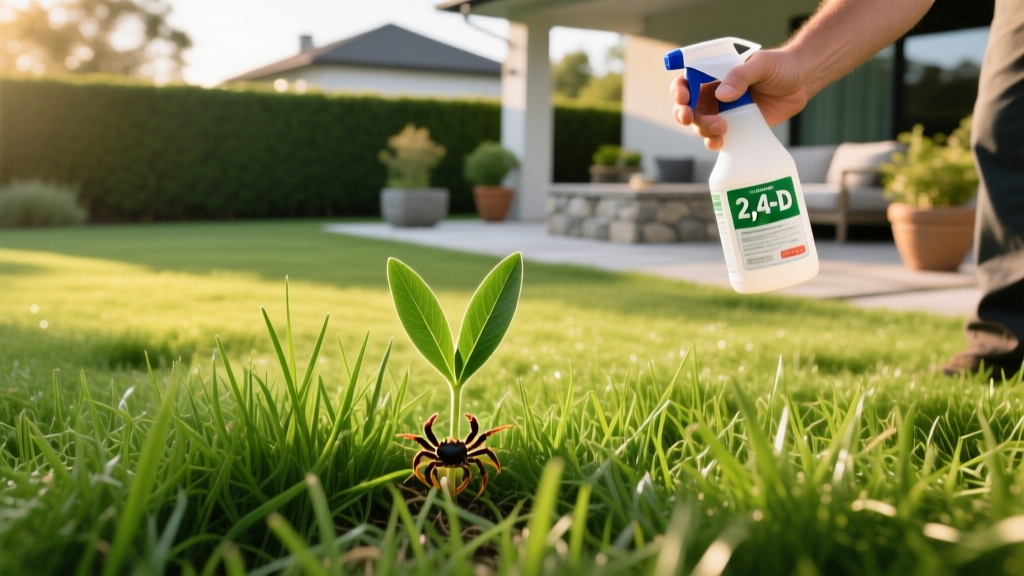
Will 2,4-D Kill Crabgrass? The Truth About Grassy Weed Control
The Short Answer: No, 2,4-D Will Not Kill Crabgrass
If you are staring down a lawn infested with crabgrass and holding a bottle of standard 2,4-D weed killer, put the sprayer down. The direct answer to whether 2,4-D will kill crabgrass is a definitive no. While 2,4-Dichlorophenoxyacetic acid (2,4-D) is one of the most effective and widely used herbicides in lawn care, it is strictly a broadleaf herbicide. Crabgrass (Digitaria sanguinalis) is a grassy weed. Spraying 2,4-D on crabgrass is like trying to cut a steak with a spoon—you are using the wrong tool for the biological job.
Many homeowners make the costly mistake of applying broadleaf weed and feed products, expecting their crabgrass to wither and die. Instead, they end up burning the tips of the crabgrass blades while the surrounding desirable turf suffers from unnecessary chemical stress. To successfully eradicate crabgrass, you must understand the botanical differences between weed types and select an herbicide formulated specifically for monocots.
The Botanical Science: Why 2,4-D Fails on Grassy Weeds
To understand why 2,4-D is ineffective against crabgrass, we have to look at plant biology. 2,4-D is a synthetic auxin, a type of plant hormone that mimics natural growth regulators. When applied to susceptible plants, it triggers rapid, uncontrolled, and unsustainable cellular growth, essentially causing the plant to grow itself to death.
However, this mode of action is highly specific to dicotyledonous plants (dicots), commonly known as broadleaf weeds. Examples include dandelions, clover, chickweed, and plantain. These plants have a vascular system that readily transports the synthetic auxin throughout their tissues, leading to systemic death.
Crabgrass, on the other hand, is a monocotyledonous plant (monocot), just like your desirable turfgrass (fescue, Kentucky bluegrass, bermudagrass). Monocots possess a different vascular structure and can rapidly metabolize and detoxify 2,4-D before it causes fatal damage. According to the National Pesticide Information Center (NPIC), the selective toxicity of 2,4-D relies entirely on this dicot-monocot biological divide. While the solvents and surfactants in a 2,4-D formulation might cause minor contact burn (tip browning) on crabgrass leaves, the root system and growing points remain completely unharmed, and the weed will recover within 48 to 72 hours.
Identifying the Enemy: Crabgrass vs. Broadleaf Weeds
Before selecting an herbicide, proper identification is critical. Misidentifying a grassy weed as a broadleaf weed is the primary reason homeowners waste money on ineffective 2,4-D products.
Key Visual Indicators of Crabgrass
- Leaf Blade Width: Crabgrass blades are significantly wider than typical cool-season turfgrasses like tall fescue or Kentucky bluegrass, often measuring 1/4 inch or more across.
- Growth Habit: It exhibits a prostrate, sprawling growth pattern, growing outward along the soil surface rather than upright, allowing it to bypass mower blades.
- The Ligule: If you pull a leaf away from the stem, crabgrass features a distinct, prominent, membranous ligule at the collar (where the blade meets the sheath). Broadleaf weeds do not have this structure.
- Seed Heads: In late summer, mature crabgrass produces seed heads that resemble a turkey's foot, with 3 to 7 finger-like spikes radiating from a central stem.
For comprehensive visual guides and regional identification tips, the University of California Integrated Pest Management Program offers an excellent botanical breakdown of Digitaria species.
What Actually Kills Crabgrass? (The Right Active Ingredients)
If 2,4-D is off the table, what should you buy? Effective crabgrass control requires herbicides that target grassy weeds without harming your desirable turf. The active ingredient you need depends on whether the crabgrass has already germinated (post-emergent) or if you are trying to prevent it (pre-emergent).
Post-Emergent Solutions (For Visible Crabgrass)
Once crabgrass is actively growing in your lawn, you need a selective post-emergent grassy weed killer. The gold standard in the turf care industry is Quinclorac. Unlike 2,4-D, Quinclorac disrupts cell wall formation and hormone balance specifically in grassy weeds. Other effective options include Fenoxaprop-p-ethyl and Fluazifop.
Pre-Emergent Solutions (For Prevention)
The absolute best way to handle crabgrass is to stop it before it sprouts. Pre-emergent herbicides like Prodiamine and Dithiopyr create a chemical barrier in the top inch of soil that prevents crabgrass seeds from developing roots.
| Active Ingredient | Type | Target Stage | Safe on Cool-Season Turf? | Safe on Warm-Season Turf? | Avg. Cost per 1,000 sq ft |
|---|---|---|---|---|---|
| Quinclorac | Post-Emergent | Seedling to Mature | Yes | Bermuda/Zoysia (Avoid St. Augustine) | $0.15 - $0.25 |
| Fenoxaprop-p-ethyl | Post-Emergent | Seedling to Mid-Tiller | Yes | No (Phytotoxic to many warm-season) | $0.20 - $0.30 |
| Mesotrione | Post-Emergent | Seedling only (Bleaches white) | Yes | St. Augustine/Centipede only | $0.35 - $0.50 |
| Prodiamine | Pre-Emergent | Germination Phase | Yes | Yes | $0.10 - $0.18 |
CRITICAL WARNING FOR WARM-SEASON LAWNS: If you have St. Augustinegrass or Centipedegrass, do not use Quinclorac or Fenoxaprop. These chemicals will severely stunt or kill your turf. For St. Augustine, rely on pre-emergents (Prodiamine) or use Mesotrione (Tenacity) carefully for post-emergent control, following strict label rates.
Step-by-Step: Applying Quinclorac for Post-Emergent Control
If you have a cool-season lawn (Fescue, Bluegrass, Ryegrass) or Bermudagrass, and the crabgrass is already visible, Quinclorac is your best option. Professional products like Drive XLR8 or consumer options like BioAdvanced Season Long Weed Control contain this active ingredient. Follow this protocol for maximum efficacy:
- Prepare the Turf: Do not mow for 2 days before and 2 days after application. This ensures maximum leaf surface area on the crabgrass to absorb the chemical.
- Add a Surfactant: Quinclorac requires a high-quality surfactant to penetrate the waxy cuticle of the crabgrass leaf. Use a Methylated Seed Oil (MSO) at a rate of 1 to 2 teaspoons per gallon of mixed solution. Standard dish soap or basic non-ionic surfactants are often insufficient for mature crabgrass.
- Mix the Solution: For a standard 1-gallon pump sprayer covering 1,000 square feet, mix approximately 1.45 ounces (roughly 3 tablespoons) of a standard Quinclorac concentrate. Always read the specific product label, as concentrations vary.
- Spray to Wet, Not Drench: Apply a fine mist that evenly coats the crabgrass leaves until they are wet, but avoid heavy runoff onto the soil. Post-emergent grassy herbicides are primarily foliar-absorbed.
- Wait Before Watering: Allow the herbicide to dry completely on the leaf surface (usually 2 to 4 hours) before any rainfall or irrigation occurs.
- Plan a Follow-Up: Mature crabgrass (with 3 or more tillers) is highly resilient. A single application will likely cause the weed to turn purple and stunt its growth, but it may not kill it entirely. Plan a second application 14 to 21 days after the first.
Troubleshooting Common Crabgrass Control Failures
Even when using the correct herbicide, homeowners often encounter issues. Here is how to troubleshoot the most common failures:
The Crabgrass Turned Purple but Didn't Die
This is the classic sign of Quinclorac stress. The herbicide has disrupted the plant's vascular system, causing an accumulation of anthocyanins (purple pigment). If the crabgrass was large and mature (more than 4 tillers), the initial dose wasn't enough to kill the deep root system. You must apply the second follow-up treatment at the 14-day mark to finish the job.
The Herbicide Burned My Desirable Fescue
If your desirable turf is showing yellowing or browning tips after a Quinclorac or Fenoxaprop application, you likely sprayed during high heat. Grassy weed herbicides are highly sensitive to temperature. Never apply these products when daytime temperatures exceed 85°F (29°C). High heat causes the turfgrass stomata to open wider, absorbing toxic levels of the herbicide. Always spray in the early morning or late evening when temperatures are below 80°F.
I Sprayed 2,4-D and the Crabgrass Looks Dead
If you used a 2,4-D product and the crabgrass appears to be dying, check the label. You likely used a 'Trimec' or multi-chemical blend that contains Quinclorac or Dicamba alongside the 2,4-D. The 2,4-D did nothing to the crabgrass; the secondary active ingredients are doing the heavy lifting. Always read the active ingredient list on the back of the bottle, not just the marketing claims on the front.
Final Thoughts on Grassy Weed Management
Understanding the biological limitations of 2,4-D saves you time, money, and chemical exposure. By correctly identifying crabgrass and pivoting to targeted active ingredients like Quinclorac or Prodiamine, you can reclaim your lawn from this aggressive summer annual. For ongoing turf management strategies and regional weed identification, consult resources like Penn State Extension's Turfgrass Weed Management program to keep your lawn thick, healthy, and weed-free.

