
Lawn Care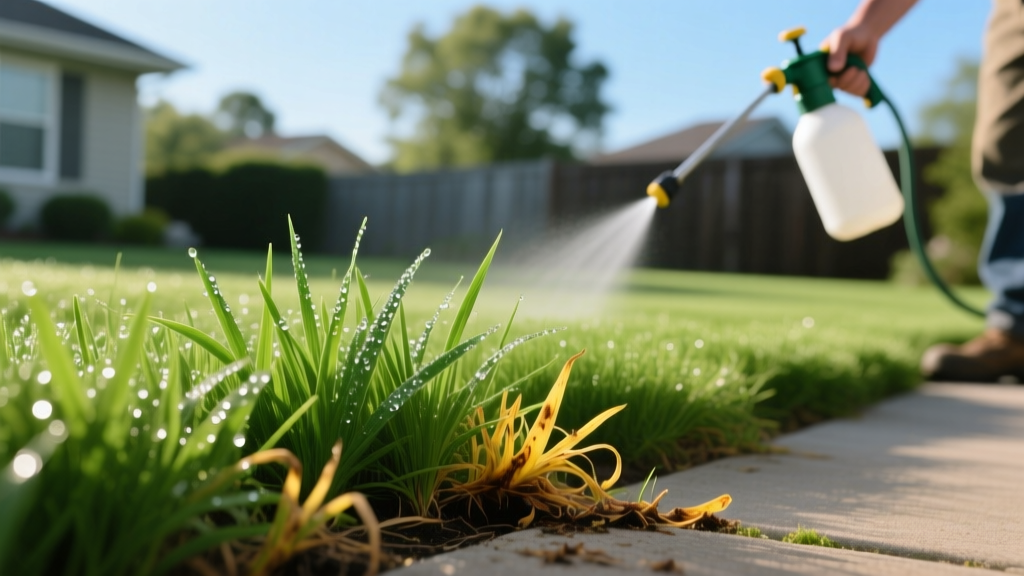
Will Ammonia Hurt Grass? The Science of Lawn Burn and Recovery
The Short Answer: Household Ammonia vs. Ammonium Fertilizers
When homeowners ask, 'will ammonia hurt grass?', the answer depends entirely on the chemical compound in question. Household cleaning ammonia (ammonium hydroxide) is highly alkaline and caustic, causing immediate cellular damage and severe burning to turfgrass. Conversely, ammonium-based fertilizers (like ammonium sulfate or ammonium nitrate) are essential nitrogen sources that promote vigorous, dark green growth when applied at correct rates.
The confusion stems from internet hacks suggesting household ammonia as a DIY weed killer or cheap fertilizer. Applying a 5% to 10% ammonium hydroxide solution to your lawn will not feed it; it will strip the waxy cuticle from the grass blades, denature leaf proteins, and create a hostile, high-pH soil environment that locks out essential micronutrients like iron and manganese.
WARNING: Never use household glass cleaners or pure ammonia solutions on your lawn. According to the Environmental Protection Agency (EPA), these products are formulated for hard, non-porous surfaces and contain surfactants that destroy soil biology and root membranes.
The Chemistry of Ammonia Burn on Turfgrass
To understand the damage mechanism, we must differentiate between ammonia (NH3), the ammonium ion (NH4+), and the pH of the carrier solution.
Household Ammonia (Ammonium Hydroxide)
Household ammonia is a gas dissolved in water, creating a highly alkaline solution with a pH between 11.0 and 12.0. Turfgrass thrives in a slightly acidic soil pH of 6.0 to 7.0. When ammonium hydroxide hits the soil, it causes an immediate alkaline shock. This rapid pH spike causes clay particles to disperse (destroying soil structure) and triggers the release of toxic levels of aluminum and hydroxyl ions, which chemically burn the root hairs.
Pet Urine (Urea and Ammonia Salts)
Dog urine is frequently blamed for 'ammonia burn,' but the damage is actually caused by nitrogen toxicity and osmotic stress, not alkaline pH. Urine contains high concentrations of urea, which soil bacteria rapidly convert into ammonium. A single dog urination can deposit the equivalent of 10 pounds of nitrogen per 1,000 square feet in a concentrated 6-inch circle. This massive salt load creates an osmotic gradient that literally pulls water out of the grass roots, resulting in a dead brown center surrounded by a dark green 'halo' of stimulated growth.
Anhydrous Ammonia (Agricultural)
Used in commercial farming, anhydrous ammonia is a pressurized gas (82% nitrogen) injected directly into the soil. As noted by the CDC's National Institute for Occupational Safety and Health (NIOSH), this compound is extremely hazardous, highly corrosive, and strictly regulated. It is never used in residential lawn care due to the severe risk of chemical burns to humans and the immediate destruction of surface turf.
Diagnostic Matrix: Identifying Ammonia Damage
Not all brown patches are created equal. Use this diagnostic table to identify the specific type of ammonia or nitrogen-related burn affecting your turf.
| Symptom Presentation | Probable Cause | Soil / Tissue Indicator | Recovery Timeline |
|---|---|---|---|
| Uniform bleaching followed by rapid browning; strong chemical odor. | Household Ammonia Spill | Surface pH > 9.0; waxy leaf cuticle stripped. | 4-8 weeks (requires reseeding). |
| Circular brown dead spot with a dark green outer ring. | Dog Urine (Nitrogen/Salt Burn) | High localized EC (Electrical Conductivity); pH may actually be slightly acidic. | 2-4 weeks (if flushed early). |
| Streaky brown tipping on grass blades after a sunny day. | Ammonium Sulfate Fertilizer Burn | Fertilizer prills visible; salt crystals on leaf tissue. | 1-2 weeks (grows out with mowing). |
Step-by-Step Remediation Protocol for Ammonia Spills
If you have accidentally spilled household ammonia, or if you are dealing with severe, repeated pet urine damage, follow this exact agronomic remediation sequence to save the turf and restore soil health.
Step 1: Immediate Hydraulic Flushing
Time is the most critical factor. Within 12 hours of the spill or urination, apply a minimum of 1 inch of water (approximately 0.62 gallons per square foot) to the affected area. This dilutes the ammonium hydroxide or urea salts and pushes them below the active root zone (6-8 inches deep), preventing osmotic desiccation.
Step 2: Apply Calcic Sulfate (Gypsum)
Household ammonia and urine both leave behind disruptive salts. Apply pelletized gypsum (calcium sulfate) at a rate of 20 lbs per 1,000 square feet. The calcium ions will displace the sodium and ammonium ions from the soil clay exchange sites, while the sulfate helps buffer the alkaline pH spike. Water the gypsum in immediately with another 0.5 inches of water.
Step 3: Core Aeration and Topdressing
Once the soil dries to a workable moisture level (usually 3-5 days post-flushing), run a core aerator over the damaged patch. This relieves soil compaction caused by the chemical dispersion of clay particles. Follow aeration with a 1/4-inch topdressing of screened compost to reintroduce beneficial mycorrhizal fungi that were killed by the alkaline shock.
Step 4: Overseed with Tolerant Cultivars
If the crown of the grass was destroyed, the patch will not recover on its own. According to turf research from the University of Massachusetts Amherst Turf Program, certain grasses recover faster from chemical and nitrogen stress. Overseed the bare soil with Rhizomatous Tall Fescue (RTF) or a modern Kentucky Bluegrass cultivar like 'Midnight' or 'Award', which possess aggressive rhizome systems that quickly fill in dead spots.
'Attempting to neutralize an ammonia spill with vinegar is a common internet myth. While acid-base neutralization works in a beaker, in the soil it creates a violent exothermic reaction and leaves behind ammonium acetate, which can further stress the root system. Stick to hydraulic flushing and gypsum.' — Turfgrass Management Best Practices Guide
The Myth of Ammonia as a DIY Weed Killer
Some gardening forums recommend mixing household ammonia with dish soap to kill dandelions and broadleaf weeds. While this mixture will indeed cause contact burn on weed foliage, it is a terrible strategy for lawn health. Ammonia is a non-selective contact herbicide; it will burn your desirable turfgrass just as badly as the weeds. Furthermore, the surfactants in dish soap strip the protective lipids from soil microbes, temporarily sterilizing the top inch of your soil and halting the natural thatch-decomposition process.
For targeted weed control without damaging the surrounding grass, stick to selective, systemic herbicides containing 2,4-D or quinclorac, which are absorbed by the weed's leaves and translocated to the roots without harming monocot turfgrasses.
Frequently Asked Questions
Does ammonia lower soil pH?
No. Household ammonia (ammonium hydroxide) is highly alkaline and will temporarily raise soil pH, causing micronutrient lockout. However, agricultural ammonium sulfate fertilizer undergoes nitrification in the soil, a process that releases hydrogen ions and lowers soil pH over time, which is why it is often used on alkaline soils.
Will Epsom salt fix ammonia or urine burn?
No. Epsom salt is magnesium sulfate. While it provides magnesium, it does not provide the calcium needed to displace toxic sodium and ammonium ions from the soil's cation exchange capacity (CEC). Always use gypsum (calcium sulfate) for chemical burn remediation.
How long does it take for ammonia to dissipate from soil?
Free ammonia gas (NH3) is highly volatile and will off-gas into the atmosphere within 24 to 48 hours if left on the soil surface. However, the ammonium ions (NH4+) and the alkaline pH damage left behind by household cleaners can persist in the soil profile for weeks, requiring active remediation via flushing and gypsum application.

