
Lawn Care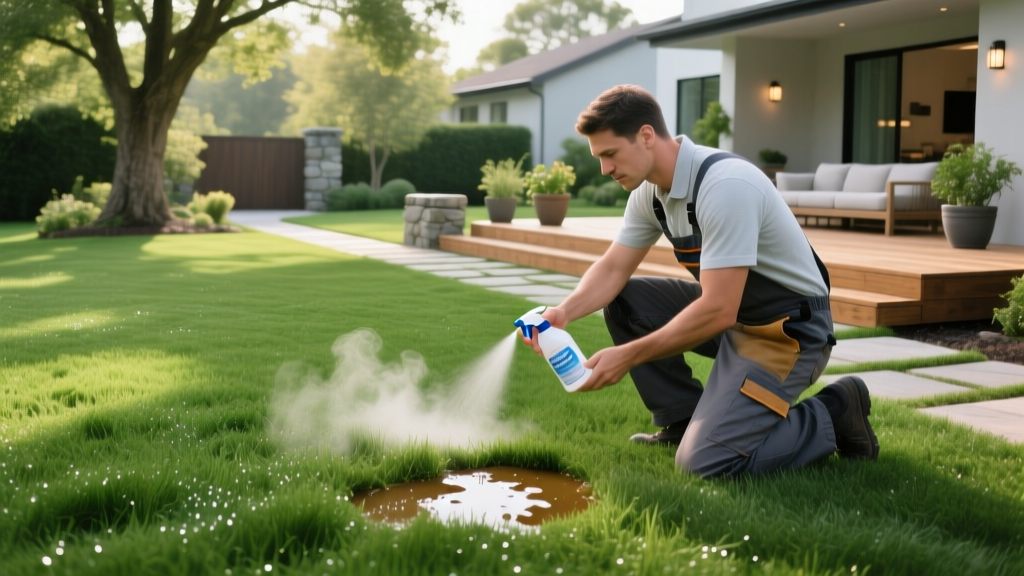
Will Ammonia Kill Grass? Spill Remediation and Fertilizer Science
The Short Answer: Does Ammonia Kill Grass?
The short answer is yes, concentrated household ammonia will kill grass. However, the complete answer requires distinguishing between ammonium hydroxide (the active ingredient in household glass cleaners) and ammonium-based fertilizers (like ammonium sulfate). While turfgrass requires nitrogen to synthesize chlorophyll and amino acids, the chemical delivery mechanism dictates whether your lawn thrives or suffers catastrophic cellular burn.
Household ammonia typically contains 5% to 10% ammonium hydroxide, yielding a highly alkaline pH between 11 and 12. When spilled on turf, it triggers immediate osmotic shock and alkaline hydrolysis of root cell membranes. Conversely, agricultural and turf-grade ammonium fertilizers are chemically buffered or paired with sulfate ions to safely deliver nitrogen to the soil profile.
Household Ammonia vs. Ammonium Fertilizers
Understanding the exact chemical composition of the ammonia source is critical for diagnosing turf damage or selecting the right nitrogen supplement. Below is a comparison of the most common ammonia-derived compounds encountered in lawn care.
| Compound | Common Source | pH Level | Effect on Turfgrass | N-P-K Ratio |
|---|---|---|---|---|
| Ammonium Hydroxide | Household Cleaners | 11.0 - 12.0 | Severe foliar burn, root death, soil alkalinity spike | N/A |
| Ammonium Sulfate | Turf Fertilizer | 5.0 - 5.5 (Acidic) | Excellent nitrogen source, lowers soil pH over time | 21-0-0 |
| Urea | Synthetic Fertilizer | 7.0 - 8.0 (Neutral) | Safe when watered in; converts to ammonium in soil | 46-0-0 |
| Anhydrous Ammonia | Agricultural Injection | N/A (Gas/Liquid) | Lethal to all plant life at injection point; requires professional licensing | 82-0-0 |
The Chemistry of Ammonia Burn: pH and Osmotic Shock
When a homeowner accidentally spills window cleaner containing ammonium hydroxide on their lawn, the resulting brown, necrotic patch is not caused by nitrogen toxicity alone. According to turfgrass pathology principles outlined by Penn State Turfgrass Science, the damage is a two-fold chemical assault:
1. Alkaline Hydrolysis (pH Burn)
Healthy turfgrass thrives in a soil pH range of 6.0 to 7.0. Household ammonia introduces a massive spike of hydroxide ions (OH-), pushing the localized soil pH above 11. This extreme alkalinity saponifies the lipid bilayers of root cell membranes, effectively dissolving the protective barriers of the root system and causing immediate cellular collapse.
2. Osmotic Shock (Salt Burn)
Ammonium hydroxide possesses a high salt index. When concentrated in the soil water solution, it creates an osmotic gradient that pulls water out of the grass roots and into the soil. The grass essentially dies of dehydration, even if the soil is physically wet. This manifests as rapid wilting, followed by a crispy, bleached-white or dark brown necrosis within 24 to 48 hours.
Step-by-Step Remediation for Accidental Ammonia Spills
If you spill household ammonia, cleaning solvents, or improperly mixed DIY fertilizers on your lawn, immediate intervention can save the turf crown. Follow this exact remediation protocol:
⚠️ CRITICAL FIRST STEP: Do not wait to see if the grass turns brown. Ammonium hydroxide penetrates the soil profile rapidly. You must begin flushing the area within 15 minutes of the spill.
- Heavy Dilution (Minutes 0-30): Apply a minimum of 1 inch of water over the affected area using a sprinkler or hose. For a 10-square-foot spill, this requires approximately 6 gallons of water. This dilutes the ammonium concentration and pushes the hydroxide ions deeper into the subsoil, away from the primary root zone.
- Soil pH Testing (Day 2): Use a calibrated digital soil pH meter. If the localized pH remains above 7.5, the soil requires chemical buffering.
- Apply Gypsum (Calcium Sulfate): If the pH is elevated, apply pelletized gypsum at a rate of 50 lbs per 1,000 square feet. The calcium ions will displace the ammonium and sodium ions on the soil cation exchange sites, while the sulfate helps neutralize alkalinity without altering the pH drastically in the wrong direction.
- Monitor and Reseed (Day 14): If the grass crowns were destroyed, rake out the dead thatch, amend the top 2 inches of soil with compost, and overseed with a cultivar matching your existing lawn. Keep the seedbed consistently moist for 14 days.
Can You Use Diluted Household Ammonia as a DIY Fertilizer?
A persistent internet myth suggests mixing household ammonia with water and dish soap to create a cheap, DIY lawn fertilizer. As a turf management practice, this is highly discouraged by agronomists.
While it is true that ammonium is a plant-available form of nitrogen, household ammonia is highly volatile. When applied to the soil surface, a significant percentage of the nitrogen rapidly off-gasses as ammonia gas (NH3) into the atmosphere rather than converting to stable nitrate in the soil. Furthermore, the lack of secondary macronutrients (like sulfur or iron) and the unpredictable concentration of commercial cleaning products make it impossible to calculate a safe application rate. You risk burning the turf while simultaneously wasting the nitrogen you intended to apply.
Safe Ammonium-Based Fertilizer Application Rates
If your goal is to leverage ammonium for rapid turf greening, bypass the household chemicals and use professional-grade Ammonium Sulfate (21-0-0). It is highly soluble, immediately available to the grass, and contains 24% sulfur, which is vital for amino acid synthesis.
- Target Application Rate: 1.0 lb of actual Nitrogen per 1,000 sq ft.
- Product Math: Since the product is 21% nitrogen, divide 1.0 by 0.21. You need to apply 4.76 lbs of Ammonium Sulfate product per 1,000 sq ft.
- Timing: Apply during the active growing season (spring or early fall for cool-season grasses; late spring through summer for warm-season grasses).
- Watering: Always irrigate with 0.25 inches of water immediately after application to wash the prills off the grass blades and into the soil, preventing foliar burn.
For comprehensive soil management and nutrient tracking, consult your local university extension office, such as the UMass Amherst Turf Program, to interpret your specific soil test results before applying high-salt-index nitrogen sources.
Frequently Asked Questions
Will dog urine kill grass like ammonia?
Dog urine contains urea and uric acid, which break down into ammonia in the soil. The resulting burn spots are caused by nitrogen overload and salt concentration, not the alkalinity of household ammonia. Flushing the spot with 1 gallon of water immediately after the dog urinates will dilute the urea and prevent necrosis.
How long does it take for ammonia to evaporate from soil?
Unincorporated ammonium hydroxide can off-gas as ammonia vapor within hours, especially in warm, dry, and alkaline soils. However, the hydroxide ions (which cause the pH burn) remain in the soil and must be flushed with water or buffered with gypsum; they do not evaporate.

