
Lawn Care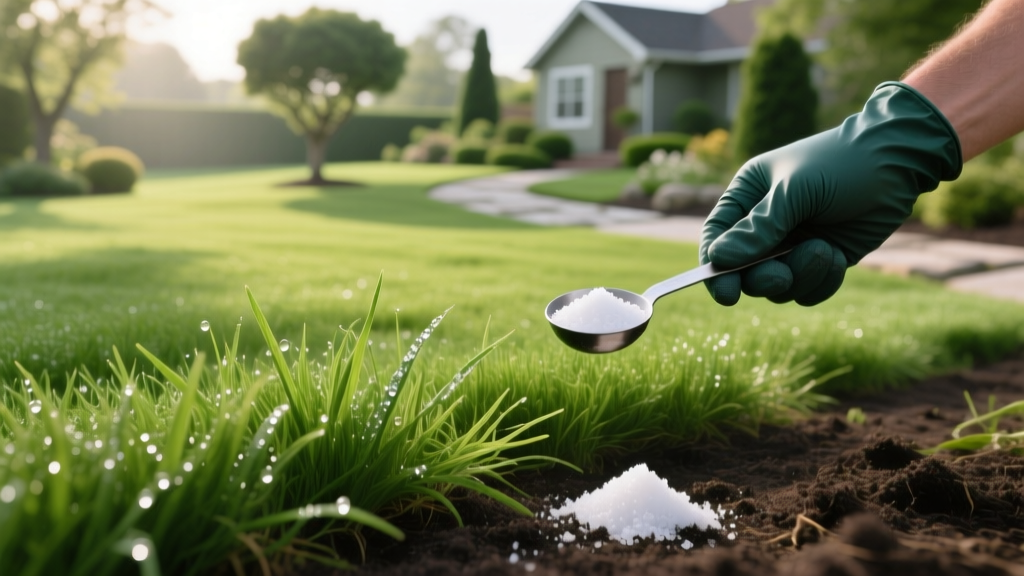
Will Salt Kill Grass? The Science of Salinity & Lawn Recovery
The Short Answer: Will Salt Kill Grass?
Yes, sodium chloride (rock salt) will kill grass if it accumulates in the soil beyond the turf's salinity threshold. When soil Electrical Conductivity (EC) exceeds 3.0 to 4.0 dS/m (deciSiemens per meter), sensitive cool-season grasses like Kentucky Bluegrass and Fine Fescues experience severe cellular dehydration and ion toxicity. While salt is an effective, low-cost de-icer for driveways and walkways, the runoff creates localized 'dead zones' in lawns every spring. Understanding the exact mechanism of this damage is the first step toward reversing it.
⚠️ Critical Salinity Warning
Never apply rock salt directly to turf to kill weeds or moss. The resulting sodium buildup destroys soil structure, permanently collapsing soil aggregates and creating an anaerobic environment where neither grass nor beneficial microbes can survive.
The Cellular Mechanics: How Salinity Destroys Turf
When sodium chloride dissolves in snowmelt and enters your lawn's soil profile, it attacks the grass plant through two distinct physiological pathways. According to soil science principles outlined by the USDA Natural Resources Conservation Service, these pathways are osmotic stress and ion toxicity.
1. Osmotic Stress (Physiological Drought)
Plant roots absorb water through osmosis, moving moisture from an area of low solute concentration (the soil) to an area of high solute concentration (the root cells). When salt floods the soil, it reverses this gradient. The soil becomes hypertonic, literally pulling water out of the grass roots. Even if the soil is soaking wet from spring snowmelt, the grass dies of 'physiological drought' because it cannot extract the water.
2. Ion Toxicity and Nutrient Displacement
Sodium ions (Na+) compete with essential macronutrients—specifically potassium (K+) and calcium (Ca2+)—for uptake sites on the root membrane. Furthermore, excess sodium displaces calcium from the soil's cation exchange sites. This causes clay particles to disperse, sealing the soil surface, destroying porosity, and preventing oxygen from reaching the root zone.
Diagnostic Matrix: Salt Burn vs. Winter Desiccation
Homeowners often misdiagnose salt damage as standard winter kill or fungal disease. Use this diagnostic matrix to accurately identify the culprit before applying expensive treatments.
| Symptom / Factor | Salt Damage | Winter Desiccation | Snow Mold (Fungal) |
|---|---|---|---|
| Location | Within 12-24 inches of paved surfaces, driveways, or streets. | Exposed hilltops, windy areas, or south-facing slopes. | Low-lying areas, shaded zones, or under snowdrifts. |
| Visual Appearance | Uniform bleaching or browning; white crust visible on soil surface. | Straw-colored, matted grass; crowns may still be green. | Circular patches with gray/pink webbing (mycelium). |
| Soil Test (EC) | High (> 3.0 dS/m) | Normal (0.5 - 1.5 dS/m) | Normal (0.5 - 1.5 dS/m) |
| Recovery Method | Gypsum application and deep leaching. | Light raking, hydration, and nitrogen fertilizer. | Raking and targeted fungicide if active. |
De-Icer Chemistry: What You Are Putting on Your Driveway
Not all ice melts are created equal. As of 2026, the market offers several chemical alternatives to traditional rock salt, each with a different impact on your lawn's soil chemistry. The University of Minnesota Extension notes that choosing the right de-icer is the most effective preventative measure for turf health.
- Sodium Chloride (Rock Salt): The cheapest option ($15–$25 per 50lb bag). Highly toxic to turf. Melts ice down to 20°F (-6°C). Leaves massive sodium residue in the soil.
- Calcium Chloride: Melts ice down to -20°F (-29°C). Priced around $30–$40 per 50lb bag. While it still causes osmotic stress, the calcium ion is less destructive to soil structure than sodium, making it a moderate-risk option for adjacent lawns.
- Magnesium Chloride: Effective down to 0°F (-18°C). Costs roughly $25–$35 per 50lb bag. Less toxic to plant tissue than sodium chloride, but over-application can lead to magnesium toxicity, which interferes with calcium uptake.
- Calcium Magnesium Acetate (CMA): The premium, turf-safe option ($45–$65 per 50lb bag). Derived from dolomite limestone and acetic acid. It is biodegradable, virtually chloride-free, and will not burn grass or corrode concrete. Highly recommended for homes with sensitive lawn borders.
The 4-Step Soil Flushing and Recovery Protocol
If your lawn has already suffered sodium chloride damage, simply watering it is not enough. Sodium binds tightly to clay particles. You must use a chemical displacement strategy to remove it.
Step 1: Physical Removal and Raking
Before the spring growing season begins, use a stiff thatch rake to remove dead, salt-burned grass blades and physically scrape away any visible white salt crusts resting on the soil surface. This removes the concentrated surface salts before they melt deeper into the root zone.
Step 2: Apply Pelletized Gypsum (Calcium Sulfate)
Gypsum is the antidote to sodium toxicity. The calcium in gypsum (CaSO4·2H2O) swaps places with the sodium on the soil's cation exchange sites. Apply 40 to 50 lbs of pelletized gypsum per 1,000 square feet of affected turf. Do not use powdered gypsum, as it will blow away and create a mess on your hardscaping.
Step 3: Deep Leaching
Once the gypsum is applied, the displaced sodium forms sodium sulfate, a highly soluble salt. You must now flush it out of the root zone. Apply 1 to 1.5 inches of water over the area. If your soil is heavy clay, split this into three separate watering sessions of 0.5 inches each, spaced 24 hours apart, to prevent surface runoff and ensure deep percolation.
Step 4: Overseed with Salt-Tolerant Cultivars
If the grass crowns are dead, flushing the soil won't bring them back. Once the soil has been leached, overseed the bare patches. For cool-season lawns, select Tall Fescue or Perennial Ryegrass, which possess significantly higher salinity tolerance than Kentucky Bluegrass. For warm-season zones, Bermuda Grass and Seashore Paspalum are exceptionally salt-resistant.
"Never attempt to fix salt damage by applying a high-nitrogen synthetic fertilizer. Pushing rapid top growth on a grass plant with a compromised, dehydrated root system will accelerate its death. Focus entirely on soil chemistry and hydration first."
Frequently Asked Questions
Will Epsom salt kill grass?
No. Epsom salt is magnesium sulfate, not sodium chloride. It will not cause the same osmotic stress or soil structural collapse as rock salt. In fact, it is sometimes used as a foliar spray to correct magnesium deficiencies. However, applying massive quantities to the soil can cause a nutrient imbalance, locking out calcium and potassium.
Can I use pool salt on my lawn to kill weeds?
Absolutely not. Pool salt is simply high-purity sodium chloride. Applying it to your lawn will sterilize the soil, killing the weeds, the grass, and the microbial life. The area may remain barren for years until the sodium is naturally leached by heavy rainfall.
How long does it take for salt-damaged grass to recover?
If the crowns are still alive and you execute the gypsum flushing protocol in early spring, you will see new green shoots within 14 to 21 days as soil osmotic pressure normalizes. If the crowns are dead, recovery depends on your overseeding timeline, typically requiring 3 to 4 weeks for seed germination and establishment.

