
Lawn Care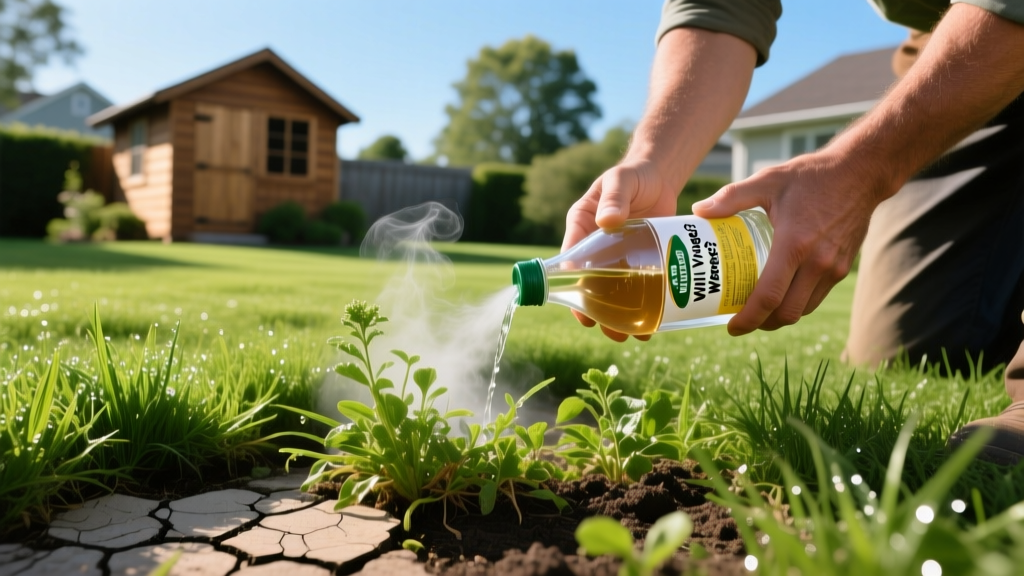
Will Vinegar Kill Weeds? Science, Limits, and Safe Application
The Short Answer: Will Vinegar Kill Weeds?
The Verdict: Yes, vinegar will kill the visible foliage of young, annual weeds, but it will not kill established perennial weeds or their root systems. Vinegar is a contact desiccant, not a systemic herbicide. While it provides rapid visual burn-down, relying on it for lawn weed control often leads to endless resprouting and unintended soil damage.
Homeowners frequently turn to vinegar as a 'natural' weed killer, assuming that because it is non-toxic to humans in culinary doses, it is a safe, silver-bullet solution for lawn care. However, the biochemical reality of acetic acid—the active ingredient in vinegar—reveals severe limitations when used in turfgrass environments. Understanding the exact mechanism of action, concentration requirements, and collateral soil damage is critical before you spray your lawn.
The Science of Acetic Acid as an Herbicide
Acetic acid kills plant tissue through rapid cell membrane lysis. When applied to a leaf, the acid strips away the waxy cuticle and causes the cell membranes to break down, leading to immediate leakage of cellular fluids and rapid desiccation (drying out). According to foundational research by the USDA Agricultural Research Service, acetic acid can achieve 85% to 100% kill rates on the top growth of weeds within 24 hours.
However, this mechanism is strictly contact-based. The acid does not translocate (move) through the plant's phloem down to the roots. Once the top growth is destroyed, the chemical reaction is complete, and the acid begins breaking down in the environment.
Household vs. Horticultural Vinegar: Concentration Matters
The standard white vinegar in your kitchen contains roughly 5% acetic acid. This concentration is largely ineffective on anything other than tiny, newly germinated weed seedlings. To achieve reliable foliar burn-down on mature weeds, commercial horticultural vinegars utilize much higher concentrations, which introduce significant safety and handling requirements.
| Vinegar Type | Acetic Acid % | Efficacy on Weeds | Avg. Cost (2026) | Required PPE |
|---|---|---|---|---|
| Household White | 5% | Poor (Seedlings only) | $4 / Gallon | None |
| Cleaning Vinegar | 6% - 10% | Fair (Small annuals) | $8 / Gallon | Gloves, Eye Protection |
| Horticultural | 20% | Good (Foliar burn) | $28 / Gallon | N95 Mask, Goggles, Nitrile Gloves |
| Industrial | 30%+ | Excellent (Severe burn) | $45 / Gallon | Full Face Shield, Acid-Resistant Gear |
Why Vinegar Fails on Established Lawn Weeds
The primary reason vinegar frustrates homeowners is its inability to kill perennial weeds with deep root systems or taproots. Weeds like dandelions (Taraxacum officinale), broadleaf plantain, and curly dock store massive amounts of energy in their roots. When 20% acetic acid burns off the top 20% of the plant's leaf tissue, the root system simply goes dormant for a few days and pushes up a fresh rosette of leaves within 7 to 14 days.
Furthermore, mature weeds develop a thick, waxy cuticle on their leaves to prevent moisture loss. This same cuticle repels water-based vinegar solutions. Without the addition of a non-ionic surfactant, the vinegar will simply bead up and roll off the leaf surface, resulting in zero kill efficacy.
The Hidden Danger: Soil pH and Microbiome Damage
Warning: Repeated application of high-concentration acetic acid to the same soil area will temporarily drop the soil pH, increasing the solubility of toxic metals like aluminum. More importantly, it acts as a broad-spectrum biocide, indiscriminately killing beneficial soil microbes, earthworms, and mycorrhizal fungi that your turfgrass relies on for nutrient uptake.
While acetic acid breaks down relatively quickly in the soil (usually within a few days to a week), the localized shock to the soil food web is severe. If you are spot-treating weeds in the cracks of a driveway, this is irrelevant. If you are spraying vinegar directly onto your lawn to target clover or dandelions, you are actively degrading the soil health required for your grass to thrive. The Environmental Protection Agency (EPA) notes that while acetic acid is a minimum-risk pesticide active ingredient, its non-selective nature means it will damage any plant tissue and soil biology it contacts.
Step-by-Step: How to Safely Use Vinegar for Spot Treatment
If you are dealing with annual weeds in non-turf areas (like patio pavers or gravel driveways) and still wish to use vinegar, follow this precise protocol to maximize efficacy and minimize collateral damage.
- Select the Right Concentration: Purchase a 20% horticultural vinegar (e.g., Green Gobbler 20% Vinegar Weed Killer).
- Add a Surfactant: Mix 1 ounce of liquid dish soap (or a dedicated non-ionic agricultural surfactant) per gallon of vinegar. This reduces the surface tension from ~72 mN/m to ~30 mN/m, allowing the acid to penetrate the waxy leaf cuticle.
- Time the Application: Spray between 10:00 AM and 2:00 PM on a hot, sunny day with no wind. UV radiation and heat accelerate the desiccation process. Do not spray if rain is forecast within 24 hours.
- Use a Physical Shield: Hold a piece of heavy cardboard between the weed and your desirable lawn plants to block spray drift.
- Drench the Foliage: Spray until the weed leaves are thoroughly coated and dripping, but avoid saturating the soil beneath the plant.
Better Alternatives for Persistent Lawn Weeds
For weeds actively growing inside your turfgrass, vinegar is the wrong tool. You need selective, systemic herbicides that target broadleaf weeds or specific grassy weeds without harming your lawn or destroying your soil microbiome. According to turfgrass specialists at the University of Minnesota Extension, modern selective herbicides offer vastly superior long-term control.
- For Broadleaf Weeds (Dandelions, Clover, Plantain): Use a chelated iron herbicide (Active ingredient: FeHEDTA). Products like Fiesta Turf Weed Killer (approx. $45-$55 per quart in 2026) selectively kill broadleaf weeds by causing iron toxicity in their tissues, while turfgrass safely absorbs and utilizes the iron. It is systemic, killing the root, and leaves no toxic soil residue.
- For Grassy Weeds (Crabgrass, Foxtail): Use a selective post-emergent herbicide containing Quinclorac (e.g., Drive XLR8). This chemical mimics plant hormones, causing uncontrolled growth that exhausts and kills the weed, while safe for most cool-season turfgrasses.
- For Preventative Control: Apply a pre-emergent herbicide like Prodiamine (Barricade) in early spring when soil temperatures reach 50°F to 55°F. This stops weed seeds from germinating, eliminating the need for post-emergent burn-down treatments entirely.
Frequently Asked Questions
Does vinegar permanently alter soil pH?
No. Soil has a 'buffering capacity' determined by its cation exchange capacity (CEC) and organic matter content. While a heavy application of 20% vinegar will temporarily spike soil acidity, microbial action and natural soil buffers will neutralize it within a few days to a couple of weeks. However, the localized die-off of beneficial microbes during that window can stunt grass recovery.
Will vinegar kill my grass if it drifts onto the lawn?
Yes. Acetic acid is completely non-selective. If 20% horticultural vinegar drifts onto your Kentucky Bluegrass, Fescue, or Bermudagrass, it will burn the grass blades just as aggressively as it burns a dandelion, leaving brown, necrotic spots in your turf.
Can I mix vinegar with salt to make it stronger?
Absolutely not. Adding sodium chloride (table salt) to vinegar creates a soil sterilant. Salt does not break down in the soil; it accumulates, creating an osmotic imbalance that prevents any plant roots from absorbing water. Salting your soil will result in a barren patch where neither weeds nor grass will grow for years.

