Lawn Care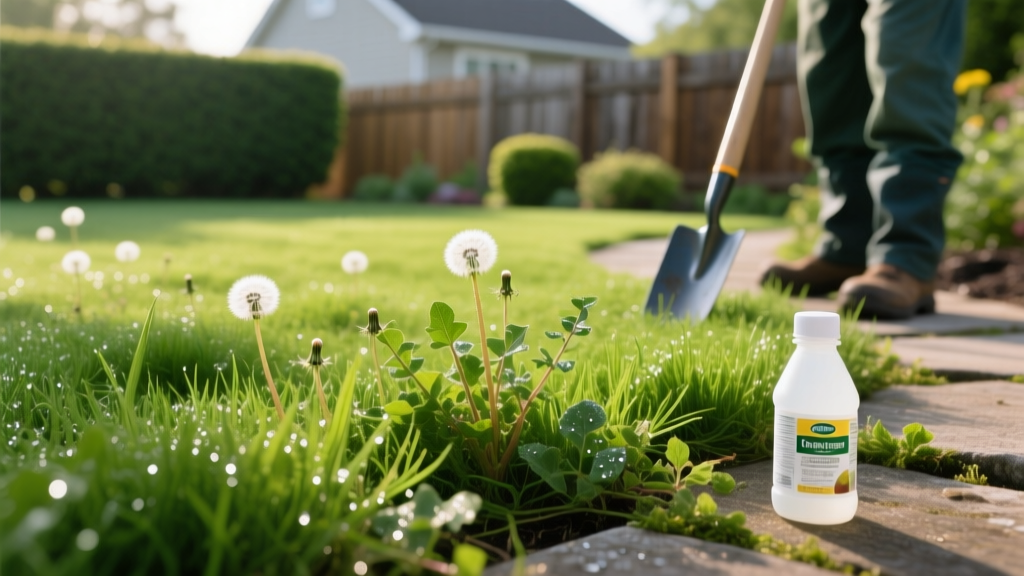
Will White Vinegar Kill Weeds? The Science, Risks, and Reality
The Short Answer: Yes, But With Major Caveats
If you are wondering, "will white vinegar kill weeds?" the immediate answer is yes, but it is not the permanent, soil-safe miracle cure often portrayed in DIY gardening circles. White vinegar acts as a contact desiccant, meaning it burns the foliage it touches but rarely kills the root system of established weeds. While it can effectively clear young annual weeds from driveway cracks, applying it to your lawn requires a deep understanding of plant biology, soil chemistry, and the severe limitations of acetic acid as an herbicide.
The Chemical Mechanism: How Acetic Acid Destroys Plant Cells
The active ingredient in white vinegar is acetic acid (CH3COOH). When sprayed onto a leaf, acetic acid rapidly breaks down the waxy cuticle and destroys the plant's cell membranes. This causes the cellular contents to leak out, resulting in rapid desiccation (drying out) of the tissue. According to research summarized by the Washington State University Puyallup Research and Extension Center, this tissue burn can occur within hours on a sunny day. However, because acetic acid is not systemic, it does not translocate through the plant's phloem to reach the roots.
Household vs. Horticultural Vinegar: A Critical Distinction
Not all vinegar is created equal. The effectiveness of your weed control depends entirely on the concentration of acetic acid, which dictates both the kill rate and the safety precautions required.
| Vinegar Type | Acetic Acid Concentration | pH Level | Efficacy on Weeds | Safety & PPE Requirements | Average Cost (Per Gallon) |
|---|---|---|---|---|---|
| Household (Supermarket) | 5% | ~2.4 | Poor. Only kills very young seedlings. | Standard eye protection. | $3.00 - $5.00 |
| Cleaning Vinegar | 6% - 10% | ~2.0 | Fair. Burns top growth of annuals. | Gloves and eye protection. | $8.00 - $12.00 |
| Horticultural / Agricultural | 20% - 30% | < 2.0 | Good. Rapidly desiccates mature foliage. | Respirator, heavy rubber gloves, face shield. | $30.00 - $45.00 |
The "Root Problem": Why Vinegar Fails on Perennial Weeds
The primary reason homeowners abandon vinegar after a few weeks is the rapid regrowth of perennial weeds. Species like dandelions (Taraxacum officinale), bindweed, and creeping charlie possess deep taproots or extensive rhizome networks that store massive amounts of carbohydrates. When you spray the top growth with 20% horticultural vinegar, the leaves die back, but the root system remains entirely unaffected. Within 10 to 14 days, the plant simply pushes up new foliage using its stored energy reserves. To truly kill a perennial weed, an herbicide must be systemic—absorbed by the leaves and transported down to the root crown.
Warning: Non-Selective Tissue Burn
Acetic acid is completely non-selective. It cannot distinguish between a dandelion and your prized Kentucky Bluegrass or Bermuda turf. Any grass blade that receives overspray will suffer the exact same cellular destruction and turn brown. Vinegar is strictly a spot-treatment tool for hardscapes, driveway cracks, and isolated garden beds, not a broadcast lawn treatment.
Collateral Damage: Soil pH Shocks and Microbiome Die-Off
A frequently overlooked consequence of heavy vinegar application is its impact on soil chemistry. While acetic acid breaks down relatively quickly in the environment (usually within a few days via microbial degradation), the immediate, localized pH shock can be severe.
- Aluminum Toxicity: If your soil is already slightly acidic (pH below 6.0), a heavy drench of 20% vinegar can temporarily drop the soil pH below 5.5. At this threshold, naturally occurring aluminum in the soil becomes soluble and highly toxic to plant roots, stunting the growth of surrounding desirable plants.
- Microbial Disruption: Beneficial soil organisms, including mycorrhizal fungi and nitrogen-fixing bacteria, are highly sensitive to extreme pH fluctuations. Repeated applications in the same area can create localized "dead zones" in the soil microbiome.
- Nutrient Lockout: Essential macronutrients like phosphorus and potassium become chemically bound and unavailable to plants when soil pH swings too far into the acidic range.
For long-term soil health and sustainable weed management, the UC Statewide Integrated Pest Management Program recommends relying on mechanical removal, mulching, or targeted organic herbicides rather than repeated acid drenches.
Better Organic Alternatives for Lawn Care
If your goal is to maintain an organic lawn care program without the soil risks and inefficiencies of acetic acid, modern horticultural science offers superior alternatives. Below is a comparison of the most effective organic contact and systemic herbicides available in 2026.
| Active Ingredient | Product Examples | Mechanism of Action | Best Use Case | Turf Safety |
|---|---|---|---|---|
| Acetic Acid (20%) | Various generic brands | Contact desiccant (membrane lysis) | Hardscapes, driveway cracks, young annuals. | Unsafe (burns grass) |
| Pelargonic Acid | Scythe, BurnOut | Contact desiccant (faster burn than vinegar) | Burndown of annual weeds before planting. | Unsafe (burns grass) |
| FeHEDTA (Chelated Iron) | Fiesta, Natria Lawn Weed Control | Selective systemic (iron toxicity in broadleaves) | Broadcast or spot treatment of broadleaf weeds in turf. | Safe (acts as a foliar iron fertilizer for grass) |
| d-Limonene (Citrus Oil) | Avenger Weed Killer | Contact desiccant (strips waxy cuticle) | Spot treatment of young weeds in garden beds. | Unsafe (burns grass) |
The FeHEDTA Advantage: For lawn care specifically, FeHEDTA (Iron HEDTA) is the gold standard for organic broadleaf weed control. Broadleaf weeds (like dandelions and plantain) absorb toxic levels of iron, causing cellular necrosis and root death, while monocot grasses simply use the iron to turn a deeper, healthier green. A quart of FeHEDTA concentrate costs roughly $40 to $50 and covers thousands of square feet, making it vastly more cost-effective and ecologically sound than buying gallons of horticultural vinegar.
Step-by-Step Application Protocol (For Spot Treatment)
If you still choose to use horticultural vinegar for hardscape weeds or isolated garden bed invaders, follow this protocol to maximize efficacy and minimize environmental harm.
- Select the Right Weather: Apply only on calm, windless days when temperatures are above 70°F (21°C) and the forecast guarantees full sun for at least 12 hours. Heat and UV radiation accelerate the desiccation process.
- Mix with a Surfactant: Acetic acid beads up on waxy leaves (like those of plantain or purslane). Add 1 ounce of liquid dish soap or a dedicated non-ionic agricultural surfactant per gallon of 20% vinegar to break the surface tension.
- Equip Proper PPE: 20% acetic acid can cause severe corneal damage and chemical burns. Wear a face shield, long sleeves, and heavy nitrile or rubber gloves.
- Spray to Runoff: Use a pressurized pump sprayer with a narrow cone nozzle. Coat the weed leaves thoroughly until the solution just begins to drip, but avoid drenching the surrounding soil.
- Monitor and Reapply: Check the treated area in 48 hours. If the weed is a perennial and shows signs of new green growth at the crown, you must reapply or switch to mechanical extraction (digging out the taproot).
Frequently Asked Questions
Will white vinegar permanently kill grass?
Yes, if applied directly. Household 5% vinegar may only burn the tips of mature grass blades, allowing them to recover. However, 20% horticultural vinegar will completely desiccate turfgrass down to the crown, requiring you to rake out the dead material and overseed the bare patch.
Does vinegar leave toxic residue in the soil?
No. Acetic acid is rapidly broken down by soil microbes and water dilution, usually within 2 to 3 days. It does not leave a long-term toxic residue. The danger lies in the immediate, short-term pH shock and the potential for aluminum toxicity during those first few days.
Can I mix vinegar and salt to kill weeds?
While adding sodium chloride (table salt) increases the kill rate, it is highly discouraged in any area where you ever want to grow plants again. Salt sterilizes the soil, destroying soil structure and creating osmotic stress that prevents any future seeds from germinating or absorbing water. According to guidelines from the EPA's Safe Pest Control resources, soil sterilants should never be used near desirable root zones or where runoff can reach storm drains.