
Lawn Care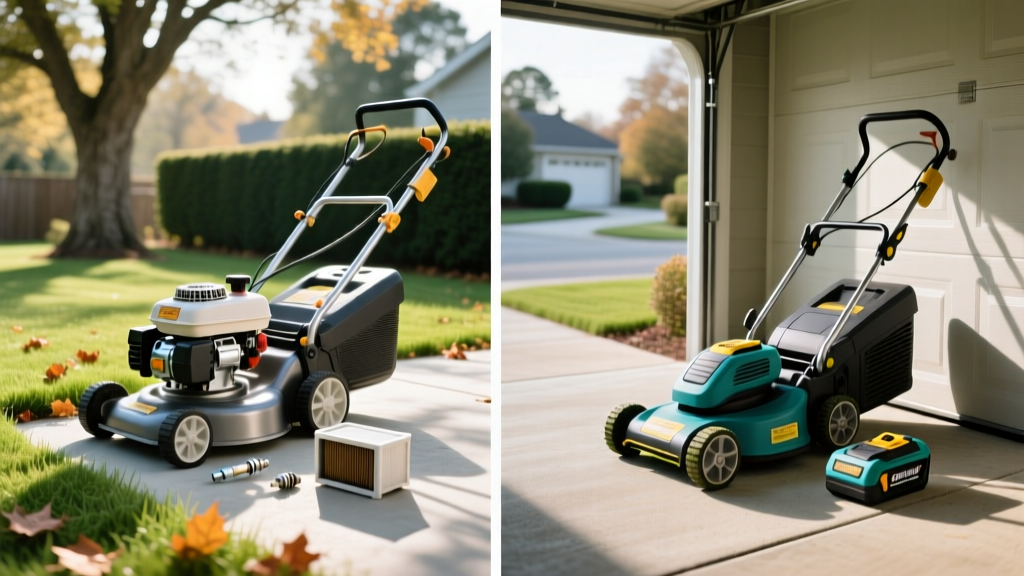
How to Winterize a Lawn Mower: Gas and Battery Steps
The Chemistry of Winter Storage: Why Mowers Fail in Spring
Over 70% of small engine failures in the spring are not caused by mechanical wear, but by improper winter storage. When you learn how to winterize a lawn mower correctly, you are fundamentally managing chemical degradation. For gas-powered equipment, the primary culprit is ethanol phase separation and varnish buildup. For battery-powered models, the enemy is lithium-ion cathode degradation and parasitic draw. According to the University of Minnesota Extension, neglecting to stabilize fuel or properly store lithium cells can reduce equipment lifespan by up to 40%. This guide provides exact, manufacturer-aligned protocols for preparing both gas and electric mowers for sub-freezing storage environments.
Step-by-Step: How to Winterize a Gas Lawn Mower
Modern small engines, particularly those with electronic fuel injection (EFI) or precision carburetors, require a specific sequence of chemical and mechanical interventions before long-term dormancy.
Phase 1: Fuel System Stabilization (The Anti-Ethanol Protocol)
The standard E10 fuel used in most regions contains 10% ethanol, which is highly hygroscopic (water-attracting). When a mower sits in an unheated shed, temperature fluctuations cause condensation inside the tank. Once the water content exceeds roughly 0.5%, phase separation occurs: the ethanol and water bond, sink to the bottom of the tank, and are the first things drawn into the carburetor in the spring, causing immediate hydro-lock or severe internal corrosion.
- Add Stabilizer Before the Tank is Empty: Do not drain the tank. Running a carburetor dry leaves microscopic fuel droplets that evaporate into a hard, shellac-like varnish, clogging the main jet. Instead, fill the tank to 95% capacity with fresh, ethanol-free recreational fuel (REC-90) if available, or standard E10.
- Dose with Marine-Grade Stabilizer: Add a fuel stabilizer formulated specifically for ethanol blends. STA-BIL 360 Marine or Sea Foam Motor Treatment are industry standards. Use exactly 1 ounce per 2.5 gallons of fuel. Marine formulas contain higher concentrations of corrosion inhibitors than standard automotive stabilizers.
- Circulate the Mixture: Start the engine and let it run at idle for 10 to 15 minutes. This ensures the stabilized fuel is pulled through the fuel lines, the fuel pump, and into the carburetor float bowl or EFI rail, protecting the entire delivery system.
Phase 2: Crankcase and Filtration Maintenance
Used motor oil contains suspended acidic byproducts, moisture, and microscopic metal shavings from normal operation. Leaving this contaminated oil in the crankcase over the winter allows acids to etch the cylinder walls and bearing surfaces.
- Hot Oil Extraction: Run the mower for 5 minutes to warm the oil, reducing its viscosity and keeping particulates suspended. Drain the oil completely while the engine is warm.
- Viscosity Selection: Refill with the exact viscosity specified by the manufacturer, typically SAE 30 or 10W-30 for most 4-cycle engines like the Briggs & Stratton 850E series. The Briggs & Stratton Maintenance Guidelines explicitly recommend checking the dipstick and filling to the upper mark, but never overfilling, as excess oil can cause aeration and foaming upon the first spring startup.
- Air Filter and Spark Arrestor: Remove the foam or paper air filter. If it is a foam filter, wash it, let it dry, and re-oil it before storing it in a sealed plastic bag. If your mower is equipped with a spark arrestor screen in the muffler, remove it and use a wire brush to clear carbon deposits, which can cause dangerous back-pressure and overheating the following year.
WARNING: The Ethanol Phase Separation Trap
Never attempt to winterize a mower by simply 'running it out of gas.' Modern carburetors have internal passages that will trap residual E10 fuel. When this fuel evaporates, it leaves a corrosive residue that will permanently ruin the float bowl gaskets and jets, resulting in a $60 to $120 carburetor replacement in April.
Battery and Electric Mower Storage Parameters
The winterization of battery-powered mowers, such as the EGO 56V ARC Lithium or Toro 60V Max systems, is entirely focused on cell chemistry preservation. Lithium-ion batteries degrade fastest when stored at extreme states of charge (0% or 100%) or in freezing temperatures.
Voltage and State of Charge (SOC) Targets
According to EGO Power+ Battery Care Instructions, storing a lithium-ion battery at 100% charge causes the electrolyte to oxidize, increasing internal resistance and permanently reducing total capacity. Conversely, storing it near 0% risks the battery dropping below its critical voltage threshold due to the Battery Management System's (BMS) parasitic draw, rendering the battery 'bricked' and unable to accept a charge.
- Target SOC: Discharge or charge the battery to exactly 30% to 50% capacity. For a standard 40V max system, this translates to roughly 36V to 38V resting voltage. For a 56V system, aim for approximately 50V to 52V.
- Temperature Control: Never store lithium-ion batteries in an unheated shed or garage where temperatures drop below 32°F (0°C). Freezing temperatures can cause lithium plating on the anode. Store batteries indoors in a climate-controlled space between 50°F and 77°F (10°C to 25°C).
- Terminal Protection: Wipe the battery contacts and the mower's battery port with a dry microfiber cloth to remove grass sap and moisture. Apply a micro-thin layer of dielectric grease to the mower's port terminals to prevent galvanic corrosion over the winter.
Gas vs. Battery Winterization Comparison Matrix
| Maintenance Parameter | Gas-Powered Mowers | Battery-Powered Mowers |
|---|---|---|
| Primary Threat | Ethanol phase separation, carb varnish | Cathode degradation, BMS parasitic drain |
| Storage Location | Unheated shed/garage (well-ventilated) | Indoors, climate-controlled (50°F-77°F) |
| Prep Time Required | 45 - 60 minutes | 10 - 15 minutes |
| Estimated Annual Cost | $25 - $45 (Oil, stabilizer, filters) | $0 - $5 (Dielectric grease, cleaning supplies) |
| Mid-Winter Check | None required | Check voltage; top up to 40% if below 30% |
Under-Deck Preservation and Blade Balancing
The underside of the mower deck is subjected to highly abrasive, moisture-rich grass clippings that accelerate rust and compromise aerodynamic lift. Proper winterization of the deck ensures optimal mulching and bagging performance the following year.
- Deep Scrape and Wash: Tip the mower according to the manufacturer's instructions (always tip gas mowers with the carburetor facing UP to prevent oil from flooding the air filter). Use a wooden paint stick or plastic putty knife to scrape away impacted clippings. Avoid metal scrapers, which will gouge the factory powder-coat or paint.
- Lanolin-Based Coating: Do not use WD-40 or standard silicone sprays on the under-deck; these evaporate quickly and offer no long-term protection. Instead, apply a heavy coat of a lanolin-based corrosion inhibitor like Fluid Film NAS or Woolwax. These products creep into microscopic scratches, remain tacky, and provide an impenetrable moisture barrier for up to 12 months.
- Blade Removal and Balancing: Remove the cutting blade. Sharpen it using a bench grinder or file, maintaining the exact factory bevel angle (usually 30 to 45 degrees). Check the balance using a conical blade balancer. An unbalanced blade vibrating at 3,000 RPM will prematurely destroy the crankshaft main bearings and the spindle seals on riding mowers.
Riding Mower Specifics: Belts, Tires, and PTOs
Zero-turn and lawn tractors require additional mechanical interventions due to their complex drive systems and weight distribution.
- Drive Belt Tension Relief: If your riding mower uses a manual PTO engagement or a mechanical deck lift, disengage the blades and lower the deck to its absolute minimum setting. This relieves the constant tension on the idler pulleys and the deck drive belt. Leaving a rubber V-belt under high tension for five months in freezing temperatures causes the rubber to take a 'set memory,' leading to slipping and premature snapping in the spring.
- Tire Flat-Spotting Prevention: The heavy weight of a lawn tractor resting on the same contact patch of rubber for months will cause permanent flat-spotting, resulting in a rough ride and scalped turf. Inflate the tires to the maximum PSI listed on the sidewall (usually 14-20 PSI for turf tires) to stiffen the sidewalls. For optimal protection, place the tractor on wooden blocks or jack stands so the tires are entirely off the concrete floor.
- PTO Shaft Lubrication: If your tractor features a rear Power Take-Off (PTO) shaft, clean the splines with a wire brush and apply a generous layer of molybdenum-based grease to prevent the implement yoke from seizing to the shaft over the winter.
Quick-Reference Spring Recommissioning Checklist
When temperatures consistently rise above 40°F, reverse the winterization process using this sequence:
- Reinstall the oiled air filter and fresh spark plug.
- Check the oil level; it may have settled slightly in the crankcase.
- For gas mowers: Turn the key. Do not use starting fluid (ether), which strips cylinder lubrication. If the stabilized fuel fails to ignite, check the fuel shut-off solenoid and carburetor bowl drain.
- For battery mowers: Re-insert the battery, ensure the contacts click securely, and run the blades at full throttle for 60 seconds without cutting grass to distribute spindle bearing grease.

