
Lawn Care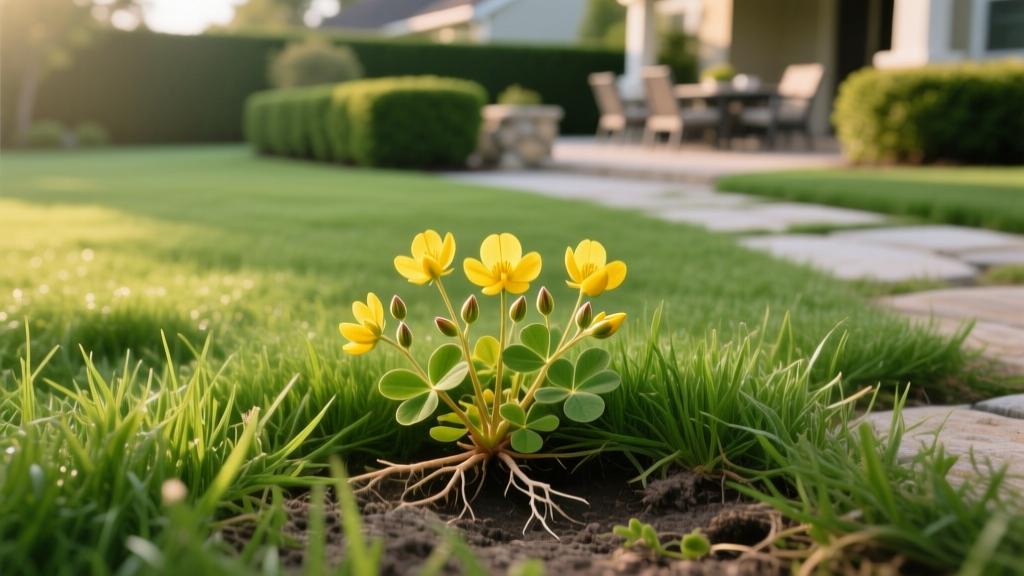
Diagnose and Eradicate Yellow Flower Clover: A Lawn Rescue Guide
When homeowners spot yellow flower clover in their lawn, the immediate instinct is to reach for a broadleaf weed killer. However, yellow-flowering clovers and clover-like weeds are not just aesthetic nuisances; they are biological indicators of underlying turf stress. Legumes and wood sorrels thrive in environments where desirable turfgrass is failing due to nitrogen deficiency, soil compaction, or improper pH levels.
This diagnostic and rescue guide provides a precise, step-by-step framework to identify the specific weed invading your lawn, correct the soil conditions that allowed it to establish, and apply targeted chemical and cultural fixes to restore your turf.
Symptom Diagnosis: Identifying the Invader
The term 'yellow flower clover' is a catch-all phrase used by homeowners to describe three distinct, unrelated weeds. Accurate identification is critical because their life cycles and herbicide susceptibilities vary significantly. Consult the USDA Plants Database for definitive botanical classifications.
| Weed Species | Leaflet Structure | Flower & Seed Traits | Primary Soil Indicator |
|---|---|---|---|
| Lesser Hop Clover (Trifolium dubium) |
Three oval leaflets; central leaflet has a distinct, longer petiole (stem). | Small, bright yellow flower heads that turn brown and papery as they mature. | Low soil nitrogen; moderate drought stress. |
| Black Medic (Medicago lupulina) |
Three teardrop-shaped leaflets with finely toothed margins; central leaflet stem is longest. | Tight, spherical yellow clusters. Produces distinctive black, kidney-shaped seed pods. | Severe soil compaction; low nitrogen; high pH. |
| Yellow Woodsorrel (Oxalis stricta) |
Three heart-shaped leaflets that fold downward at night or during heat stress. | Five-petaled yellow flowers. Produces explosive, upright seed pods that shoot seeds up to 10 feet. | Acidic soil (pH below 6.0); thin turf canopy. |
The Root Cause: Why Your Lawn is Failing
Before applying herbicides, you must address the environmental voids these weeds are exploiting. If you kill the weeds but leave the soil conditions unchanged, the next generation of seeds will germinate immediately.
1. Nitrogen Starvation
Legumes like lesser hop clover and black medic possess root nodules containing Rhizobium bacteria, which fix atmospheric nitrogen. When your soil lacks available nitrogen, your turfgrass starves and thins out, while the clover thrives and outcompetes it. A standard soil test revealing less than 20 ppm of nitrate-N confirms this diagnosis.
2. Soil Compaction and Anaerobic Conditions
Black medic is a primary indicator of compacted soil. When soil bulk density exceeds 1.4 g/cm³, turfgrass roots cannot penetrate deeply enough to access water and nutrients. Clover and medic, with their aggressive taproots, easily pierce compacted layers.
3. pH Imbalance
Yellow woodsorrel (Oxalis stricta) is highly tolerant of acidic soils. If your soil pH has dropped below 6.0, cool-season grasses like Kentucky bluegrass and tall fescue lose the ability to efficiently uptake phosphorus and micronutrients, giving woodsorrel a distinct competitive advantage.
Rescue Fix Phase 1: Cultural & Soil Corrections
Execute these cultural practices 14 to 21 days before applying any post-emergent herbicides. Stressed weeds do not absorb systemic chemicals effectively.
Pro-Tip: The Aeration & Fertilization Sequence
Never apply pre-emergent herbicides immediately after core aeration. Aeration disrupts the chemical barrier. If your lawn is heavily infested, focus on post-emergent rescue and fall overseeding, delaying pre-emergent applications until the following spring.
Never apply pre-emergent herbicides immediately after core aeration. Aeration disrupts the chemical barrier. If your lawn is heavily infested, focus on post-emergent rescue and fall overseeding, delaying pre-emergent applications until the following spring.
- Core Aeration: Rent a walk-behind core aerator (approx. $85 for a 4-hour rental). Pull 3-inch deep plugs spaced no more than 2 inches apart across the infested zones. Leave the plugs on the lawn to decompose and return soil microbes to the surface.
- pH Adjustment: If your soil test indicates a pH below 6.2, apply pelletized calcitic lime at a rate of 25 to 30 lbs per 1,000 sq ft. Water it in immediately to begin the neutralization process.
- Nitrogen Injection: Apply a fast-release nitrogen fertilizer (such as a 24-0-6 or 32-0-4 formulation) at a rate of 0.75 lbs of actual nitrogen per 1,000 sq ft. This forces the turfgrass to aggressively tiller and shade out the clover seedlings.
Rescue Fix Phase 2: Targeted Herbicide Application
Standard 2,4-D formulations often fail against yellow woodsorrel and mature hop clover. You need a multi-active-ingredient product containing Triclopyr. Triclopyr is highly effective against legumes and Oxalis species. For comprehensive turf weed management, refer to guidelines from Penn State Extension's Turfgrass Weed Control resources.
Recommended Product: T-Zone SE Broadleaf Herbicide
T-Zone SE combines 2,4-D, Triclopyr, Dicamba, and Sulfentrazone. This four-way chemistry attacks the weeds through multiple modes of action, preventing resistance and ensuring rapid desiccation.
- Mixing Rate: 1.2 to 2.0 fluid ounces per 1,000 square feet of turf.
- Water Volume: Mix in 1.5 to 2.0 gallons of water per 1,000 sq ft to ensure thorough, even coverage without excessive runoff.
- Surfactant: Add a non-ionic surfactant (NIS) at 0.25% v/v (approx. 1/3 teaspoon per gallon of mixed solution) to break the waxy cuticle on the clover leaves.
- Cost: A 20 oz bottle costs approximately $65 and treats up to 16,000 sq ft.
⚠️ Temperature & Mowing Constraints
Do NOT apply Triclopyr-based herbicides when daytime temperatures exceed 85°F (29°C). High heat causes rapid vaporization of the chemical, leading to severe phytotoxicity (leaf curling and browning) on desirable cool-season grasses. Additionally, do not mow the lawn for 48 hours before or 48 hours after application to maximize foliar absorption.
Do NOT apply Triclopyr-based herbicides when daytime temperatures exceed 85°F (29°C). High heat causes rapid vaporization of the chemical, leading to severe phytotoxicity (leaf curling and browning) on desirable cool-season grasses. Additionally, do not mow the lawn for 48 hours before or 48 hours after application to maximize foliar absorption.
Post-Rescue Overseeding Protocol
Once the yellow flower clover turns black and dies back (typically 10 to 14 days post-application), it leaves bare patches in the turf canopy. If left empty, wind-blown weed seeds or crabgrass will immediately colonize the space.
- Debris Removal: Rake out the dead clover thatch to expose bare soil.
- Seed Selection: Choose a turf-type tall fescue blend (for drought resistance) or a Kentucky bluegrass/perennial ryegrass mix (for rapid establishment and rhizome spread).
- Seeding Rate: Apply seed at 4 to 6 lbs per 1,000 sq ft for patch repair, or 2 to 3 lbs per 1,000 sq ft for general overseeding.
- Topdressing: Spread a 1/4-inch layer of screened compost over the seed to retain moisture and protect against bird predation.
- Hydration: Water lightly 2 to 3 times daily for 14 days to keep the top inch of soil consistently moist until germination occurs.
Troubleshooting Common Rescue Failures
Problem: The weeds turned yellow but didn't die.
Diagnosis: The application was made during a drought. Weeds shut down their vascular systems during water stress, preventing the systemic herbicide from traveling to the roots.
Fix: Irrigate the lawn deeply, wait 5 days for the weeds to resume active growth, and reapply the herbicide at the lower end of the label rate.
Problem: The weeds died, but new yellow flowers appeared three weeks later.
Diagnosis: Yellow woodsorrel seed pods exploded during the pulling/mowing process, depositing thousands of new seeds in the soil profile.
Fix: Apply a post-emergent application of Quinclorac to target the new, young seedlings, and ensure your mowing bag is attached to catch any remaining seed heads before they mature.

