
Lawn Care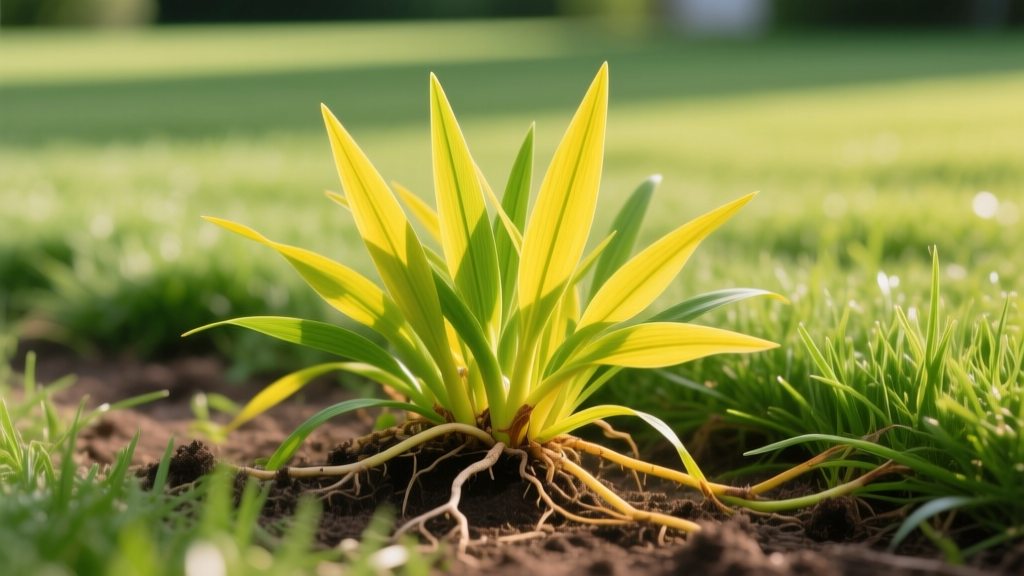
Yellow Nutsedge Grass: Diagnosis and Fast Rescue Fixes
The Nutsedge Invasion: Why Your Lawn is Turning Yellow
When homeowners spot light-green, fast-growing spikes overtaking their turf, the immediate assumption is often crabgrass or a nitrogen deficiency. However, if the invader is outpacing your regular mowing schedule and sporting a distinctively pale, yellowish-green hue, you are likely dealing with yellow nutsedge grass (Cyperus esculentus). Unlike true grasses, nutsedge is a sedge—a completely different botanical family that requires a radically different rescue protocol. Standard broadleaf herbicides like 2,4-D or dicamba will not even stunt its growth, leaving frustrated homeowners watching the weed colonize their yard week after week.
According to the NC State Extension, yellow nutsedge is a perennial weed that thrives in poorly drained, compacted soils, making it a primary indicator of underlying environmental stress in your lawn. Diagnosing it correctly is the mandatory first step before deploying any chemical or cultural rescue fixes.
The Diagnostic 'Roll Test'
To confirm yellow nutsedge grass, pull a single stem and roll it between your thumb and index finger. True grasses have round, cylindrical stems. Sedges have triangular, V-shaped stems. If it feels like a tiny pencil or has distinct edges, you have confirmed a sedge. Additionally, look for the seed head: mature yellow nutsedge produces a golden-brown, bottle-brush-like umbel at the top of the stem, unlike the purplish seed heads of its cousin, purple nutsedge.
The Tuber Trap: Why Pulling Yellow Nutsedge Grass Fails
The most common rescue attempt—hand-pulling—is also the most counterproductive. Yellow nutsedge reproduces primarily through an aggressive underground network of rhizomes and tubers (nutlets). When you yank the visible plant from the soil, the brittle rhizome snaps, leaving 80% to 90% of the root system and tubers intact.
Research from the University of California IPM notes that a single yellow nutsedge plant can produce over 1,500 tubers per square meter in a severe infestation. These tubers can remain viable in the top six inches of soil for up to three years. Worse, the physical trauma of pulling the main plant triggers a hormonal response in the remaining tubers, causing multiple new shoots to sprout from a single broken rhizome. To execute a true rescue fix, you must attack the plant systemically using targeted post-emergent herbicides that translocate down into the tuber network.
Chemical Rescue Protocols: Active Ingredients That Actually Work
Because yellow nutsedge grass is not a broadleaf weed or a true grass, you must utilize herbicides specifically formulated for sedge control. The two most effective active ingredients for residential turf rescue are Halosulfuron-methyl and Sulfentrazone. Below is a comparison matrix to help you select the right chemical intervention based on your turf type and urgency.
| Active Ingredient | Common Trade Name | Turf Safety | Speed of Control | Approx. Cost (2026) |
|---|---|---|---|---|
| Halosulfuron-methyl (75% WP) | SedgeHammer | Safe for almost all warm & cool-season grasses | Slow (14-21 days to see yellowing) | $15 - $18 per 1/3 oz packet |
| Sulfentrazone (40% SC) | Dismiss | Safe for most, but can temporarily stunt Fescue | Fast (7-10 days for visible burn) | $45 - $55 per 4 oz bottle |
| Imazaquin (20% WP) | Image Kills Nutsedge | Warm-season grasses ONLY (Toxic to Fescue/Rye) | Very Slow (3-5 weeks) | $25 - $30 per 4 oz bottle |
Step-by-Step Application Strategy for Halosulfuron-Methyl
For the safest, most thorough systemic kill that protects your surrounding turf, Halosulfuron-methyl is the gold standard. However, it requires precise mixing and the mandatory inclusion of a surfactant to penetrate the waxy cuticle of the nutsedge leaf.
- Calculate the Area: Measure your treatment zone. One 1/3 oz (approx. 1.3 grams) packet of 75% WP Halosulfuron-methyl treats exactly 1,000 square feet.
- Prepare the Carrier: Fill a 2-gallon pump sprayer with 1.5 gallons of clean water.
- Add the Surfactant: Add 1 to 2 teaspoons (approx. 5-10 ml) of a Non-Ionic Surfactant (NIS). Do not skip this step; without NIS, the herbicide will bead up and roll off the leaf.
- Mix the Herbicide: Empty the 1/3 oz packet into the tank. Agitate the sprayer thoroughly to ensure the wettable powder is fully suspended.
- Apply as a Spot Treatment: Spray the foliage of the yellow nutsedge grass until it is visibly wet but not dripping to the soil. Halosulfuron is absorbed through the leaves and translocated down to the tubers.
Critical Warning: Do not mow your lawn for at least 48 hours before and 48 hours after applying Halosulfuron-methyl. You need maximum leaf surface area on the nutsedge to absorb the chemical and pull it down into the root zone. Mowing immediately after application severs the chemical pathway.
Post-Emergent Timing and Temperature Triggers
Timing your rescue fix is just as critical as the chemical selection. Yellow nutsedge grass germinates when soil temperatures consistently reach 60°F at a 2-inch depth, typically in late spring. However, the most effective time to apply systemic herbicides like Halosulfuron is during the 3- to 8-leaf stage of the plant's growth cycle, usually early to mid-summer.
If you wait until late summer or early fall, the plant has already shifted its energy from vegetative growth to tuber production. Applying herbicides at this late stage will kill the top growth but may fail to deliver a lethal dose to the mature tubers, resulting in a massive resurgence the following spring. If you are treating late in the season, switch to Sulfentrazone for a faster burn-down, and plan a follow-up application of pre-emergent herbicides (like Pennant Magnum) the next spring to block tuber germination.
Cultural Triage: Fixing the Soil Environment
Chemical herbicides are a rescue tool, not a permanent cure. Yellow nutsedge grass is an opportunistic pioneer species that exploits specific soil deficiencies. If you do not correct the environment, the weed will return. The Penn State Extension identifies chronic soil moisture and compaction as the primary drivers of nutsedge proliferation.
Moisture and Compaction Diagnostics
- Audit Your Irrigation: Nutsedge thrives in waterlogged conditions. Check your sprinkler zones for overwatering. If your soil remains squishy 12 hours after a watering cycle, you are creating a perfect nutsedge nursery. Reduce watering frequency and increase run times to encourage deep turf roots while allowing the top inch of soil to dry out.
- Core Aeration: Compacted clay soils prevent water infiltration, leading to surface pooling. Schedule deep core aeration in the early fall (for cool-season grasses) or late spring (for warm-season grasses) to pull 3-inch soil plugs, relieving compaction and allowing the turfgrass to outcompete the sedge.
- Correct Mowing Heights: Scalping your lawn removes the turf canopy, allowing sunlight to hit the soil surface and trigger dormant nutsedge tubers. Raise your mower deck to the highest recommended setting for your specific grass type (e.g., 3.5 to 4 inches for Tall Fescue, 2 to 2.5 inches for Bermudagrass) to shade out emerging sedges.
Post-Treatment Monitoring and Follow-Up
After applying your chemical rescue fix, monitor the treated area closely. With Halosulfuron-methyl, the nutsedge leaves will stop growing within 48 hours, but visible yellowing and necrosis will take 14 to 21 days. Do not reapply the herbicide during this waiting period. Once the initial flush of nutsedge has completely browned and died back, inspect the area for secondary shoots. A second application 6 to 10 weeks after the first is often necessary to eliminate tubers that were dormant during the initial treatment. By combining precise chemical translocation with rigorous moisture management, you can permanently break the yellow nutsedge life cycle and reclaim your turf.

