
Pest Control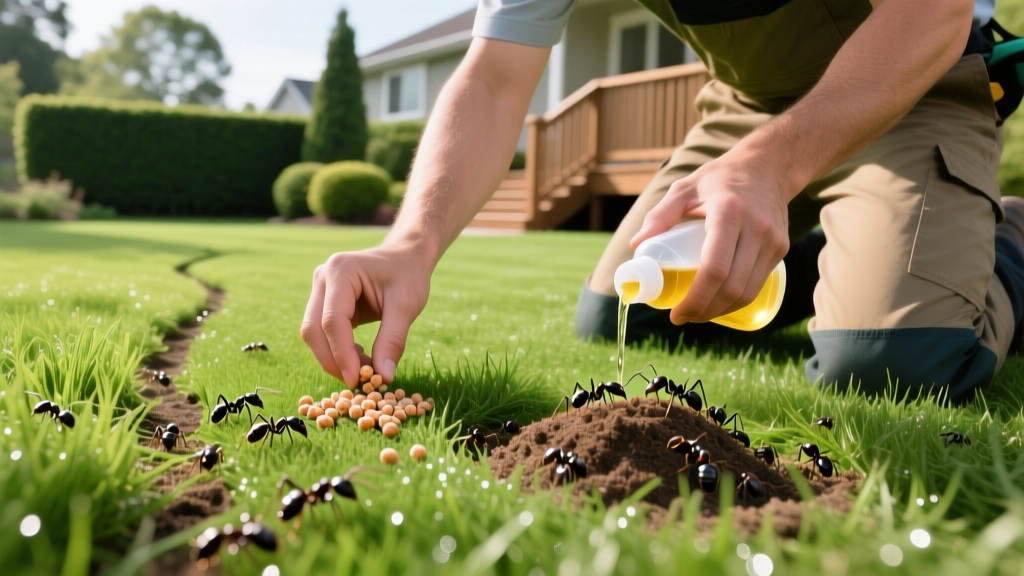
Choosing an Ant Killer for Lawns: Broadcast Baits vs Mound Drenches
The Core Dilemma: Broadcast Baits vs. Targeted Mound Drenches
Selecting the most effective ant killer for lawns requires moving beyond generic hardware store sprays and understanding colony biology. Turf-damaging species, particularly the Red Imported Fire Ant (Solenopsis invicta) and nuisance turf ants, operate as massive subterranean networks. A single mature mound can house over 400,000 workers and multiple queens. When you apply a fast-acting contact spray to the surface, you only kill the outer foraging layer, triggering a survival mechanism called colony budding, where the surviving queens fracture the colony and establish multiple new satellite mounds across your turf.
To achieve total eradication without harming your grass, turf managers rely on two primary strategies: broadcast granular baits and targeted liquid mound drenches. Each method exploits different vulnerabilities in the ant's foraging and nesting behaviors. According to the Texas A&M AgriLife Extension, integrating both methods—known as the Two-Step Protocol—yields a 90% to 95% long-term suppression rate, vastly outperforming single-application contact killers.
When to Deploy Broadcast Granular Baits
Broadcast baits are the foundation of yard-wide defense. These products consist of an attractive food carrier (usually soybean oil absorbed into a corncob grit) laced with a slow-acting active ingredient. Foraging workers carry the bait deep into the gallery system and feed it to the larvae, which then regurgitate the toxicant to the queens. Because the active ingredient is slow-acting (taking 3 to 14 days to kill), the colony does not associate the food source with the mortality event, preventing bait shunning.
When to Deploy Liquid Mound Drenches
Liquid drenches are reserved for acute nuisance mounds located near high-traffic areas, patios, or play zones. A drench involves mixing a contact or stomach insecticide with water and pouring 1.5 to 2 gallons directly into the mound to flood the gallery system. This provides rapid knockdown (within 24 to 48 hours) but requires precise execution to ensure the liquid reaches the deepest queen chambers, which can extend 3 feet below the soil surface.
Active Ingredient Comparison Matrix
The efficacy of your chosen ant killer for lawns depends entirely on the active ingredient. Below is a professional-grade comparison of the most reliable compounds used in modern turf management.
| Product Type | Active Ingredient | Speed of Kill | Turf & Pet Safety Profile | Est. Cost per 1,000 sq ft |
|---|---|---|---|---|
| Granular Bait | Indoxacarb (e.g., Advion) | 7 - 14 Days | Exceptional; requires insect enzymes to activate | $0.15 - $0.25 |
| Granular Bait | Hydramethylnon (e.g., Amdro Pro) | 7 - 10 Days | High; degrades rapidly in UV light | $0.10 - $0.18 |
| Liquid Drench | Bifenthrin (e.g., Bifen I/T) | 1 - 2 Days | Moderate; highly toxic to aquatic life and bees | $0.05 - $0.10 |
| Organic Bait/Drench | Spinosad (e.g., Entrust) | 2 - 5 Days | Excellent; OMRI listed, safe for organic lawns | $0.30 - $0.50 |
Deep Dive: Active Ingredients and Turf Interaction
Not all insecticides interact with turfgrass and soil profiles equally. Understanding these interactions prevents wasted product and environmental contamination.
Indoxacarb: The Pro-Insecticide Advantage
Indoxacarb is a bio-activated pro-insecticide. In its applied state, it is relatively non-toxic to mammals and turfgrass. Once ingested by the ant, the insect's metabolic enzymes cleave a methoxycarbonyl group from the molecule, converting it into the highly toxic DCJW compound, which blocks sodium channels in the ant's nervous system. This targeted activation makes products like Advion Fire Ant Bait incredibly safe for use around pets and children once the granules have settled into the turf canopy.
Bifenthrin and the Thatch Barrier
Bifenthrin is a synthetic pyrethroid commonly used for liquid drenches and broadcast sprays. It binds tightly to organic matter. If your lawn has a thatch layer exceeding 0.5 inches, bifenthrin will bind to the thatch and never reach the soil-dwelling ants. When using bifenthrin for broadcast applications, you must core aerate the lawn first or follow the application with 0.25 inches of irrigation to wash the chemical through the thatch and into the topsoil.
Pollinator Warning: Pyrethroids like bifenthrin and cyfluthrin are highly toxic to bees. Never apply liquid or granular pyrethroids to a lawn that contains blooming broadleaf weeds (like white clover or creeping charlie). Mow the lawn to remove all flower heads before application, or switch to a pollinator-safe alternative like Spinosad.
The Professional Two-Step Application Protocol
For comprehensive yard defense, follow this sequenced protocol. Timing and soil temperatures are critical; ants will not forage for bait if soil temperatures are below 65°F or above 85°F.
- Step 1: Broadcast Bait Application (Late Afternoon) Apply a high-quality indoxacarb or hydramethylnon bait using a rotary spreader. Calibrate the spreader to deliver 1.5 lbs of product per acre (approximately 5 tablespoons per 1,000 square feet). Apply in the late afternoon or early evening when ants are actively foraging and UV degradation is minimized. Crucial: Do not water the lawn after applying bait; moisture ruins the soybean oil carrier.
- Step 2: The 7-Day Waiting Period Allow the foraging workers 7 to 10 days to distribute the bait throughout the colony and feed the queens. You will not see immediate surface activity changes during this window.
- Step 3: Targeted Mound Drenching Mix a liquid drench (e.g., 1 oz of 7.9% Bifenthrin per gallon of water). Using a two-gallon watering can, pour 1.5 gallons of the mixture directly onto the center of any remaining active, high-traffic mounds. Pour slowly to allow the soil to absorb the liquid without runoff.
Common Application Failure Modes
Even with premium products, homeowners frequently experience treatment failure due to environmental mismanagement. Avoid these specific pitfalls:
- Morning Dew Interference: Applying granular bait when the grass is wet from morning dew or recent irrigation causes the soybean oil attractant to mold or wash off the corncob grit, rendering the bait invisible to foraging ants. Always apply to dry turf.
- Premature Mound Disturbance: Hitting a mound with a shovel or stepping on it before applying a drench triggers the colony's alarm pheromones. The queens will immediately migrate deeper or initiate budding. Never physically disturb a mound prior to chemical treatment.
- Mowing Too Soon: Mowing your lawn within 48 hours of a broadcast bait application vacuums up the granules before the ants have time to locate and transport them. Mow immediately before application, then wait at least three days to mow again.
- Ignoring Satellite Colonies: Treating only the massive, highly visible mounds ignores the smaller, newly established satellite colonies. Broadcast baits are mandatory for finding these hidden populations.
Long-Term Turf Health and Ant Management
Ants often exploit lawns that are already stressed by drought, compaction, or poor fertilization. While an effective ant killer for lawns will eliminate the immediate pest pressure, maintaining a dense, vigorously growing turf canopy is the ultimate biological defense. Thick root systems and dense stolons physically impede the ants' ability to excavate new gallery systems. For authoritative, ongoing guidance on integrating pest management with turf health, consult the EPA's Safe Pest Control guidelines and your local university extension office. By combining precise chemical interventions with sound agronomic practices, you can maintain a pristine, pest-free landscape year after year.

